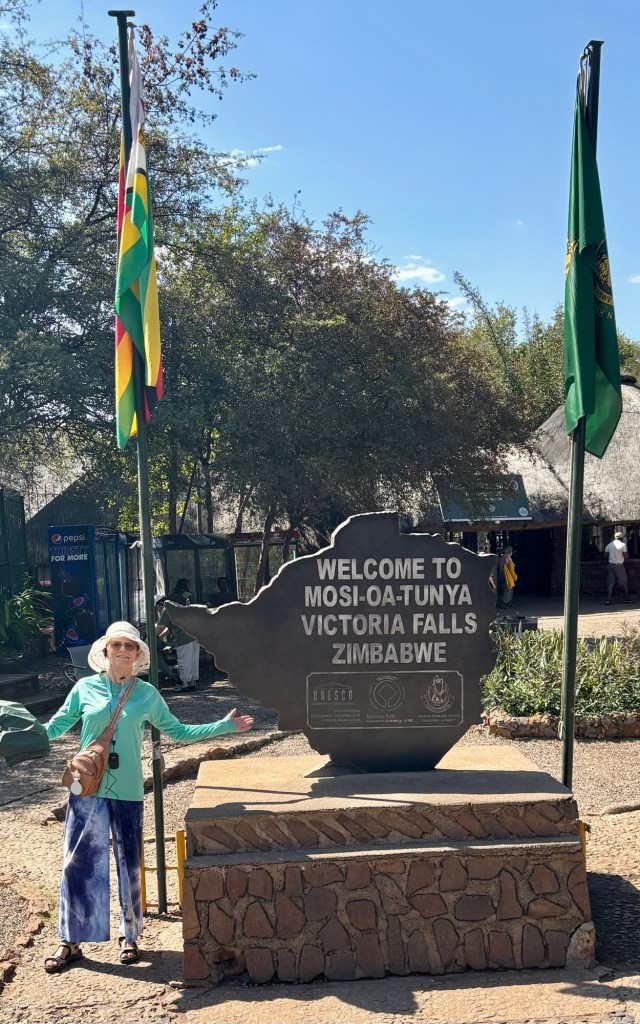
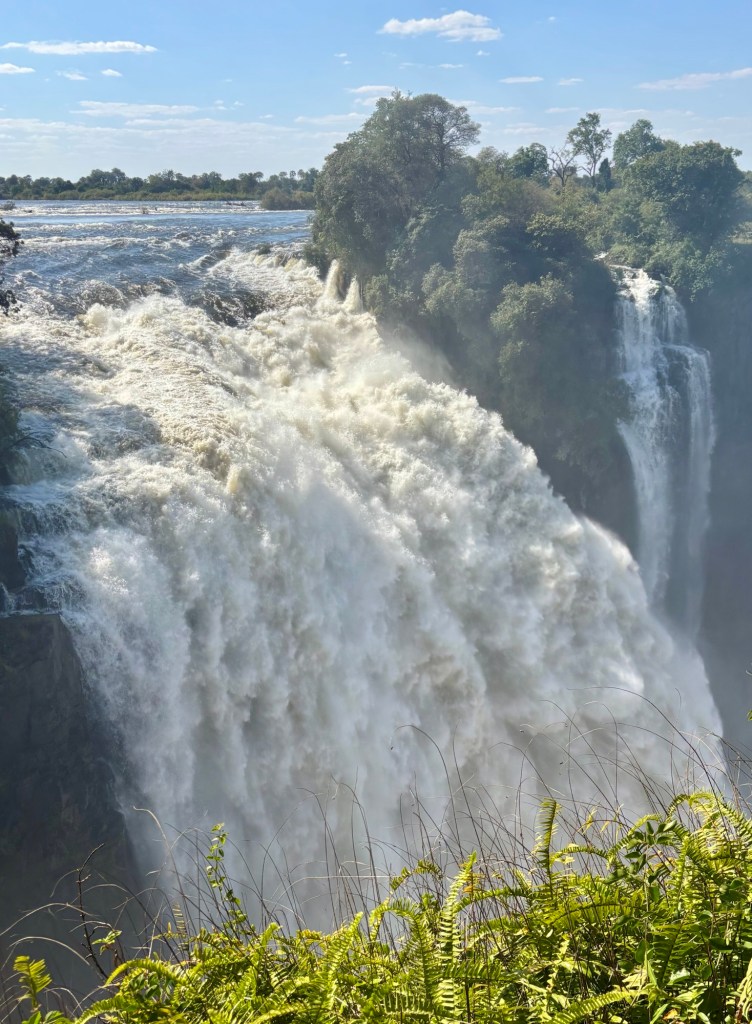
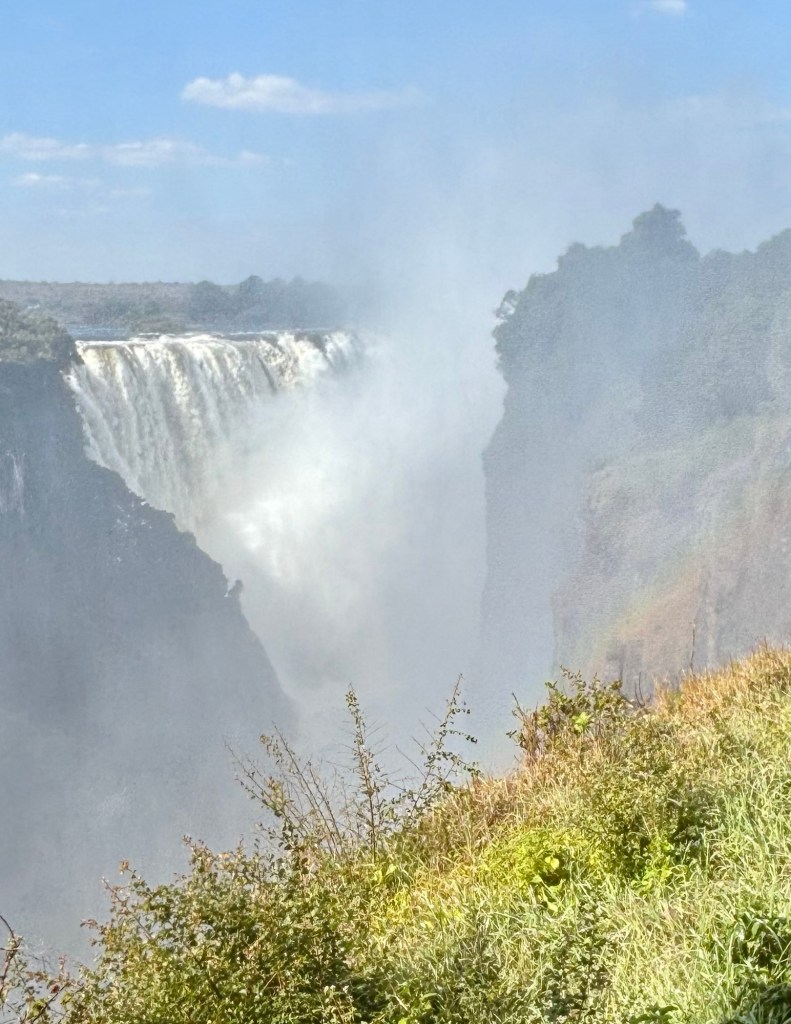
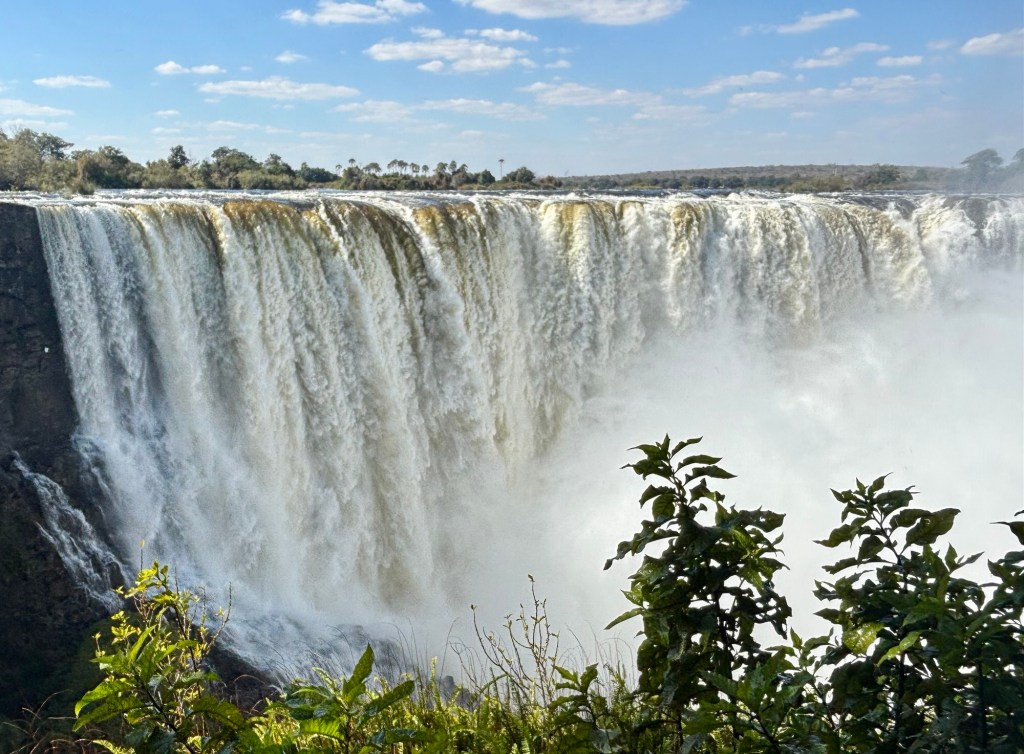
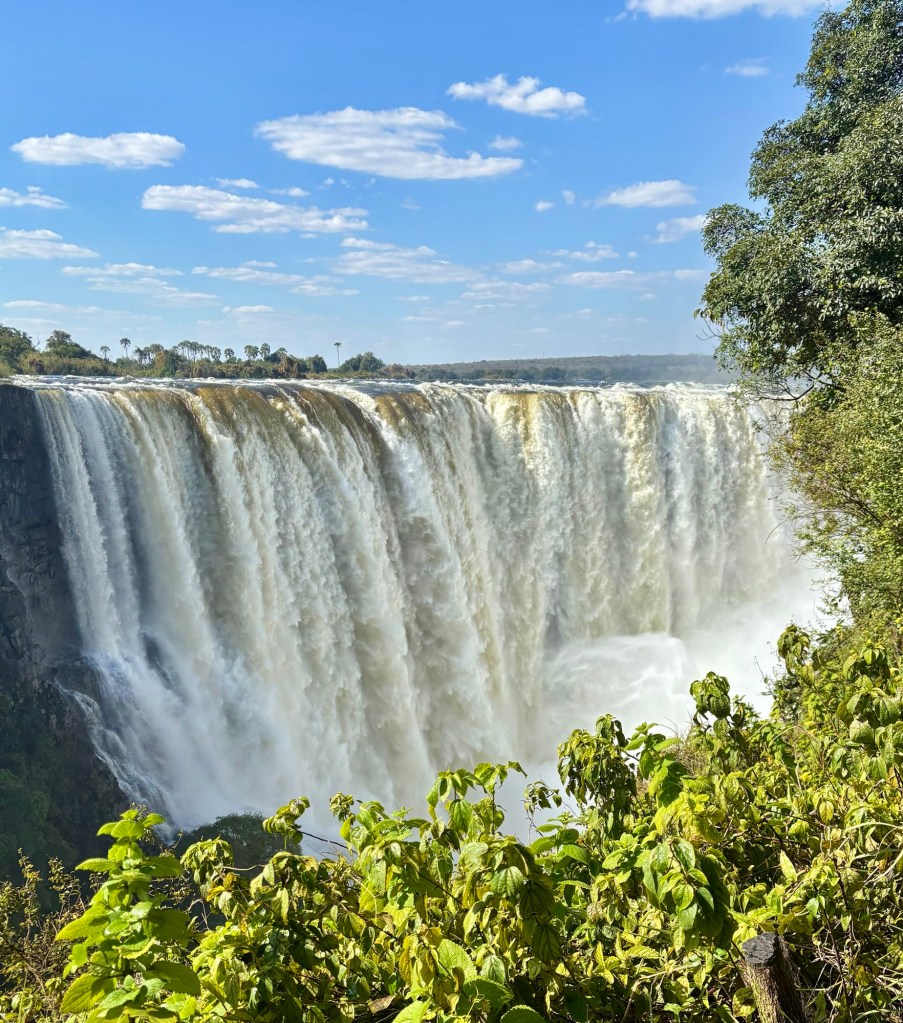
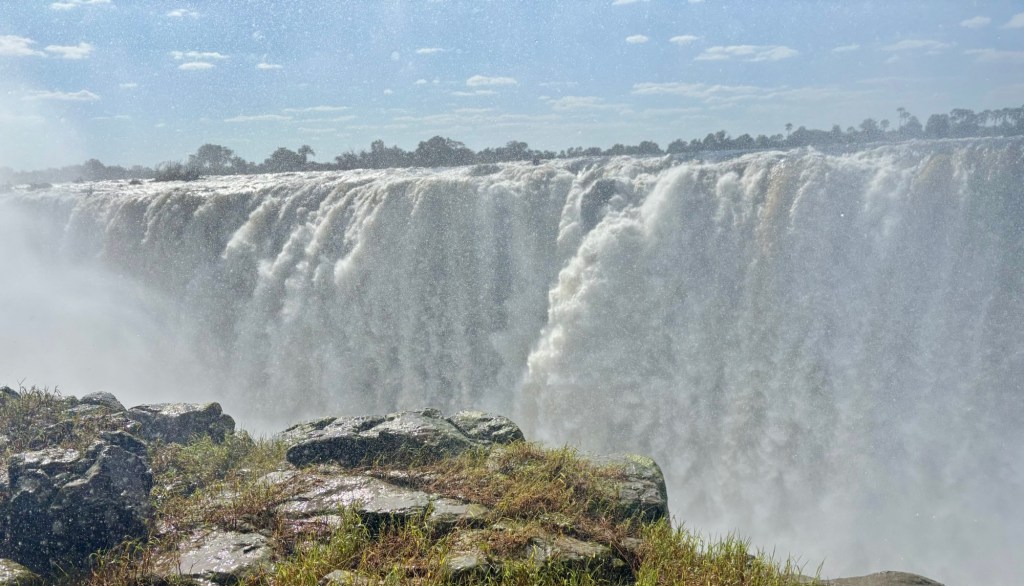
Victoria Falls is one of the Seven Natural Wonders of the World—and during peak flow (February to May), it becomes the widest curtain of falling water on Earth.
Victoria Falls sits on the Zambezi River, which forms the border between Zimbabwe and Zambia.
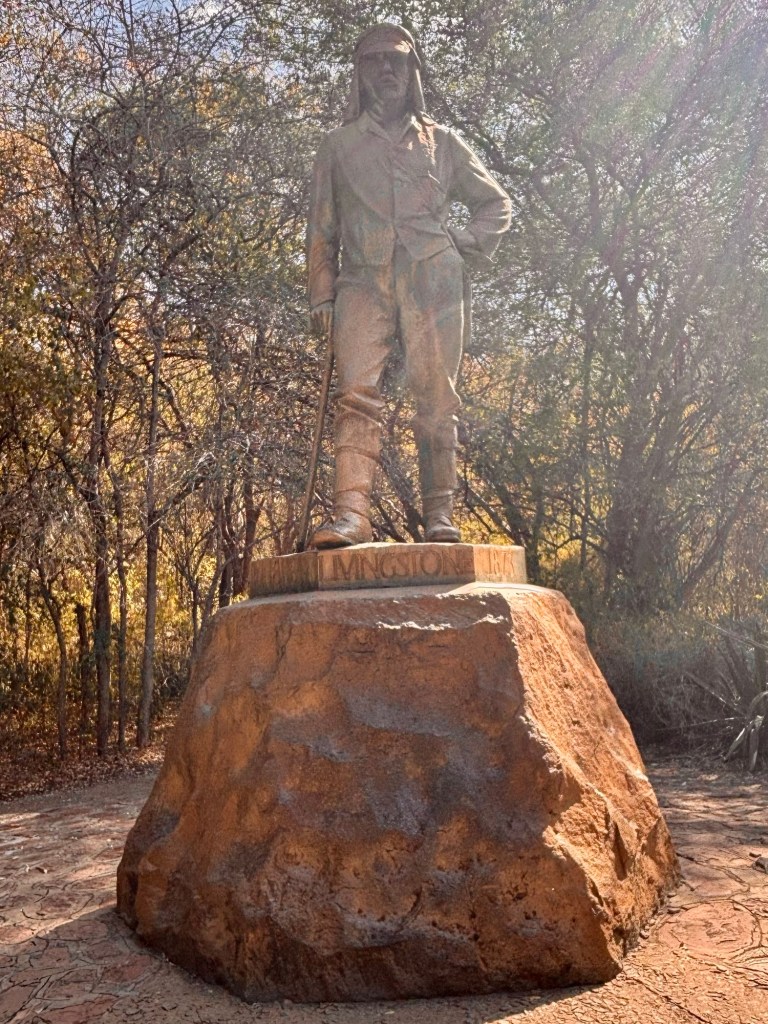
The Scottish explorer, Dr. David Livingstone, documented the falls in 1855, becoming the first known European to lay eyes on the mighty falls.
There are eight named sections of Victoria Falls, carved by flowing water over thousands of years. Even now, Mother Nature is shaping a ninth. Geologists estimate it will be complete in about 1,500 years.
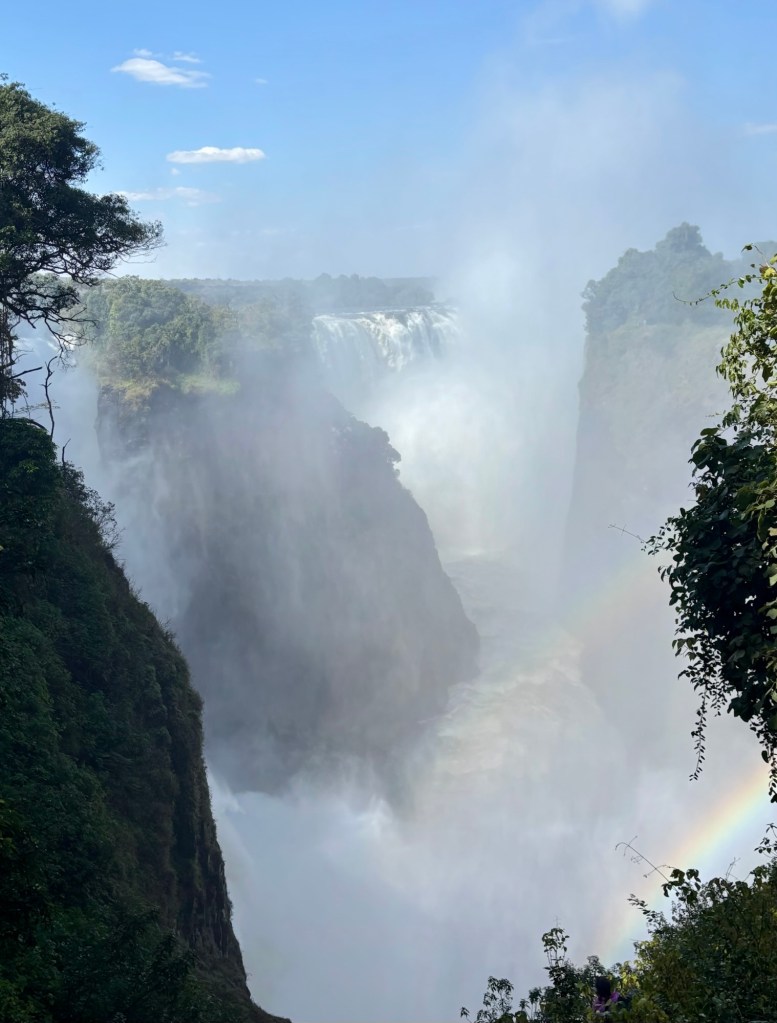
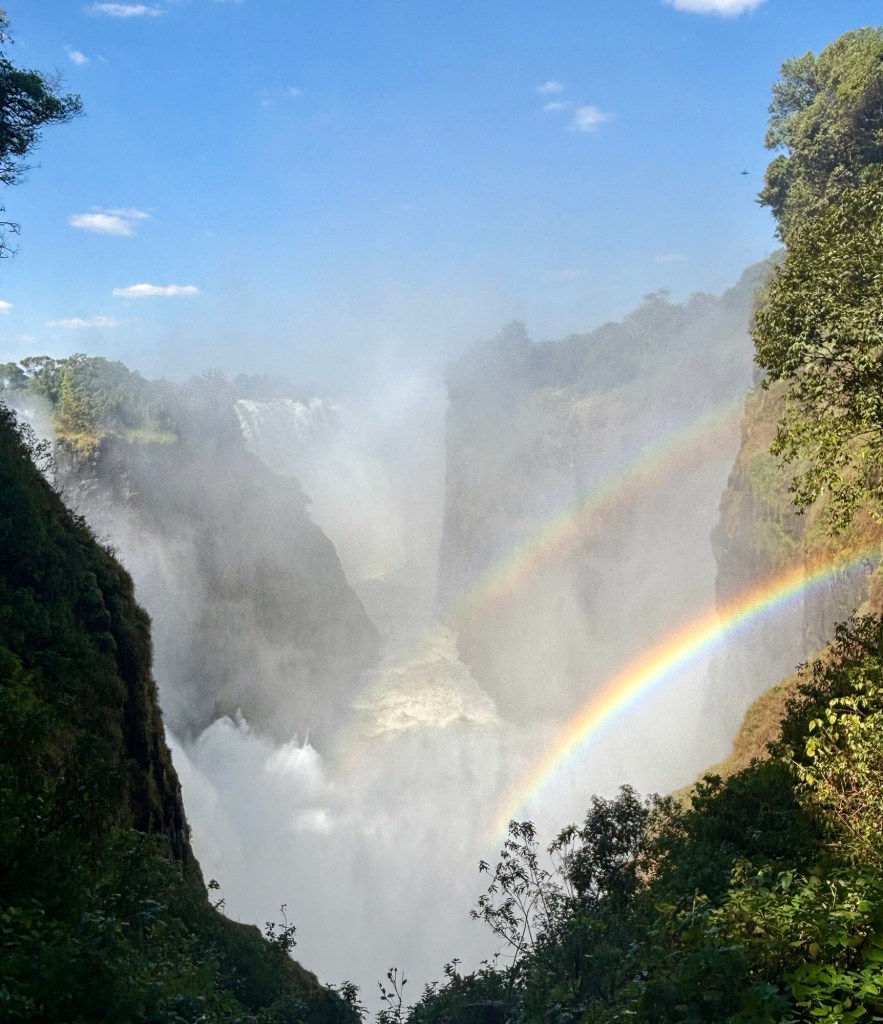
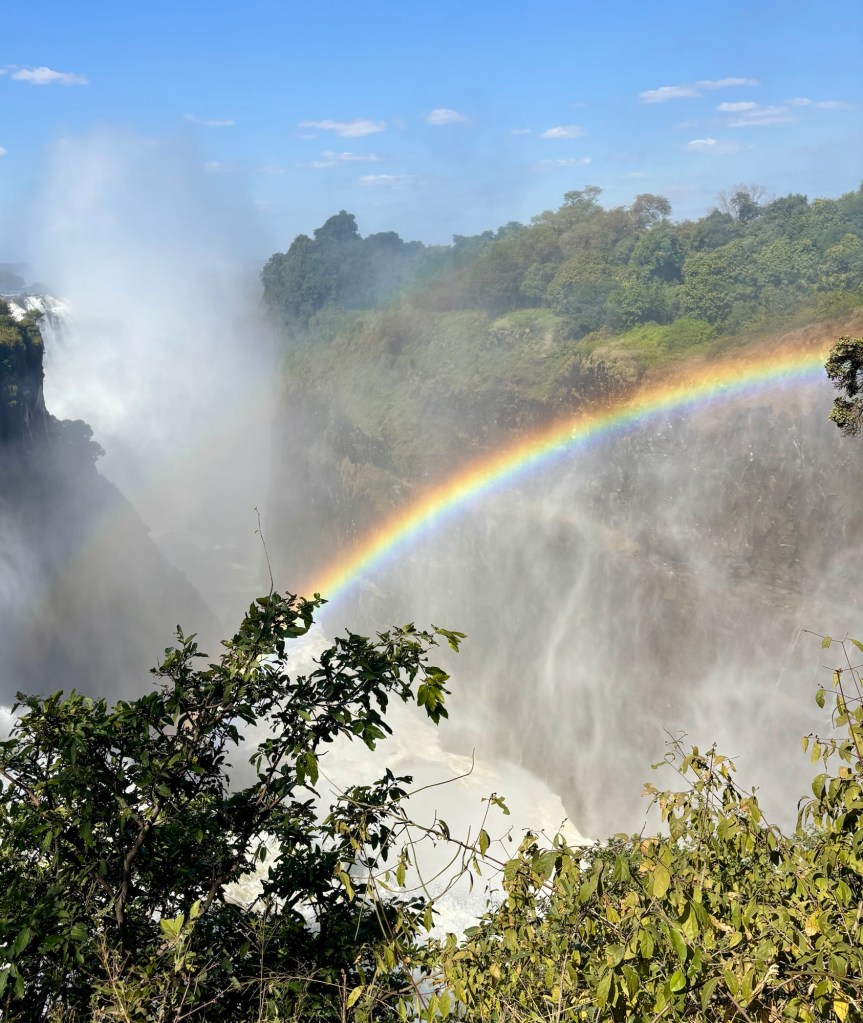
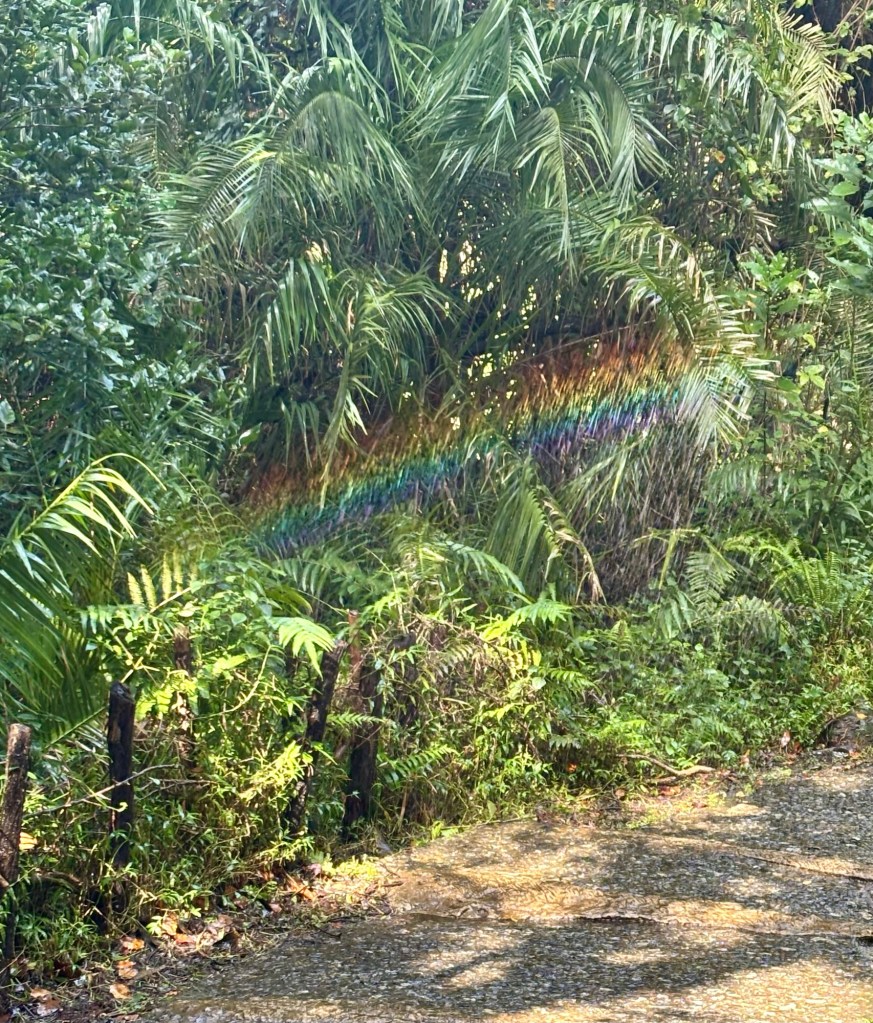
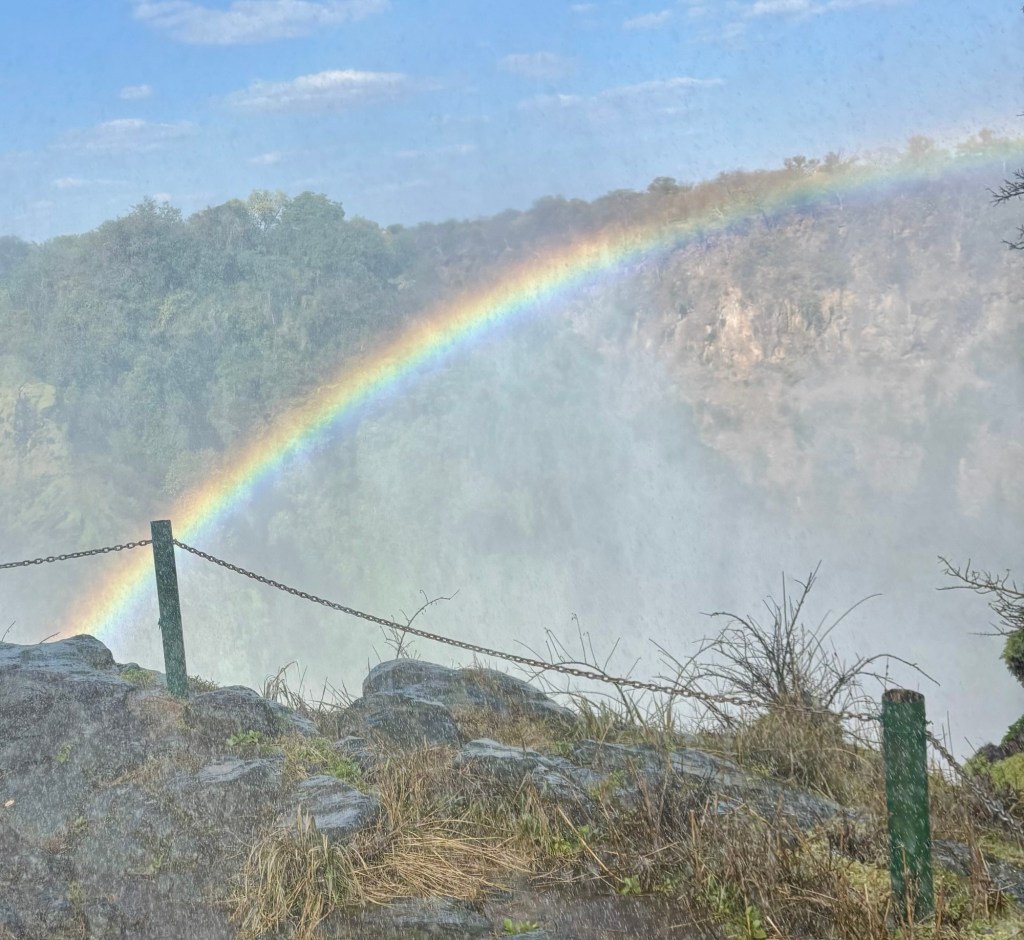
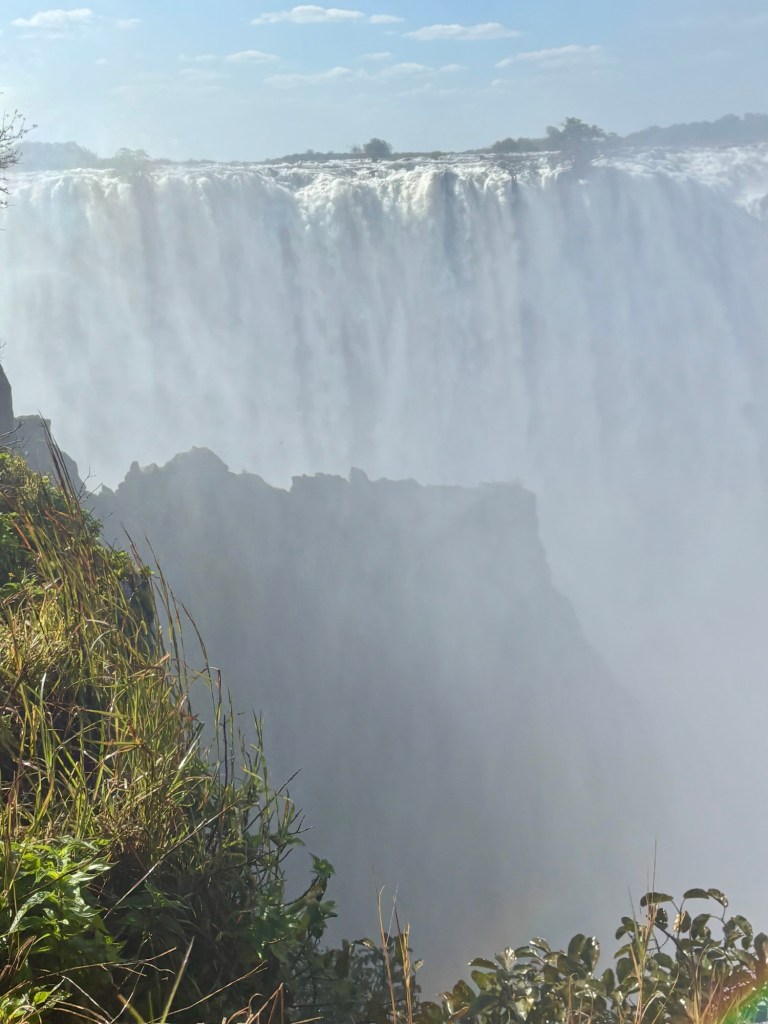
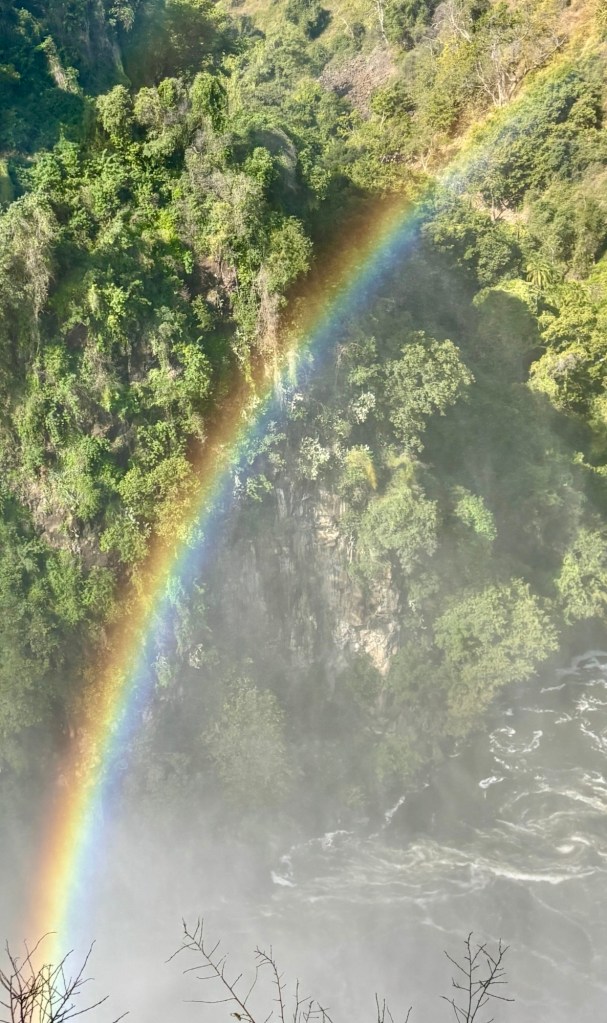
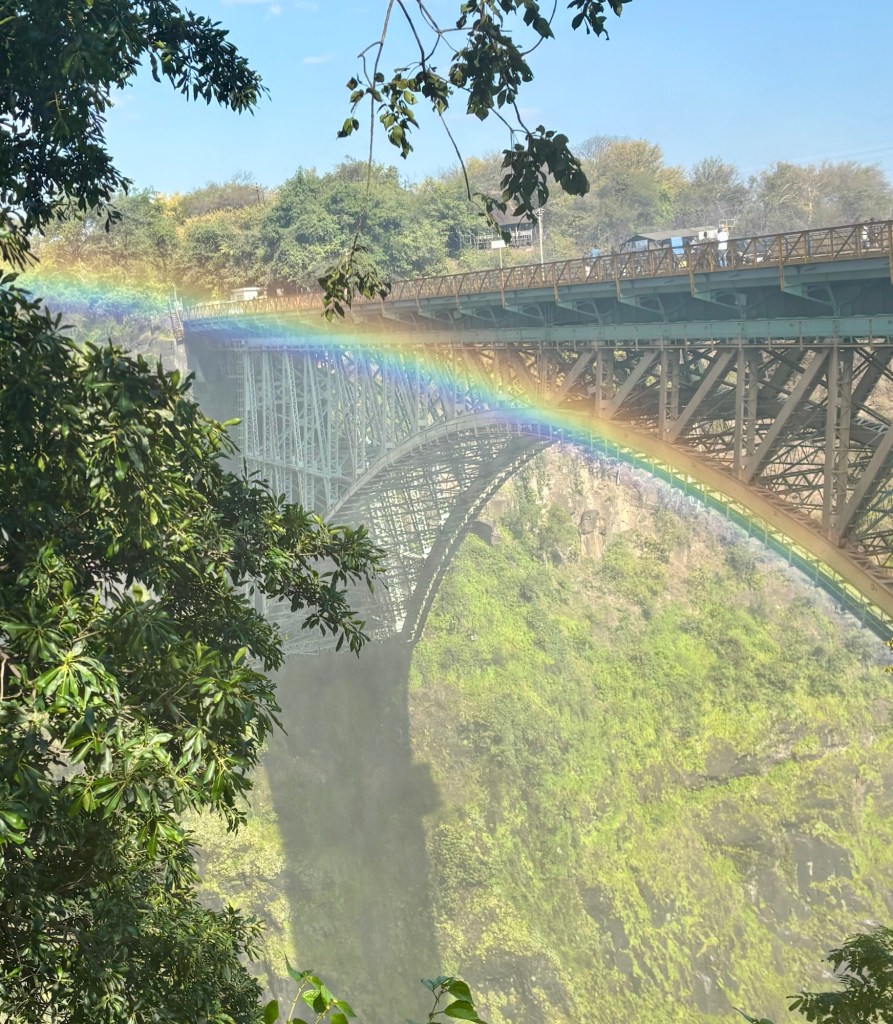
Rainbow Falls is the tallest section of Victoria Falls, plunging 354 feet. True to its name, it’s famous for the dramatic rainbows that arc through its mist.
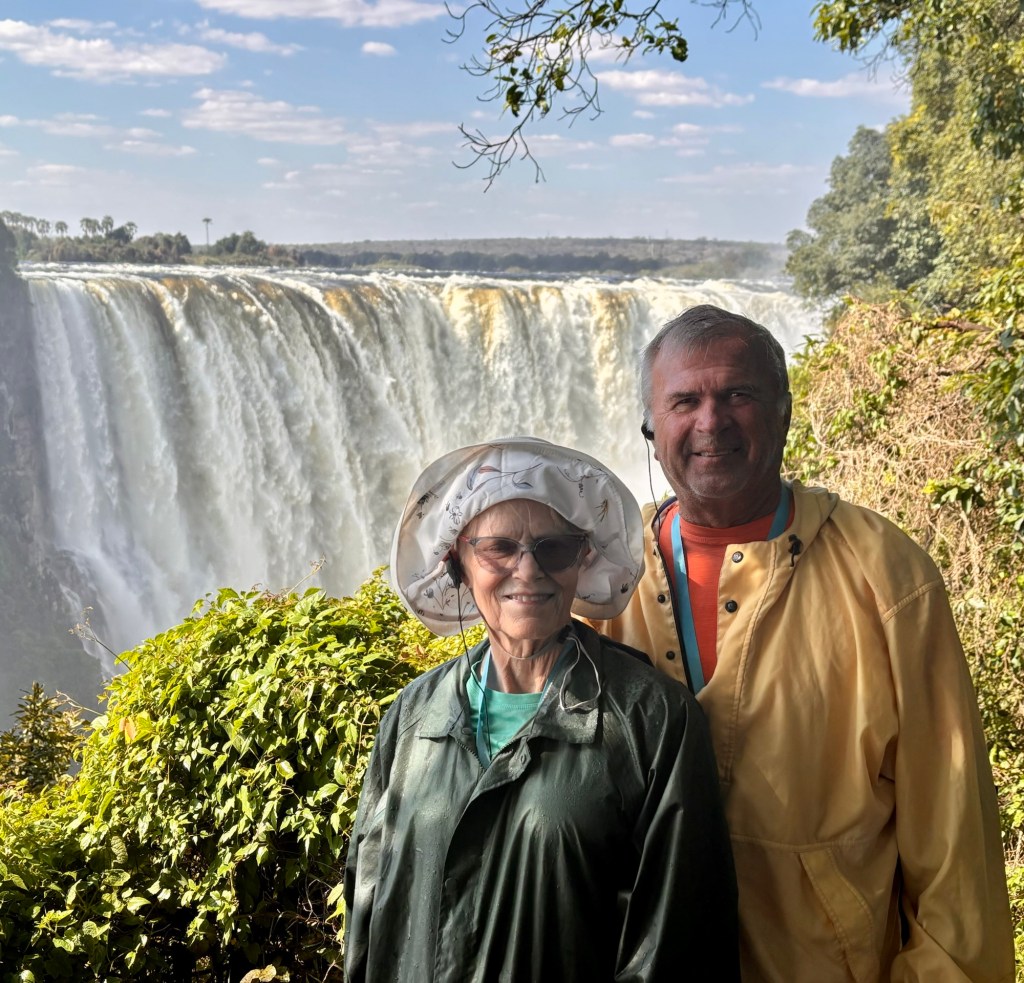
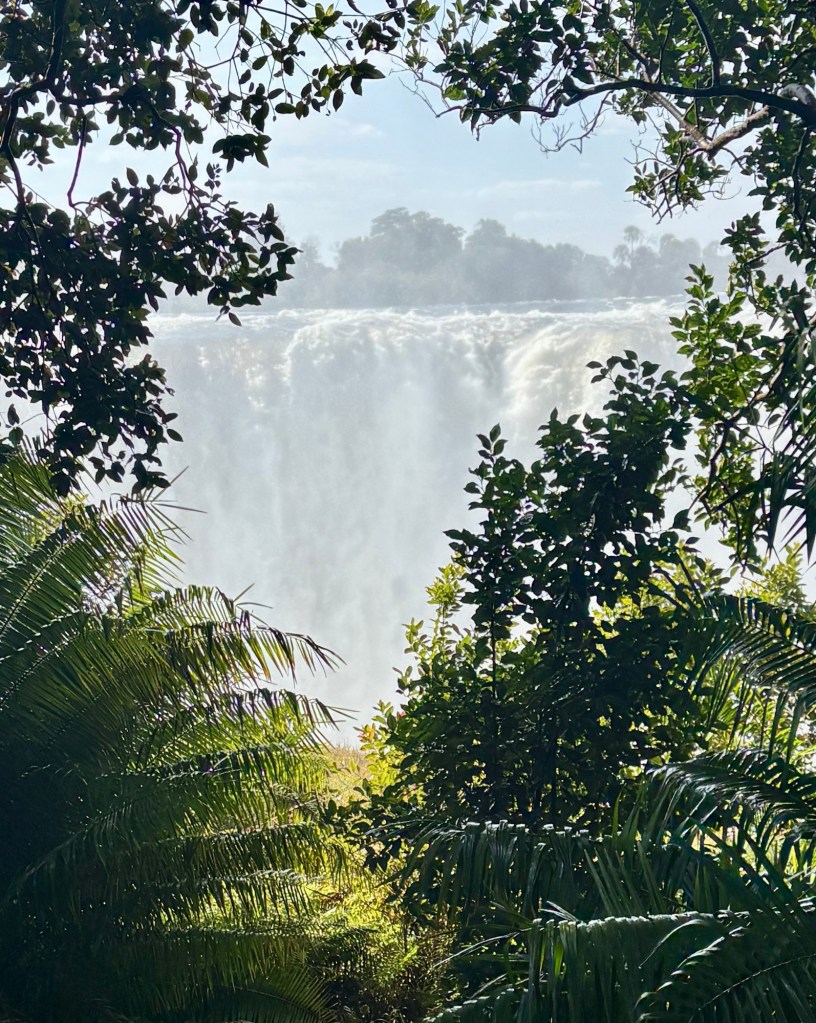
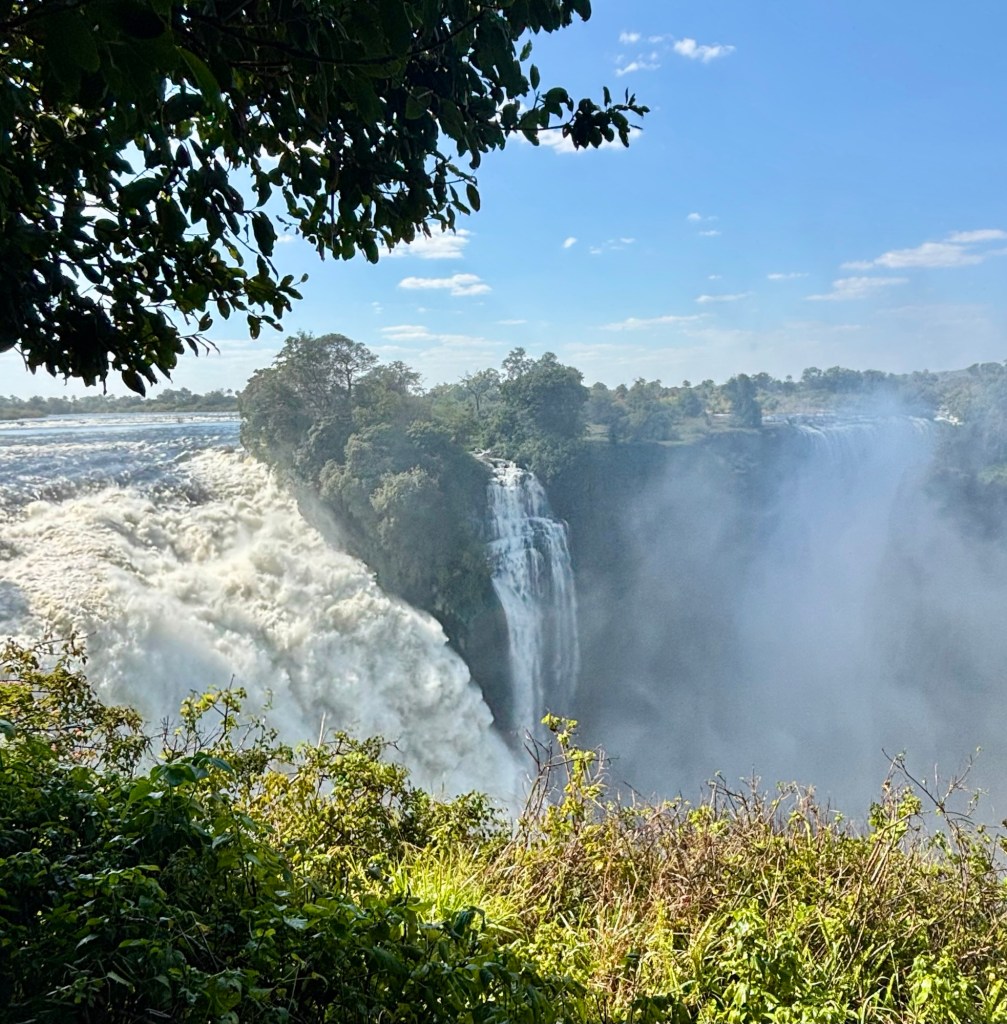
We walked the Rainforest Trail, which winds past 16 different viewpoints. Despite the sunny skies, we were soaked to the bone—drenched by the constant mist blowing off the falls. In some spots, the spray was so thick you couldn’t see a thing from the viewpoints.
Most of the intelligent people in our group bailed somewhere between viewpoints 12 and 14, wisely retreating from the relentless soaking mist. One idiot—me—kept going all the way to the final viewpoint: the Victoria Falls Bridge.
Hope you enjoyed Victoria Falls—next stop: Cape Town!
We set out on our final morning game drive with one goal in mind: wild dogs. They usually hunt at dawn and dusk, so we were hoping to catch them in action before the day heated up.
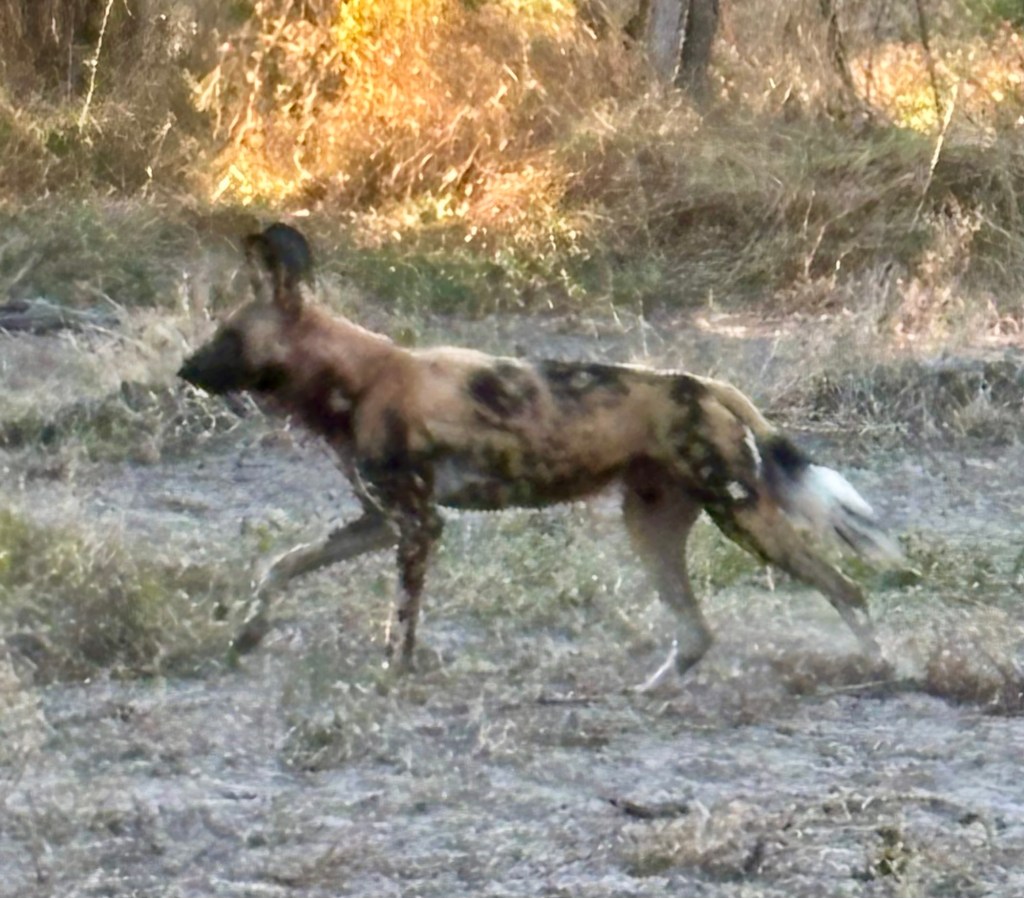
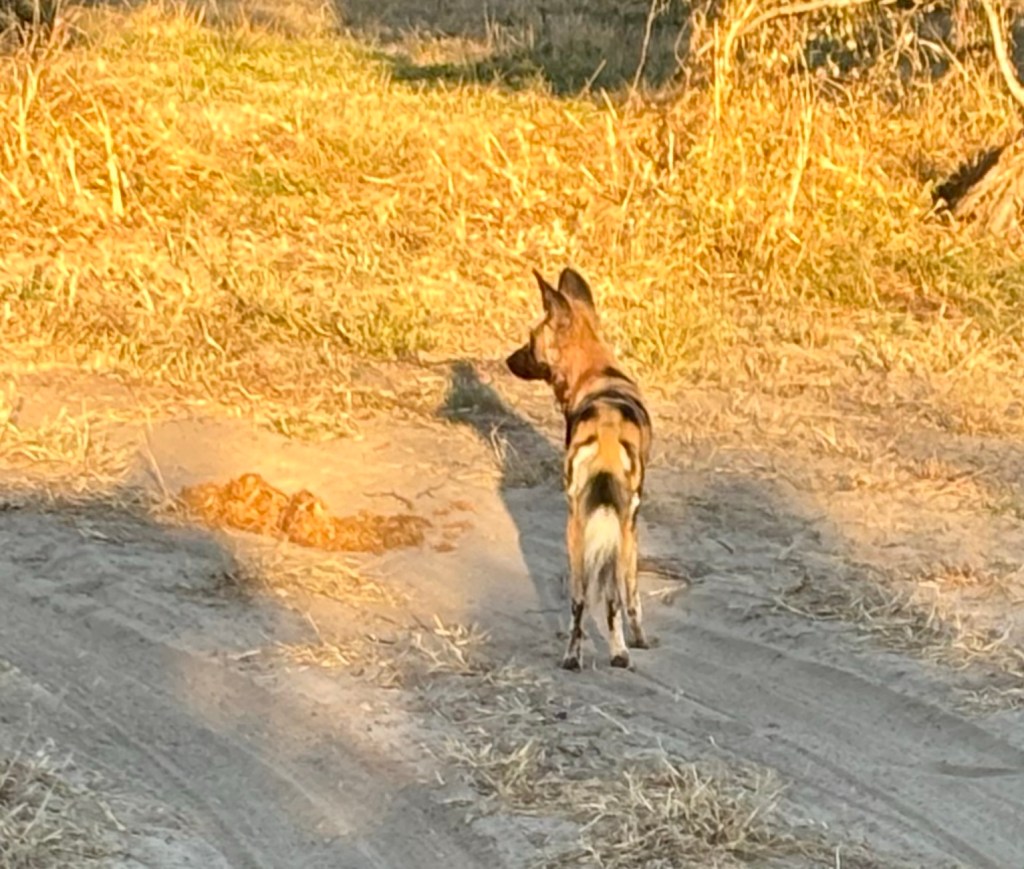
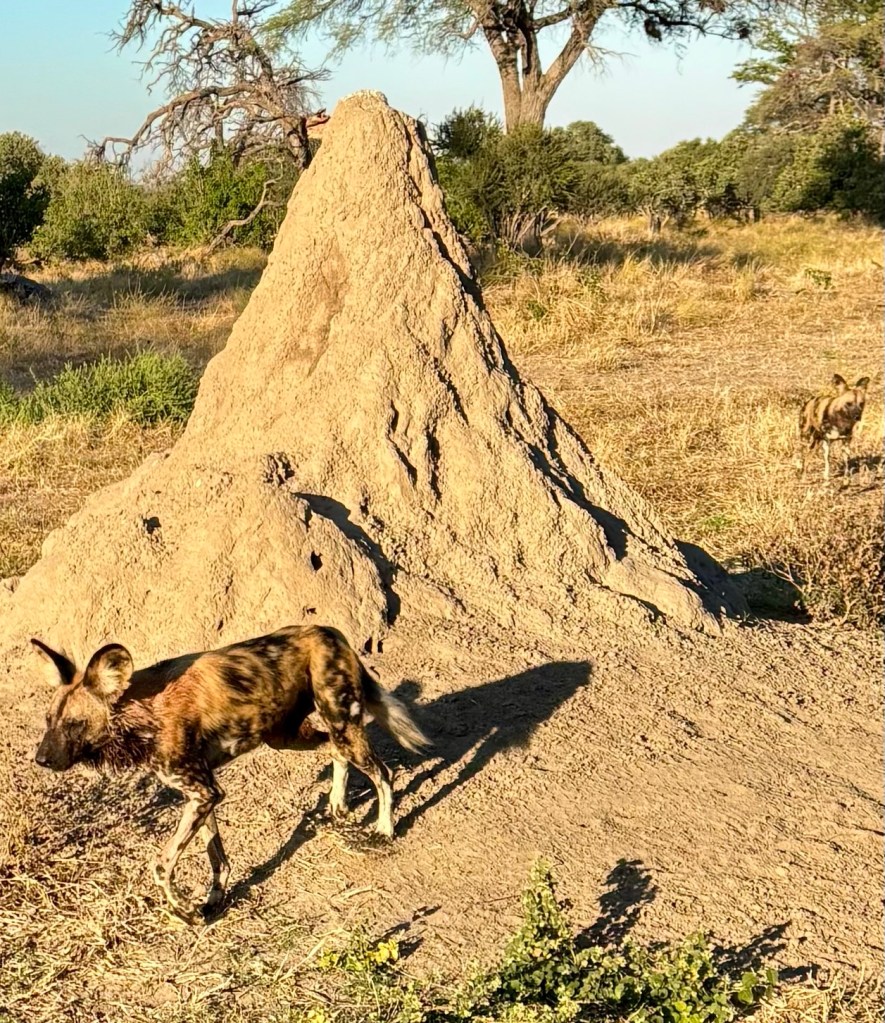
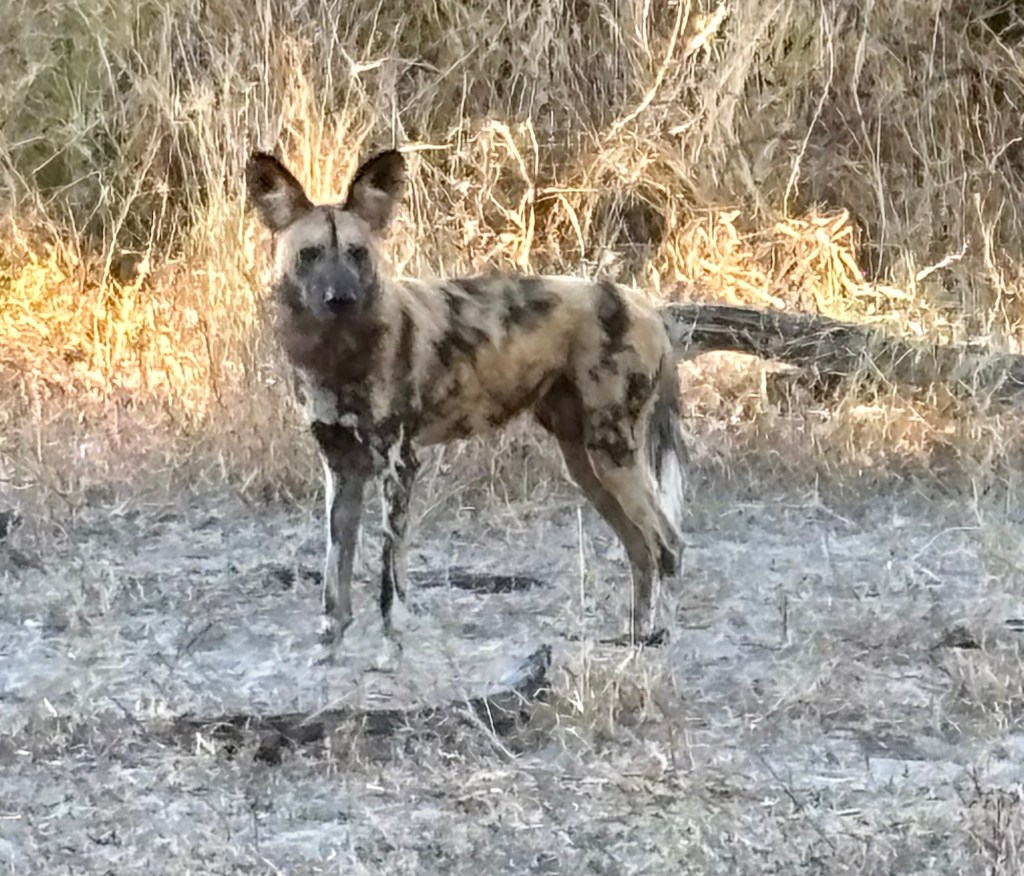
The term “wild dog” carries a negative stigma for many people. Because these unique predators are highly endangered, conservationists have begun using the name “painted dogs” instead—a nod to their striking, patchwork coats.
Although we didn’t catch the painted dogs in action, we did come across plenty of other wildlife.
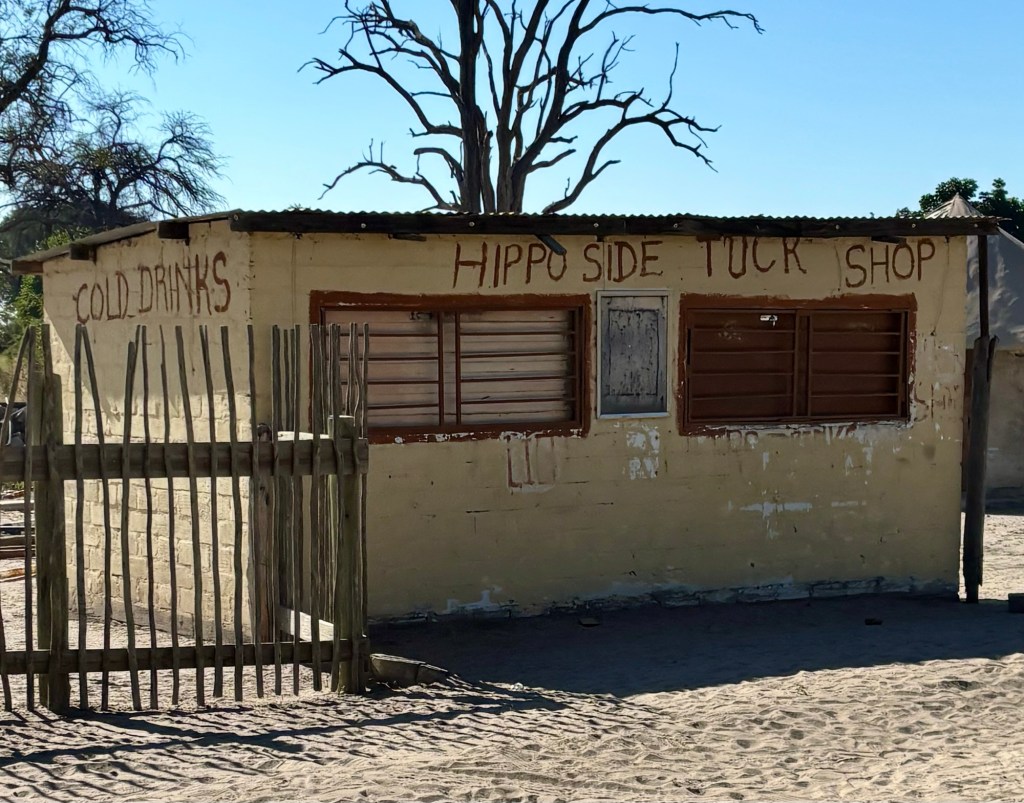
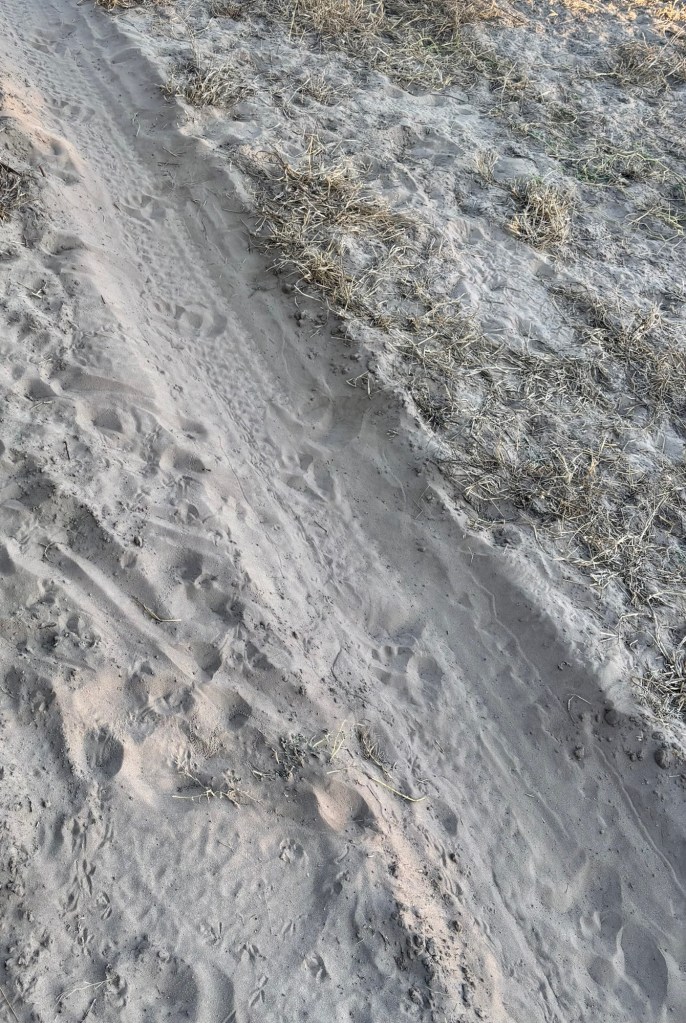
Our drive shifted focus when our guides, Dima and Smarts, got word of a lion sighting nearby. We didn’t spot the cat, but its tracks led us uncomfortably close to the village of Mababe. It’s got to be a bit unsettling knowing a big predator could come knocking at your door—invited or not.
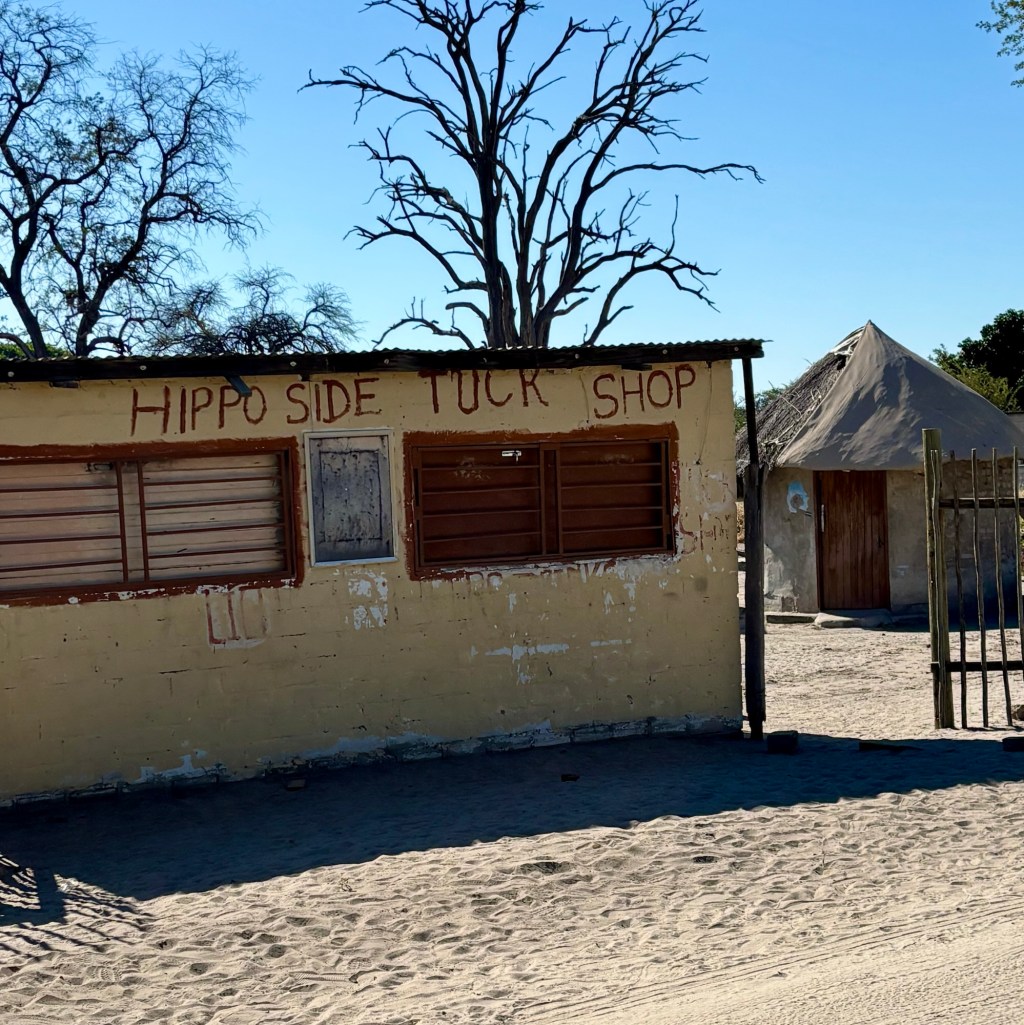
Mababe’s 7-11Tuck owner’s house to right
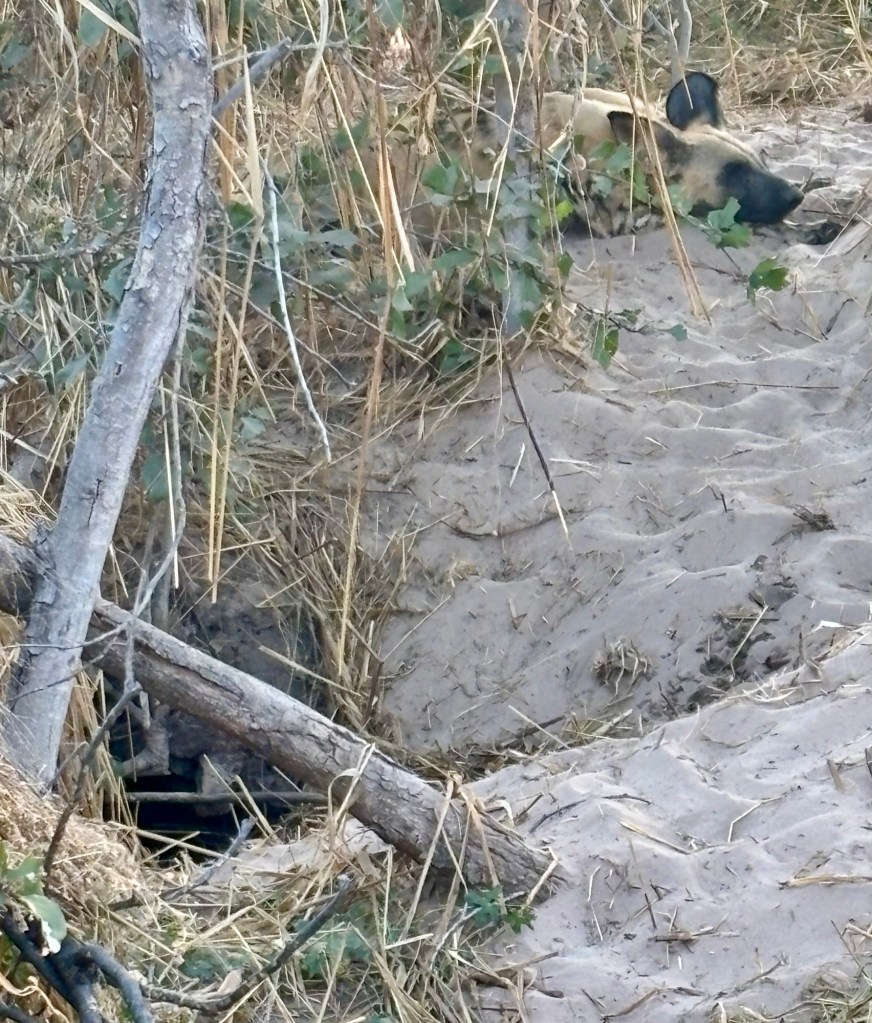
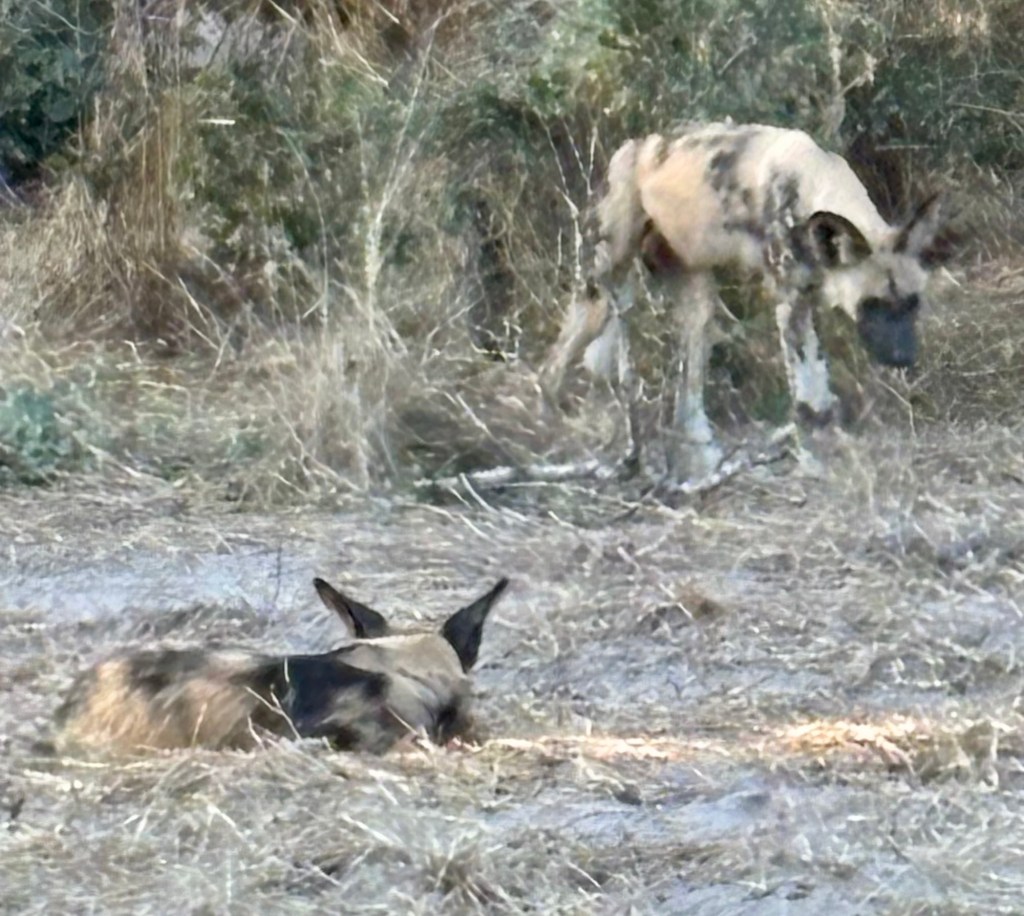
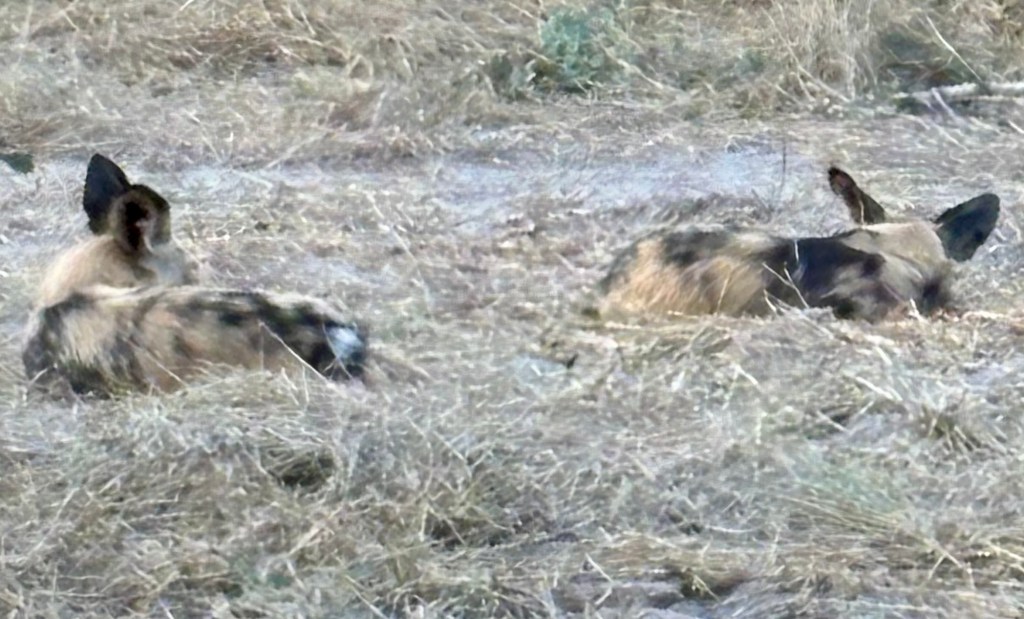
That afternoon, we returned to the painted dogs—a pack of fourteen. Unbothered by our presence, they dozed in the shade, conserving energy for the evening hunt. While most lounged in loose clusters, the alpha female was alert near the den, guarding the pups hidden below.
Then, all at once, they stirred—some silent signal had called them to the hunt.
We tried to follow them as they slipped into hunting mode, but they soon outpaced us and vanished into the bush. As the sun dipped low, our guides asked whether we wanted to keep tracking the dogs or pause for a sundowner.
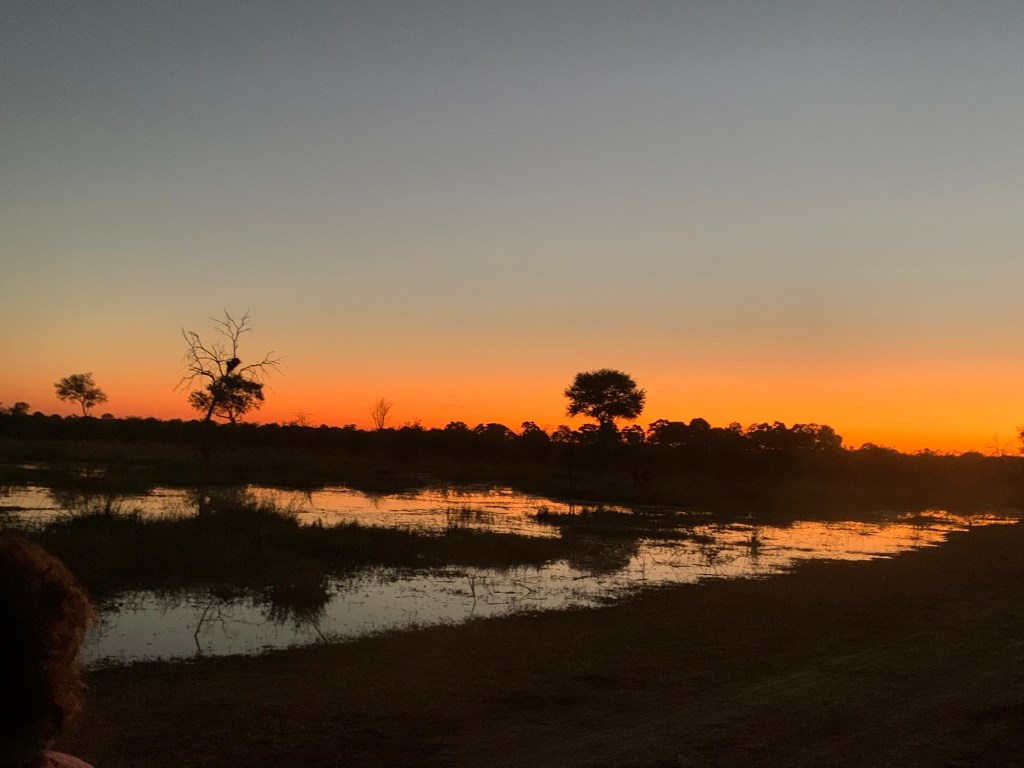
While I wanted to keep after the dogs, majority ruled. I joked to Kris that maybe the pack would bring the chase to us while we watched the sunset with a beer and some snacks. Honestly, that didn’t exactly suck.
As darkness settled over the landscape, we climbed back into the jeeps to return to camp. We had parked just ten feet from the water when, out of nowhere, two impalas burst past—racing between us and the riverbank. We’d seen plenty of impalas on safari, but never this close, and never moving so fast.
As the jeep moved forward, the reason for the impalas’ frantic sprint became clear—the painted dogs had set an ambush. One impala slipped through. The other… not so lucky.
WARNING: This video contains graphic footage of a real animal attack. Viewer discretion is advised.
Watching the kill felt like something straight out of National Geographic—raw, real, and electrifying. Even those who felt for the impala couldn’t stop talking about what we’d just witnessed.
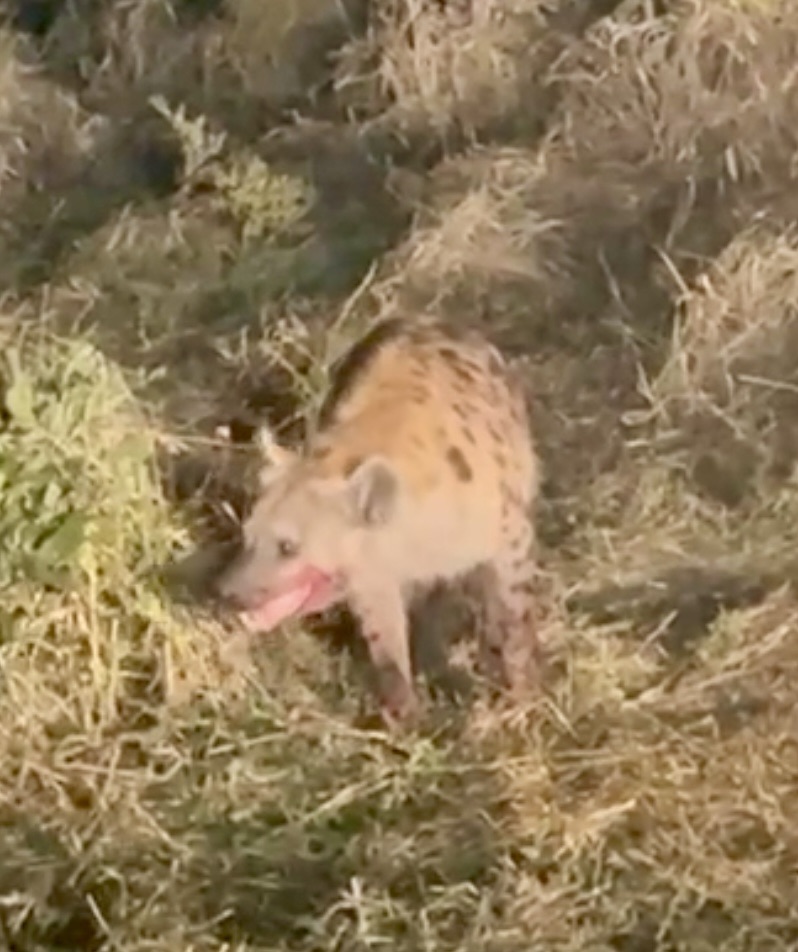
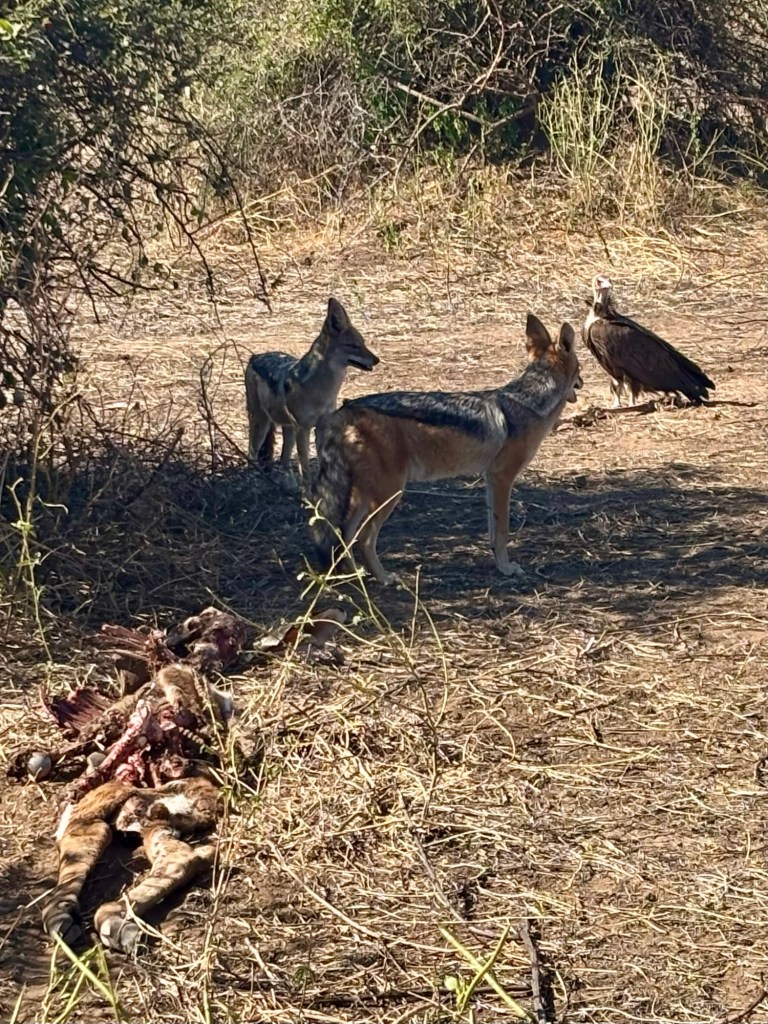
I came away with a much deeper respect for the painted dogs. I knew they were skilled hunters, but I hadn’t realized how effective they were at keeping hyenas at bay. Despite being significantly larger, the hyenas were no match for the pack, which held its ground and left them with little more than scraps.
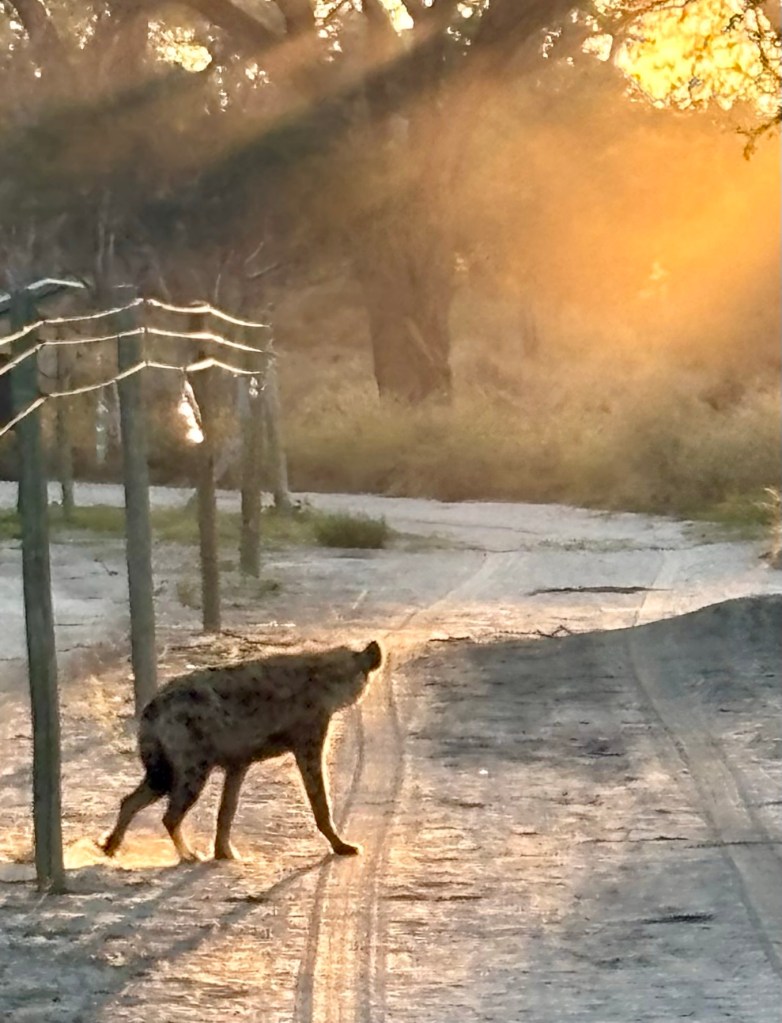
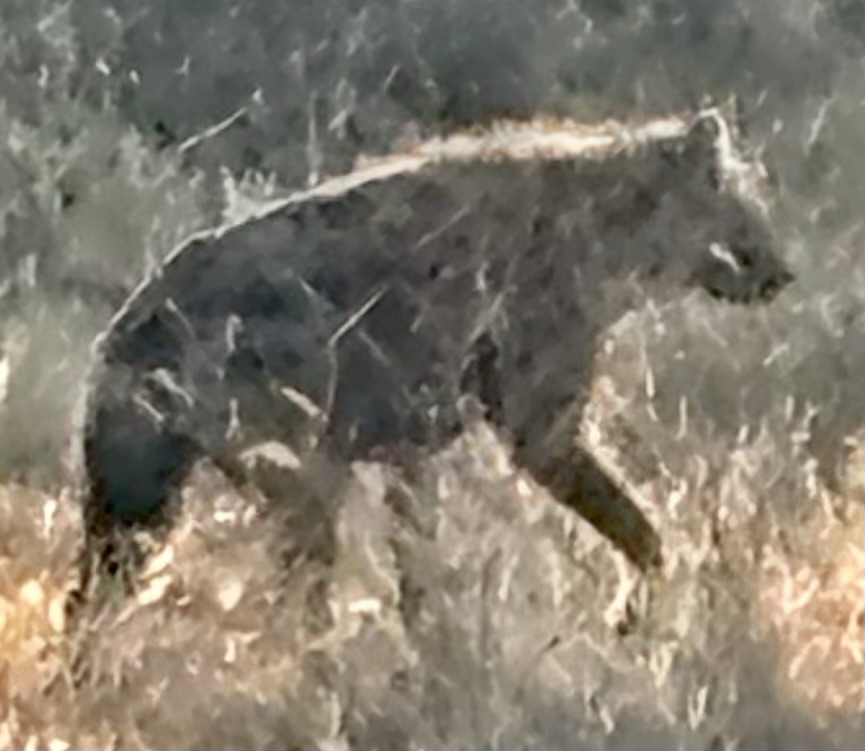
Hungry hyena.
Our 2 days and 3 nights in the Okavango Delta were unforgettable. We saw lions feeding on a Cape buffalo they’d killed right in our camp, witnessed a mating lion pair deep in the bush, and watched a pack of painted dogs take down an impala—leaving nothing behind for the vultures. It was an incredible way to end an already remarkable safari.
While our days in the bush may be over, we’re not heading home quite yet. A trip to Victoria Falls and 4 nights in Cape Town, South Africa await.
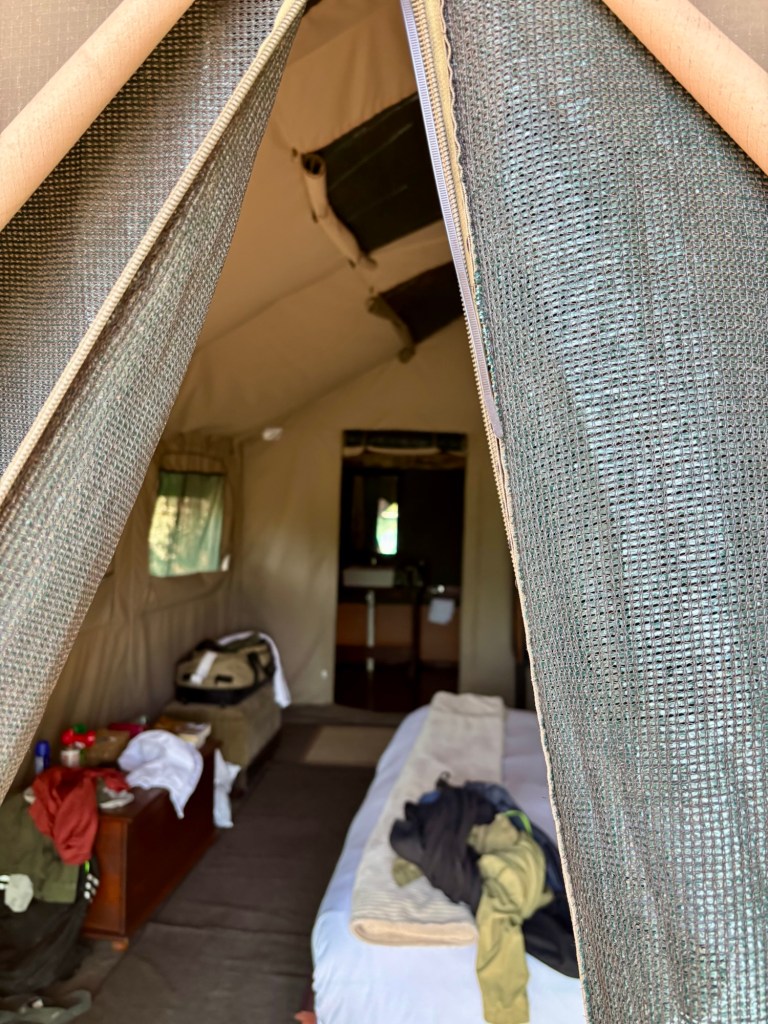
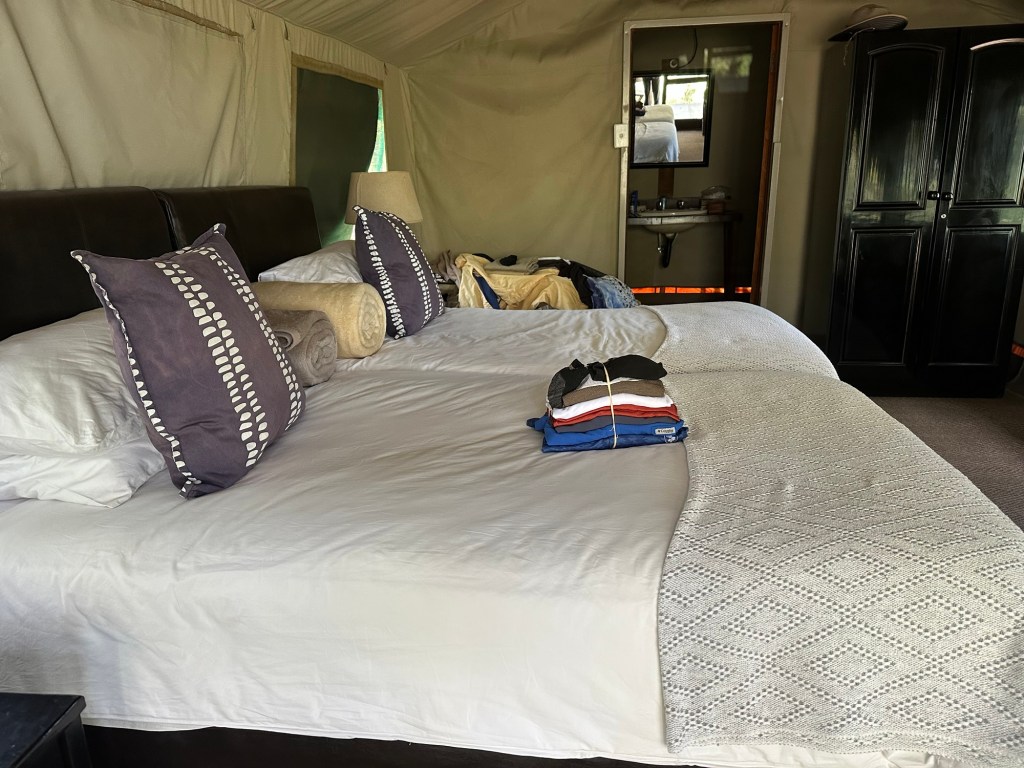
After watching the lions’ all-you-can-eat buffet on Sunday evening, we retreated to our tent for the night. And yes, it was an actual tent—not some glamping fantasy like we’d been in before. We’re talking canvas walls, canvas floor, and a zippered door that probably wouldn’t stop a determined squirrel, let alone a lion. It sat on a wooden platform, which felt reassuringly solid—until you remembered lions can jump. Thankfully, there was a bathroom attached at the back. Lions in the camp and peeing in the bush didn’t seem like a smart combo.
As darkness fell, the night erupted in a cacophony of sounds. Hyenas whooped and cackled, circling for a chance at the Cape buffalo carcass. Lions roared and bellowed their warning, staking their claim and keeping the scavengers at bay. Even the hippos grunted from the riverbank, adding their voices to the wild chorus.
After breakfast Monday morning, we set off on our early game drive—though “drive” might be a stretch. We barely rolled out of the parking area before the action began. The carcass, after all, was sprawled just 50 yards from the main lodge
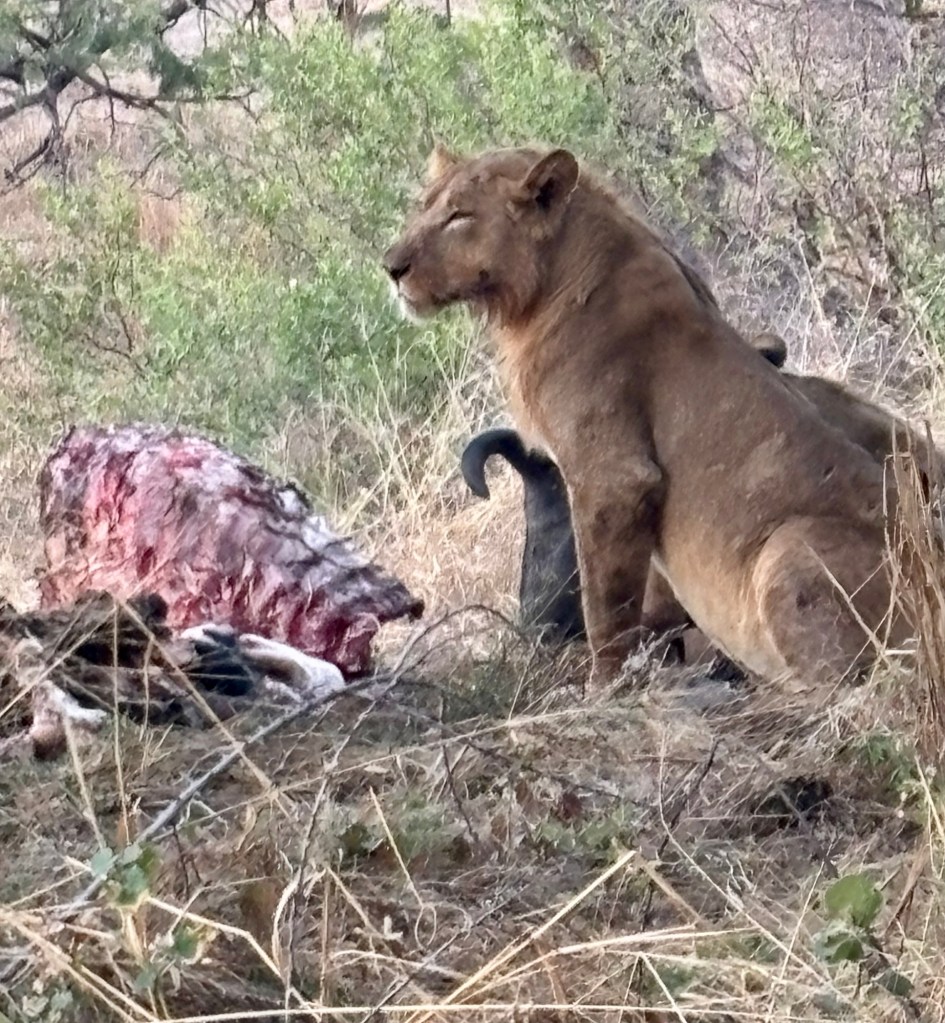
After 30 hours of feasting on their kill, the lions were finally getting close to licking the plate clean.
As we left camp, a pair of dejected hyenas slunk off in the same direction. Their midnight heist had failed, and it was time to cut their losses and sniff out the next opportunity.
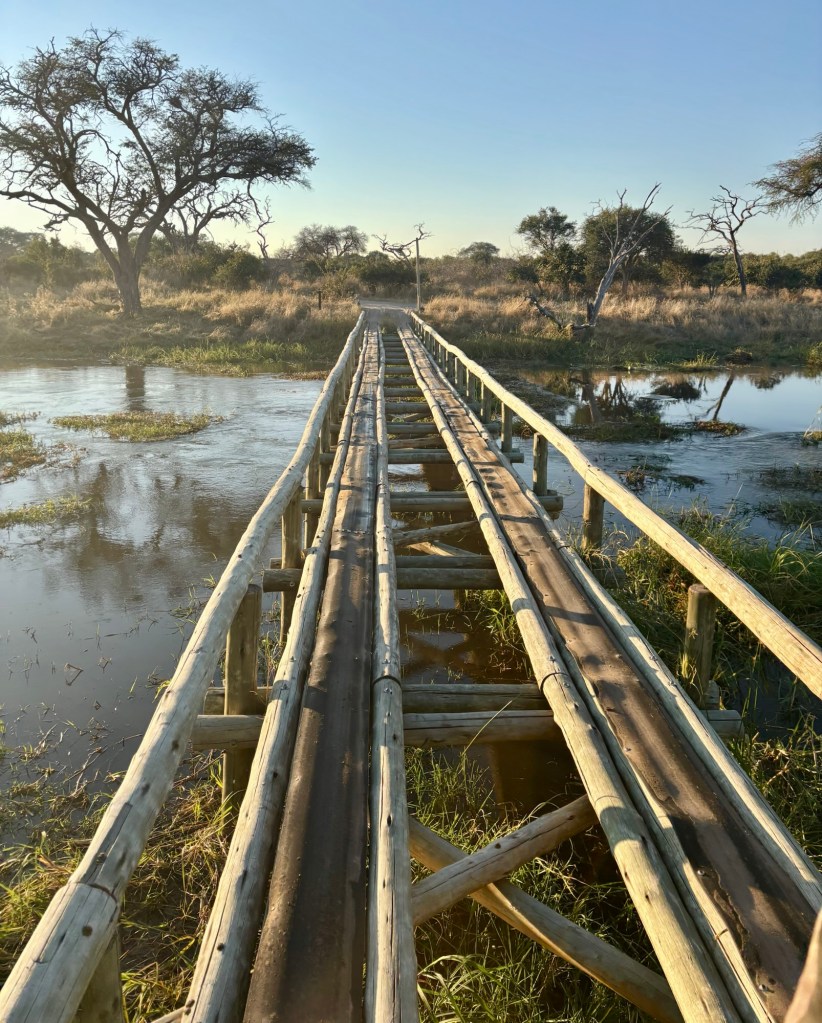
Early morning and late afternoon are prime times for spotting big cats—and that’s exactly what our guide, Dima, had in his sights. We crossed the aptly named OMG (“Oh My God”) bridge and picked up the trail of a large male.
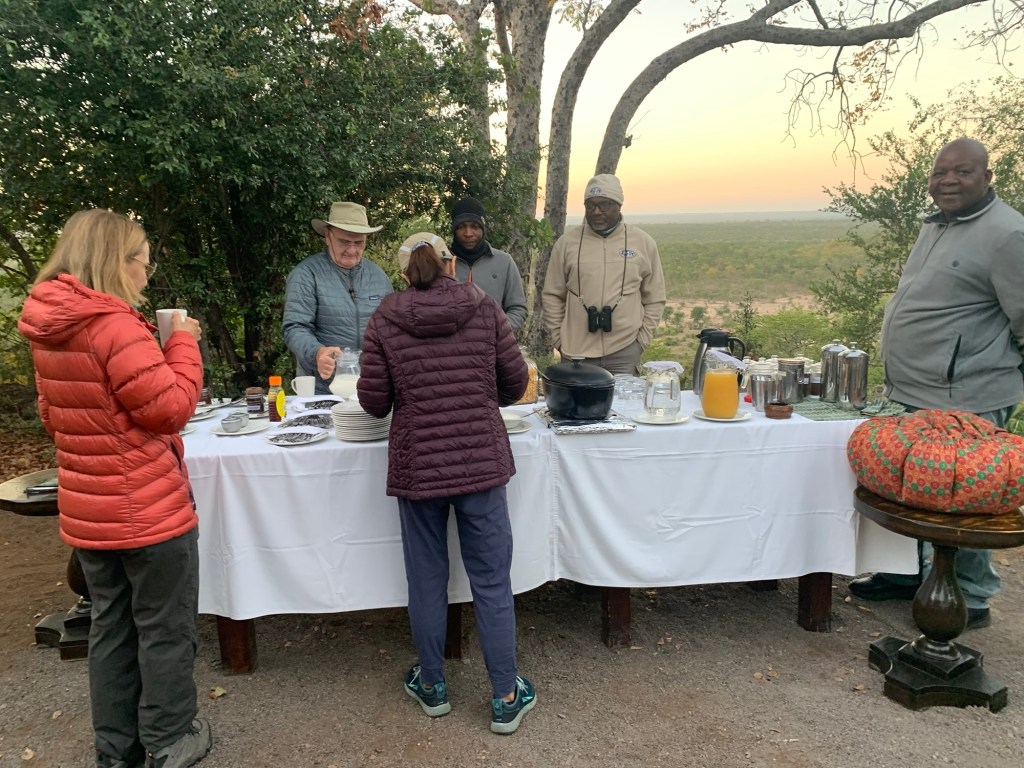
After two hours of scanning the bush for the elusive lion, we hadn’t seen so much as a twitching tail. So we pulled over by the riverbank for a well-earned mid-morning break—complete with coffee, tea, snacks, and hippos.
I’d only met Dima 24 hours earlier, but it already felt like we’d known each other for much longer. In our first conversation, he told me they always saved the best guide for last—meaning him, of course. I loved his confidence. He could laugh at himself just as easily, and his laugh was the kind that made everyone else join in.
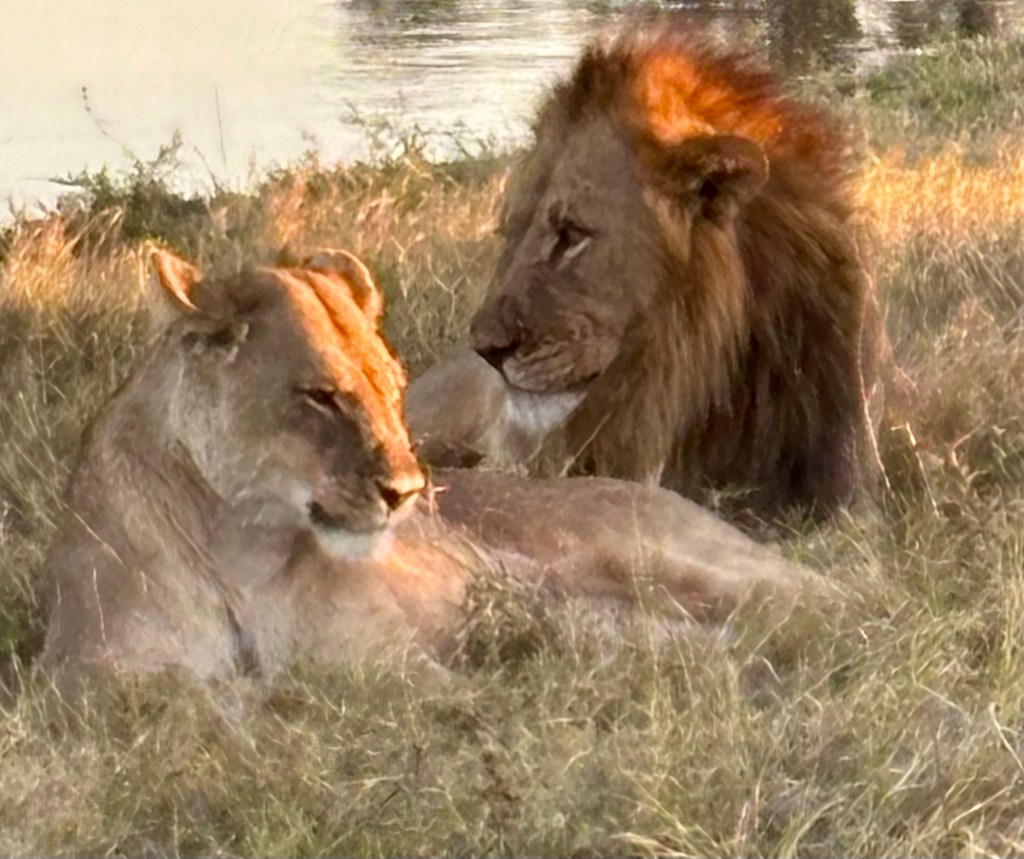
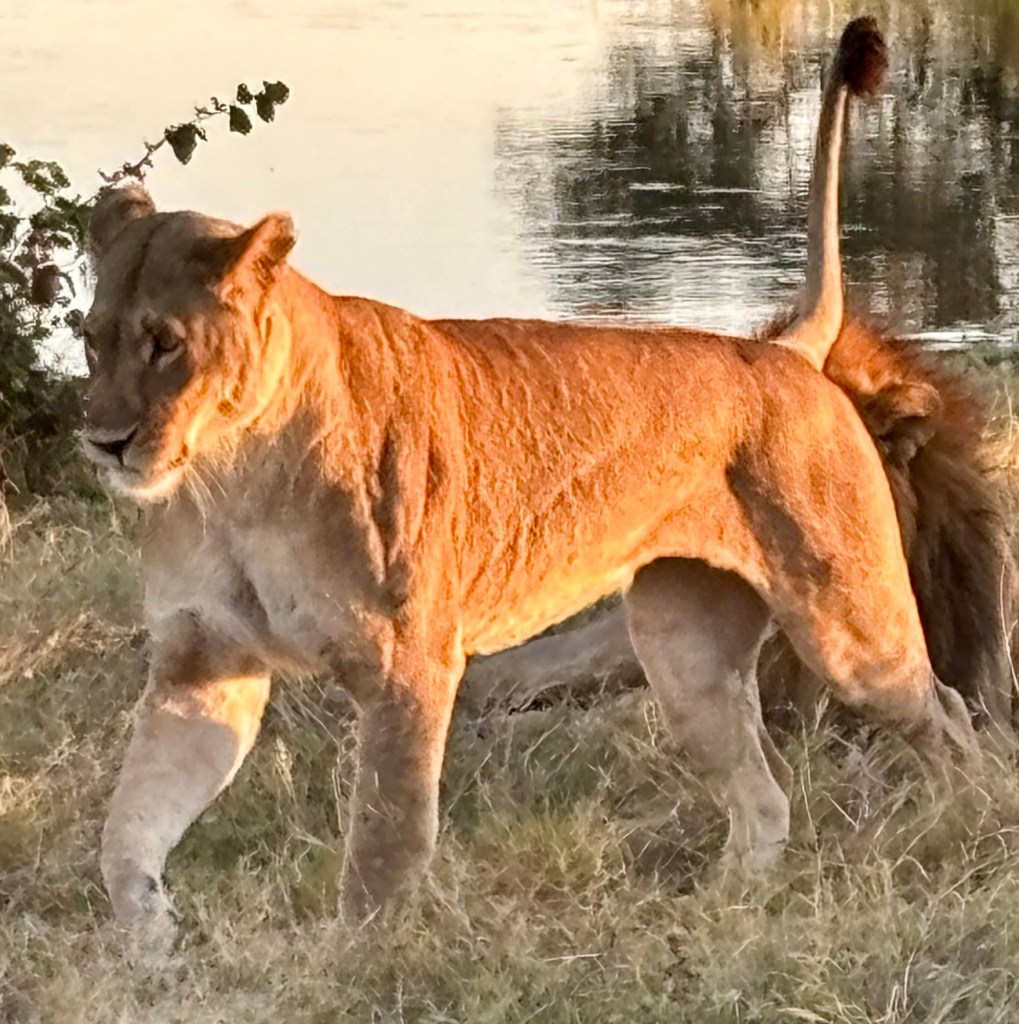
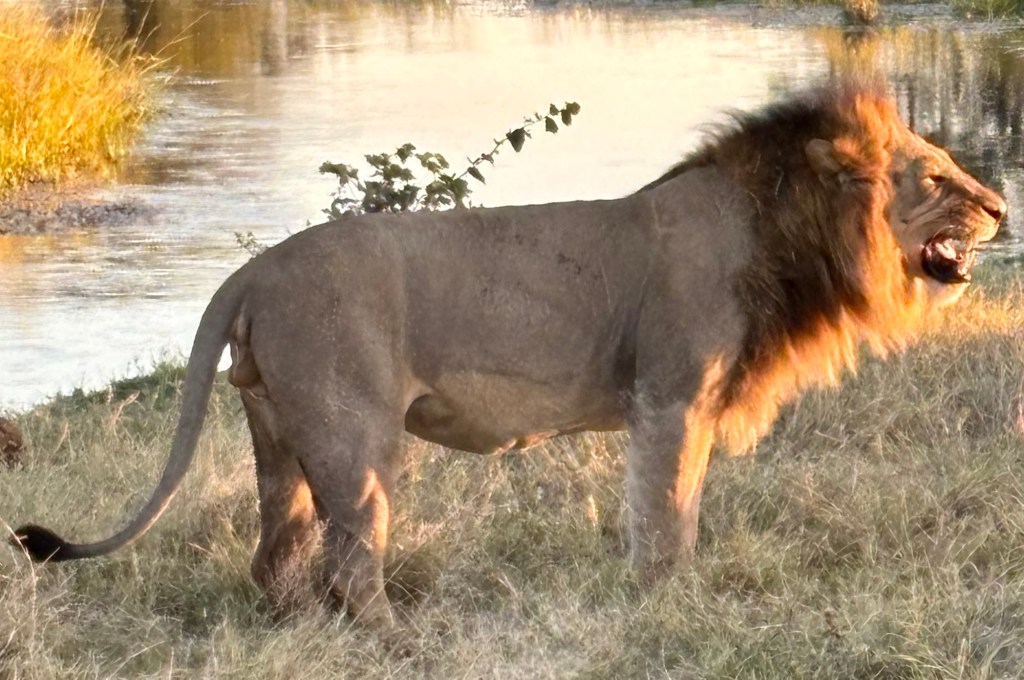
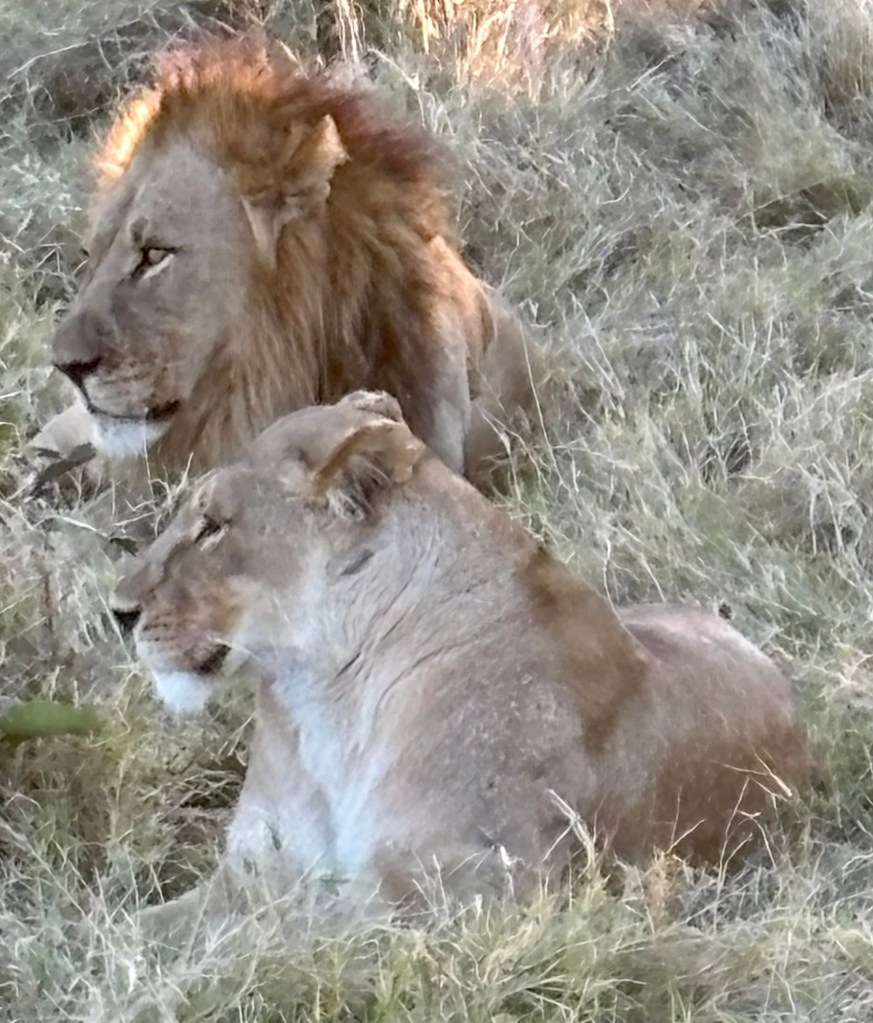
I could sense Dima’s frustration as he quietly discussed plans with our other guide, Smarts. Reports had come in about a mating pair of lions spotted in another area, so the group agreed to take it easy for the rest of the morning—and go all in on finding that pair during our afternoon drive.
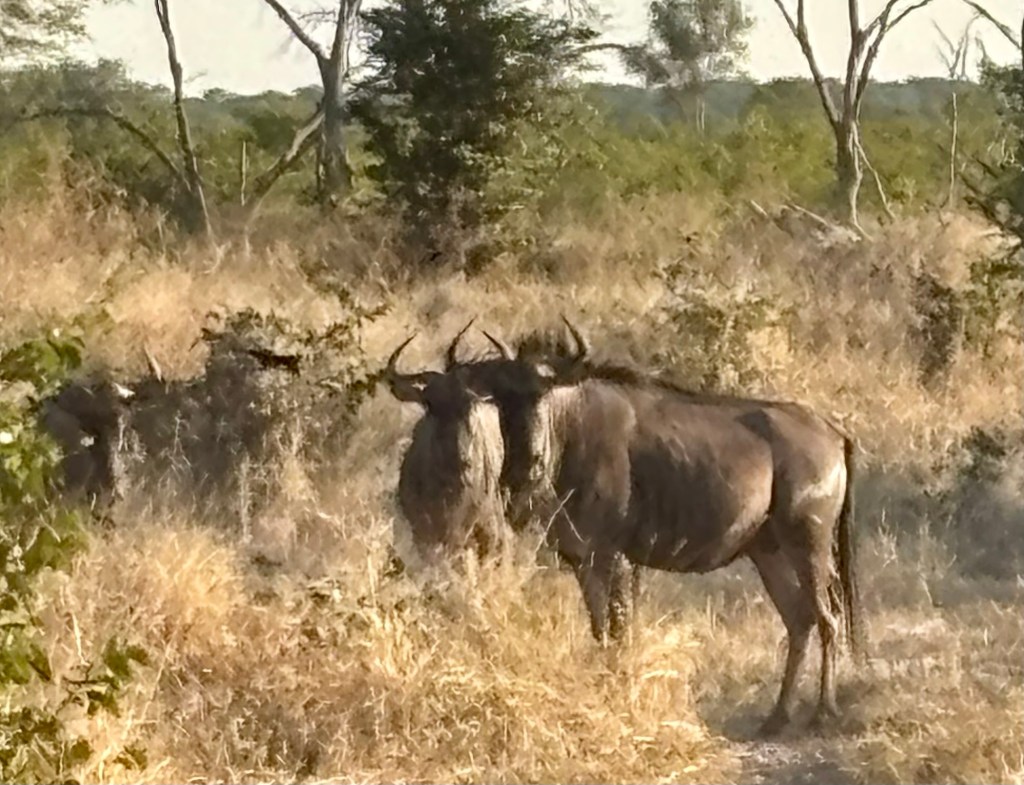
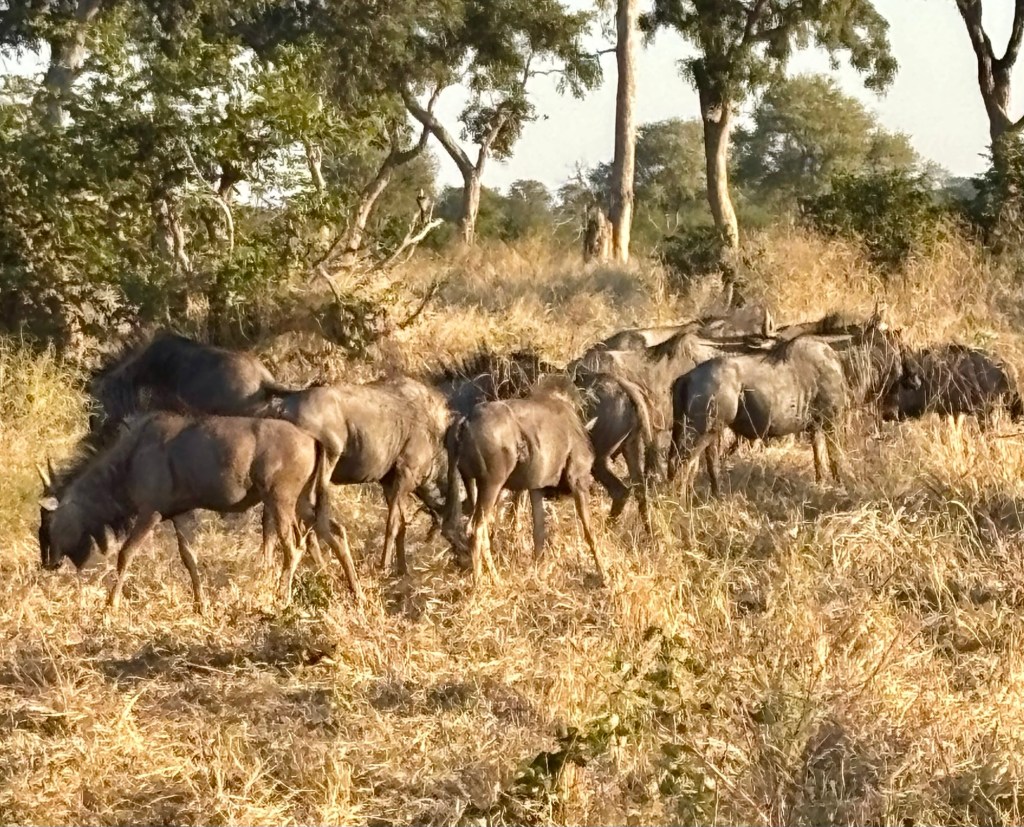
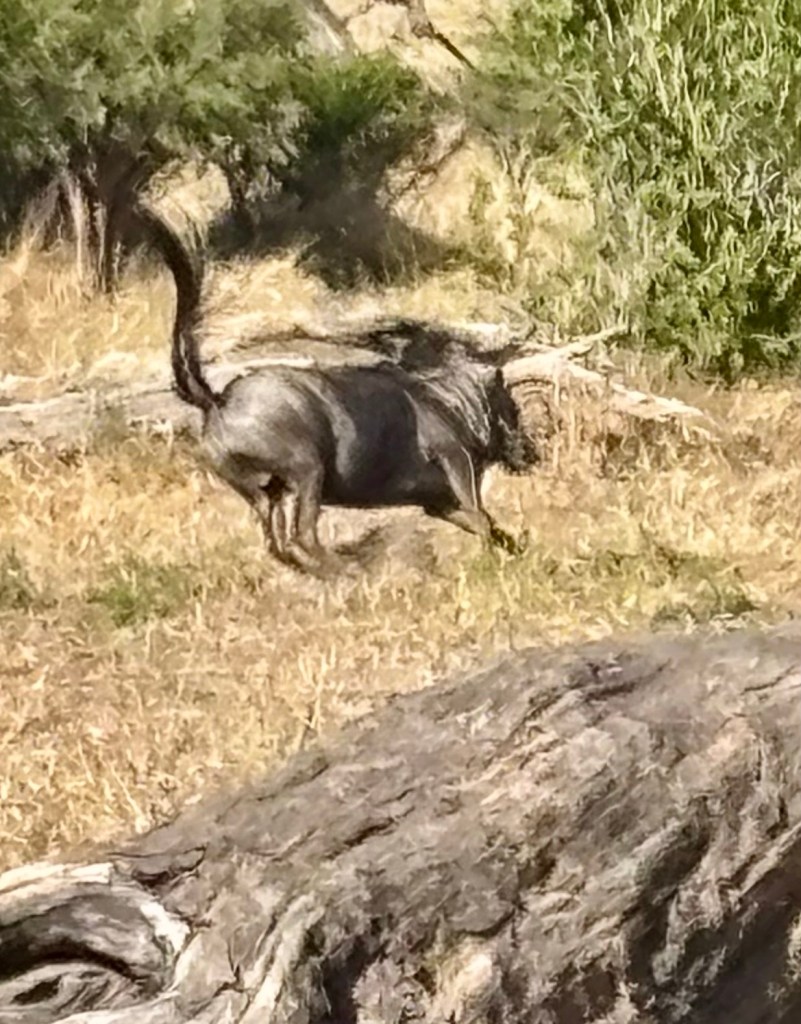
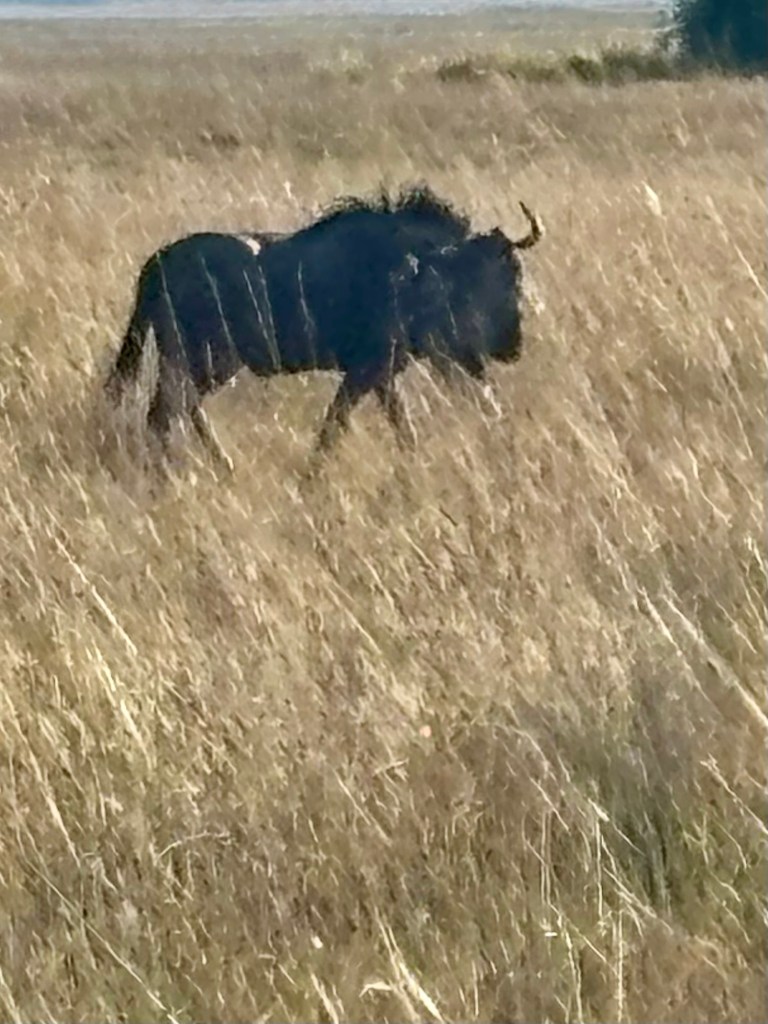
Wildebeest
The afternoon drive started no better than the morning. Three jeeps fanned out, scanning the area for any sign of the earlier lion sighting. Still no luck. Dima’s frustration was easy to read—he knew the lions were close.
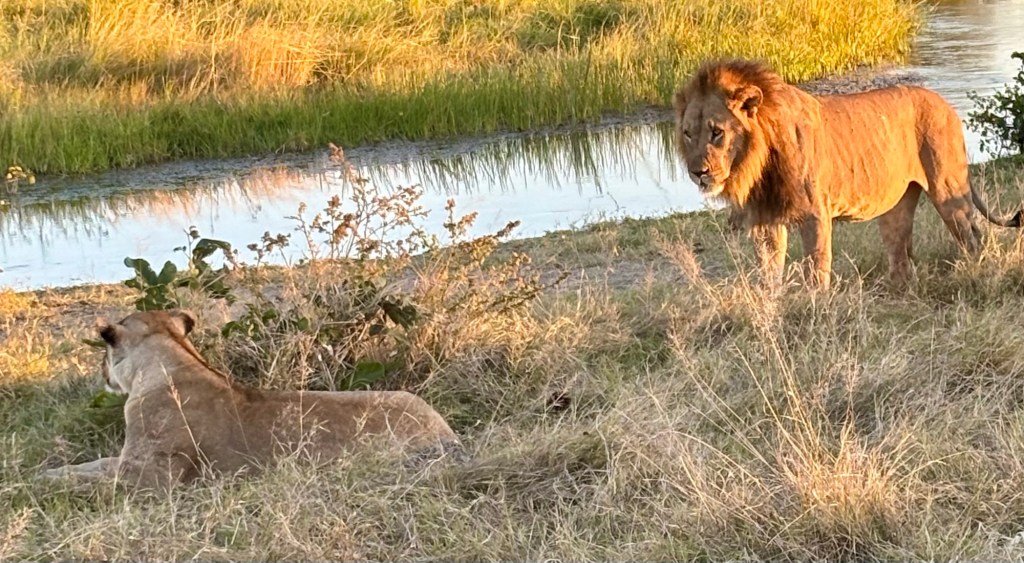
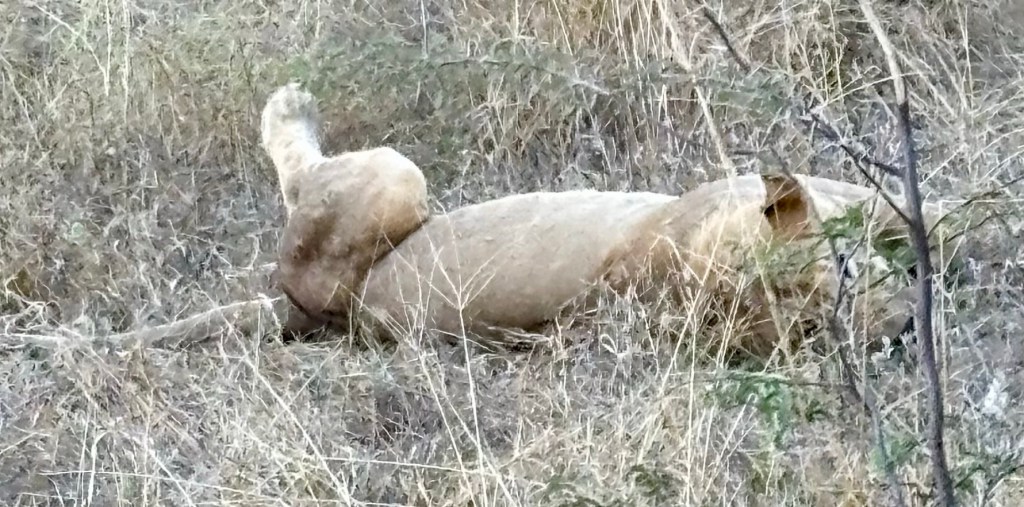
Then, he spotted a mane low in the grass on the far side of the water. Without hesitation, we bounced across the bush in that direction—an area we’d already visited a couple of times that afternoon.
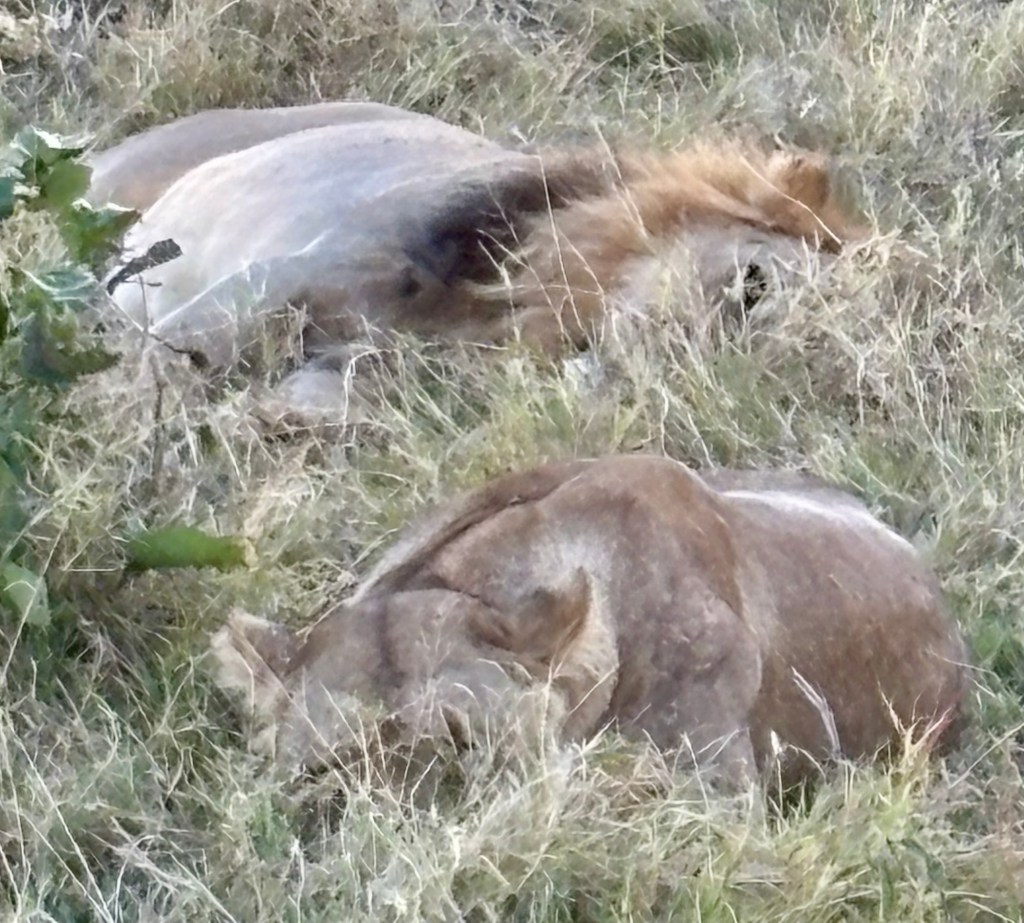
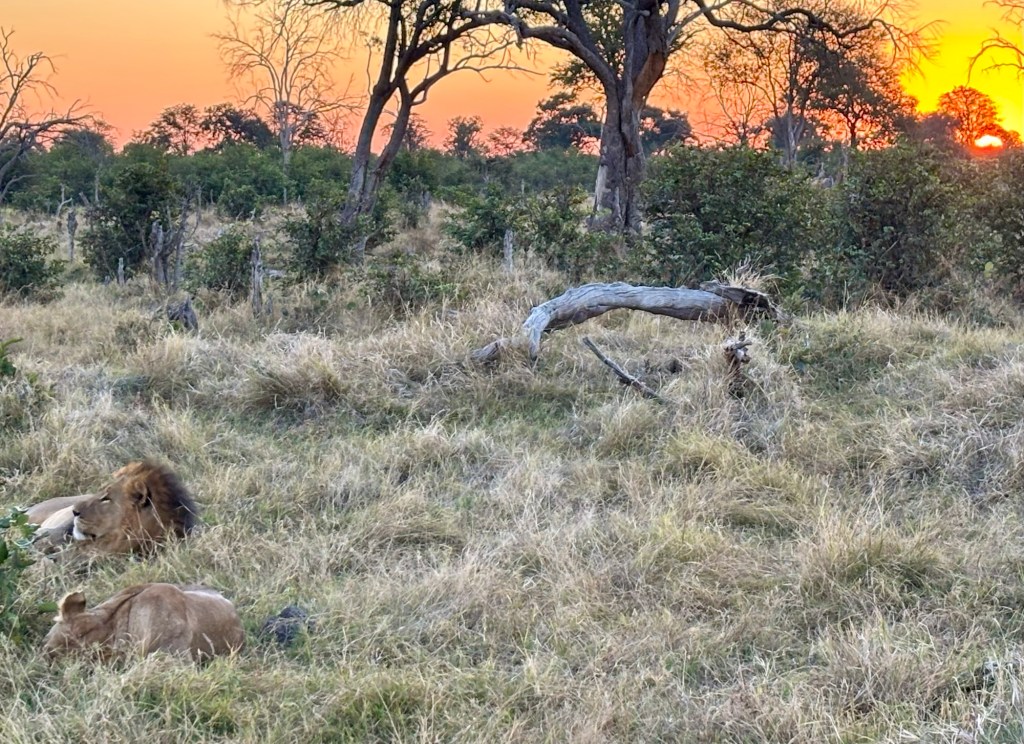
Jackpot!
WARNING: This video contains graphic, albeit brief, sexual content.
Talk about ending the day with a bang.
We have one more day on safari. Nothing could possibly top that… right? But what if I told you the final day was even better? I wouldn’t have believed it either—except I was there.
The Okavango Delta, located in northern Botswana, is one of the world’s largest inland deltas. Unlike most river deltas, it doesn’t flow into the sea—instead, the Okavango River fans out into the Kalahari Desert, creating a lush, seasonally flooded oasis teeming with wildlife.
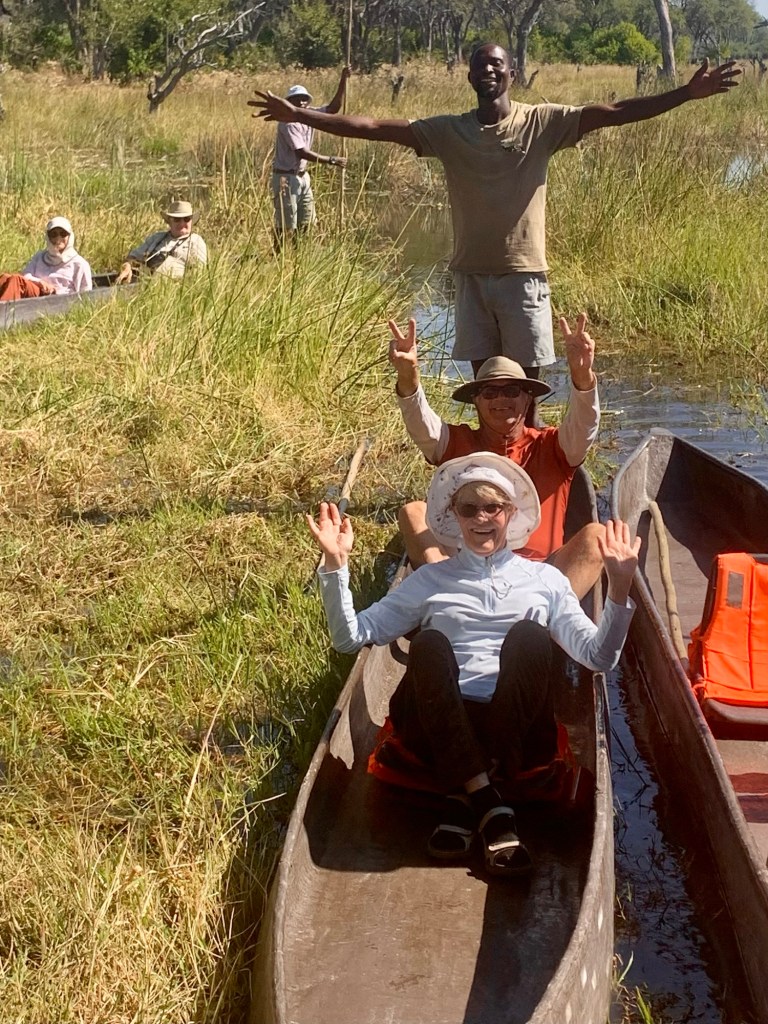
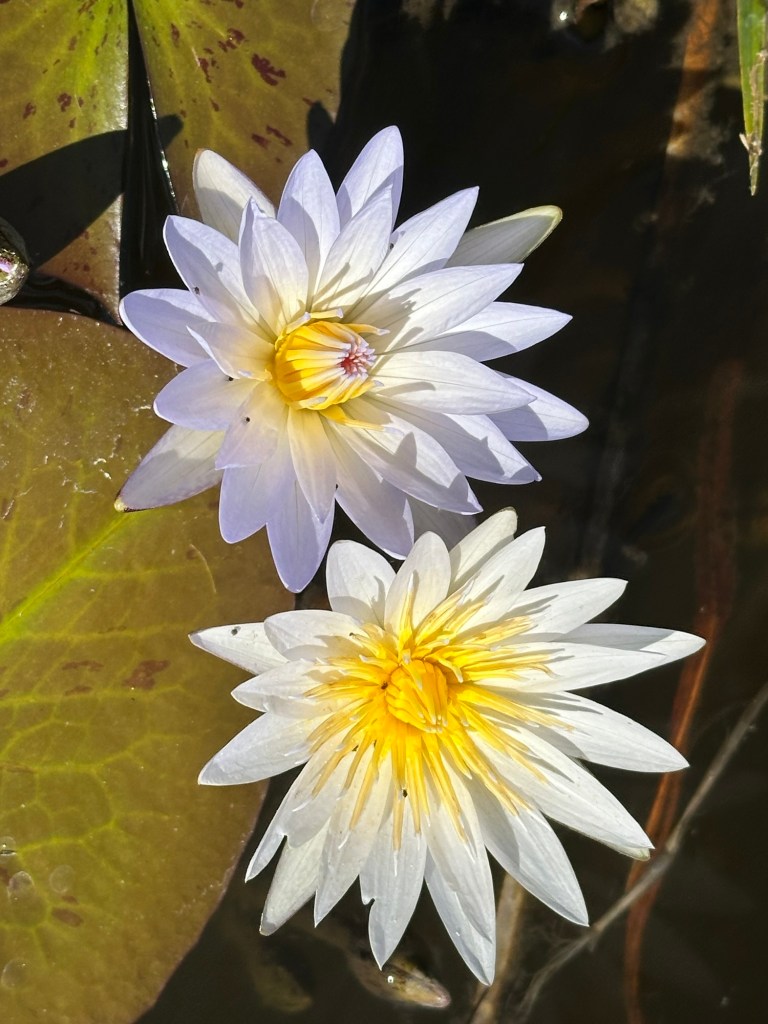
We arrived in the Okavango Delta just before noon on Sunday—perfect timing for lunch and a serene glide through one of the delta’s narrow fingers in a traditional dugout canoe. The shallow, slow-moving water was alive with color and sound: water lilies carpeted the surface, amphibians darted amongst the reeds, and birds called from the trees.
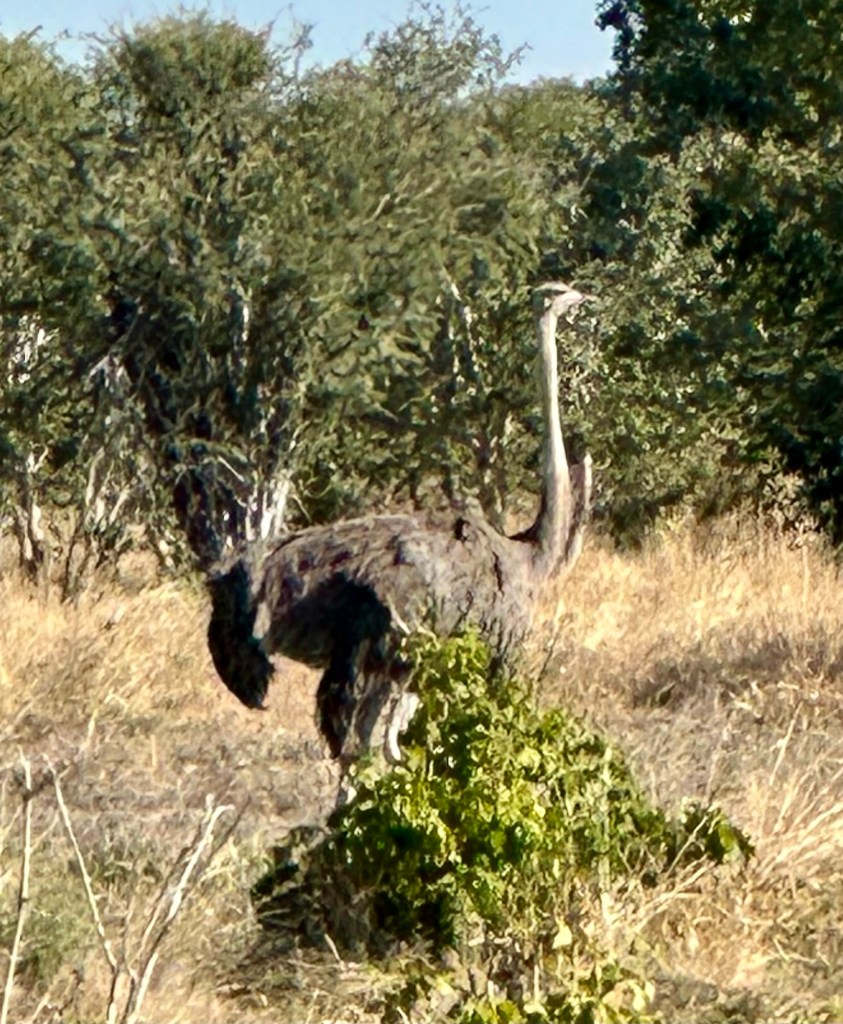
After our cruise, we headed to camp—Mogotho Safari Lodge—with my new best friend and guide, Dima, leading the way. We scanned the horizon for wildlife as we drove, spotting zebras and giraffes that, by now, felt almost routine. But then came something decidedly not routine: our first ostrich.
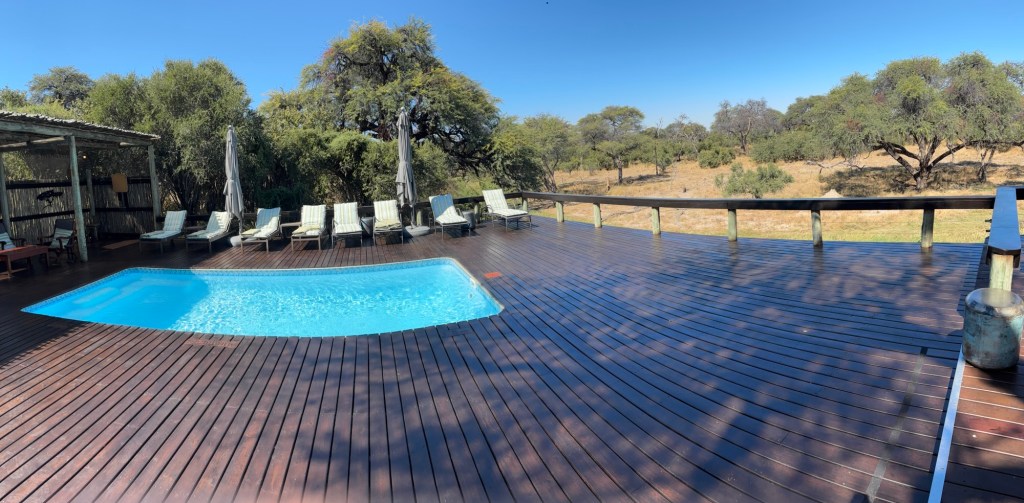
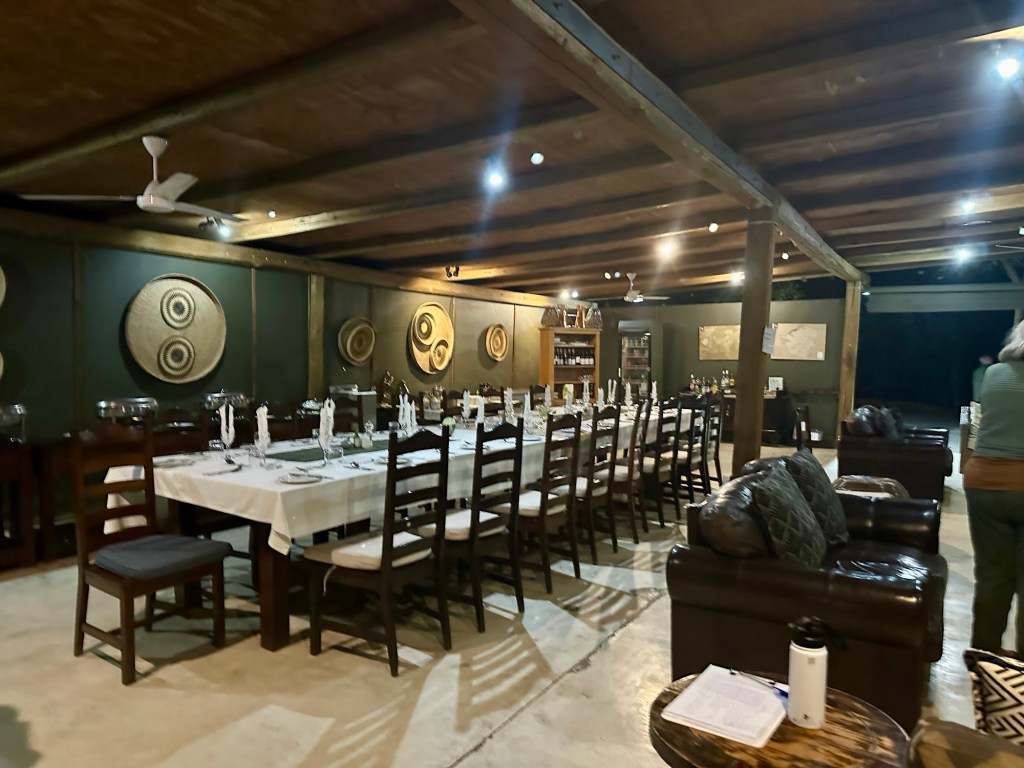
Mogotho Safari Lodge was the largest place we’d stayed so far, with a spacious dining hall and an expansive deck with a small pool overlooking a flowing river.
First order of business: the lodge briefing. This one came with a few extra precautions—after dark, we had to be driven to our tents, and the whole place was wrapped in an electric fence that started at 6’. Why 6 feet? That’s the magic number to keep out curious elephants. Anything shorter—lions, hyenas, whatever—apparently gets a free pass.
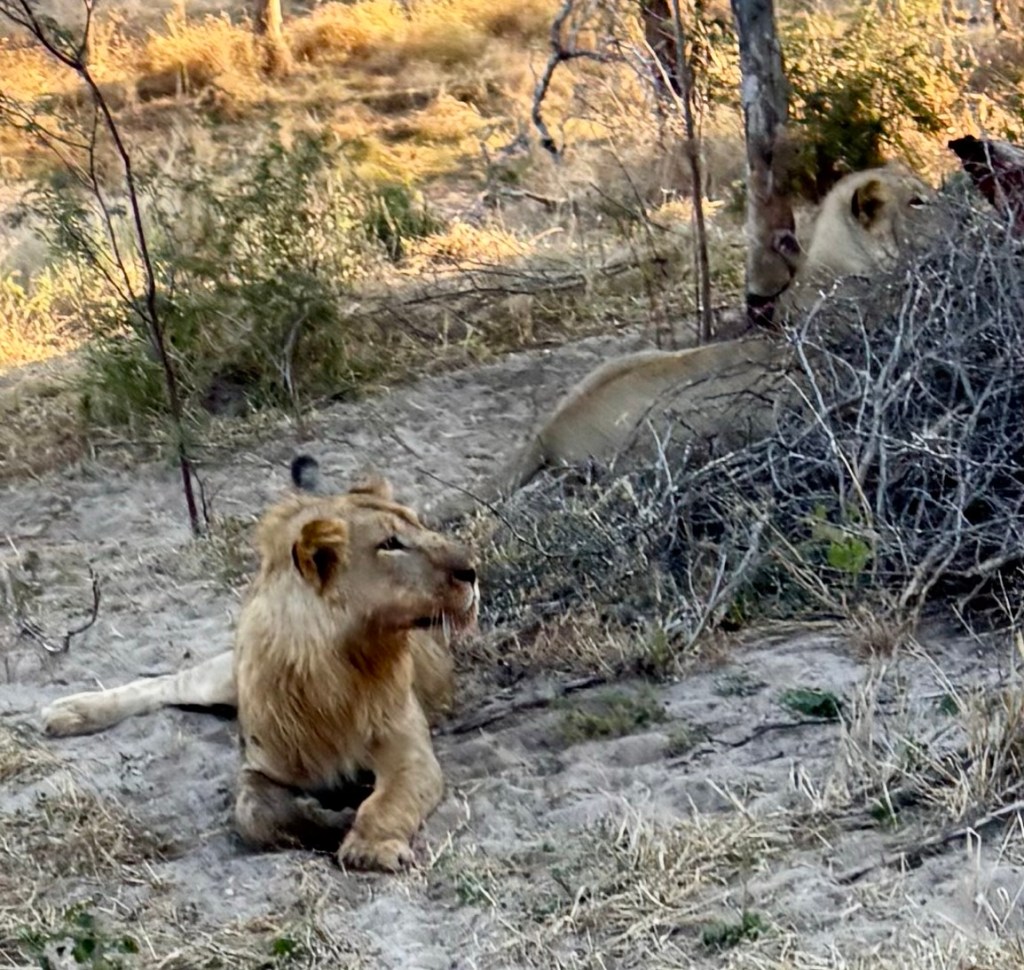
The drive to our tent turned out to be an adventure in its own right. We had barely made it 50 yards from the main lodge when we encountered two young brothers.
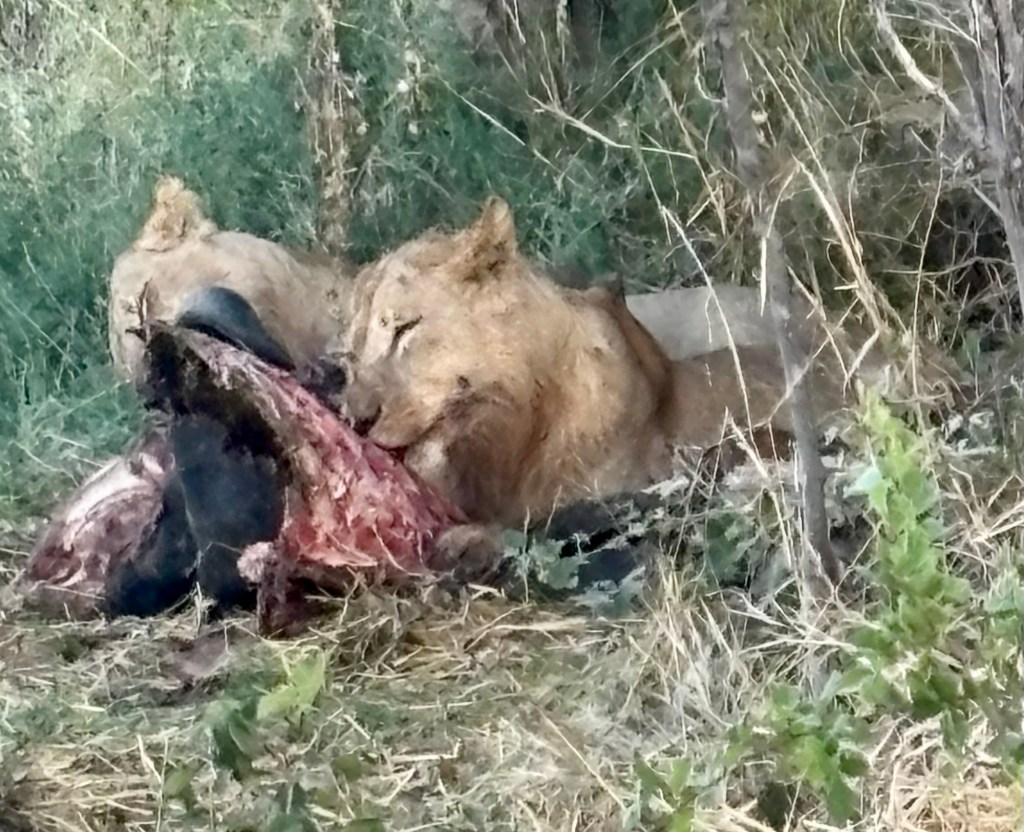
Around 1 a.m., 15 hours before we arrived, the two young males and a pair of females took down a Cape buffalo. Given the buffalo’s size and strength, the struggle was loud, violent, and unfolded entirely within the camp’s boundaries. It was surreal to think how close it all happened—one tent stood just 20 yards from the chaos.
Here’s a one-minute glimpse of the aftermath—the feast in full swing.
The Okavango Delta is absolutely teeming with wildlife. Dogs, cats, zebras, giraffes, elephants—you name it. If it walks, flies, charges, or lounges in the shade, it’s probably here. Honestly, the only thing missing might be Budweiser.
I originally planned to write one blog post per stop, but the Okavango Delta had other ideas. There’s so much happening here, it’s getting at least two more posts. Buckle up—I promise you’ll be entertained, amazed, and maybe even a little jealous.
In show business, I believe this is called a tease.
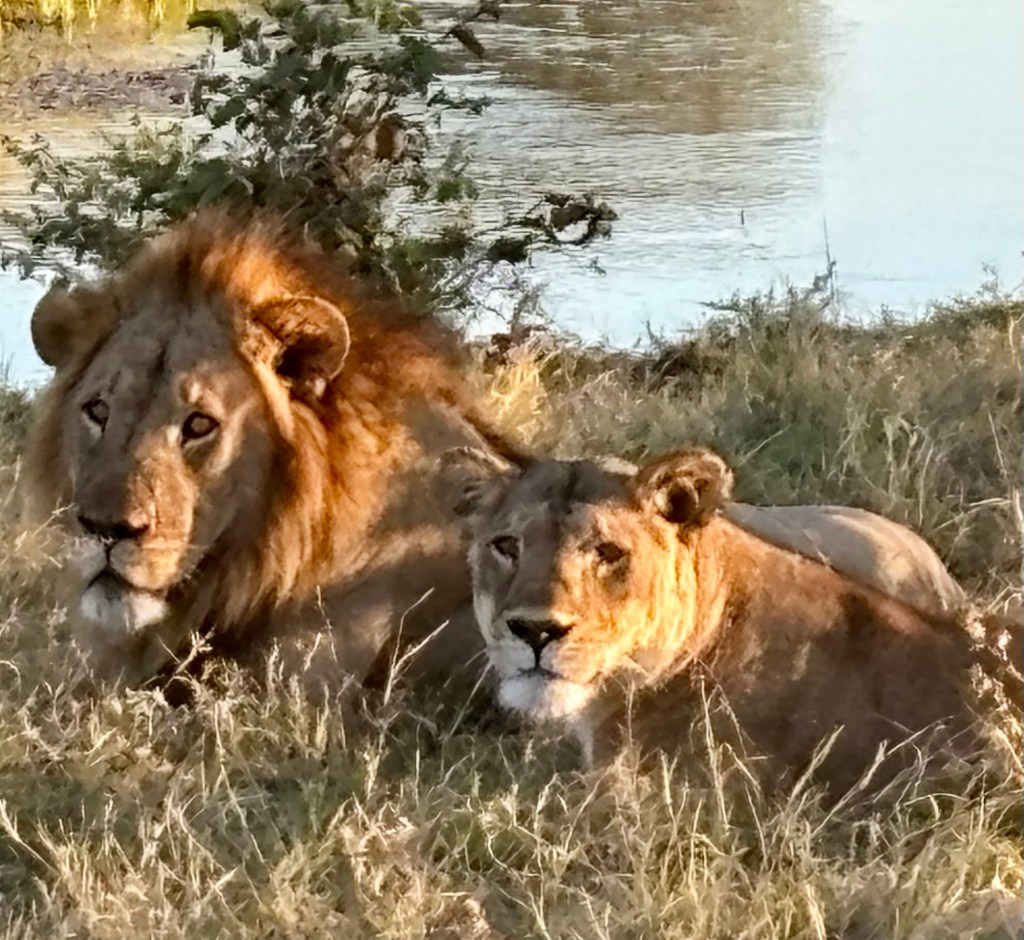
We haven’t even been in the Okavango Delta for 24 hours, and already it’s showing off. If you like lions—and I mean really like lions—you’re going to enjoy what’s coming. Think of this as the trailer before the feature presentation.
Here’s a sneak peek to whet your appetite (and possibly make you want to pack your bags).
Thursday, we crossed into the fourth country of our African journey: Botswana.
We’re staying at Xhabe Safari Lodge. The accommodations are crude—mahogany decks, swimming pool, and views over the Chobe River—but I suppose we’ll find a way to endure it.
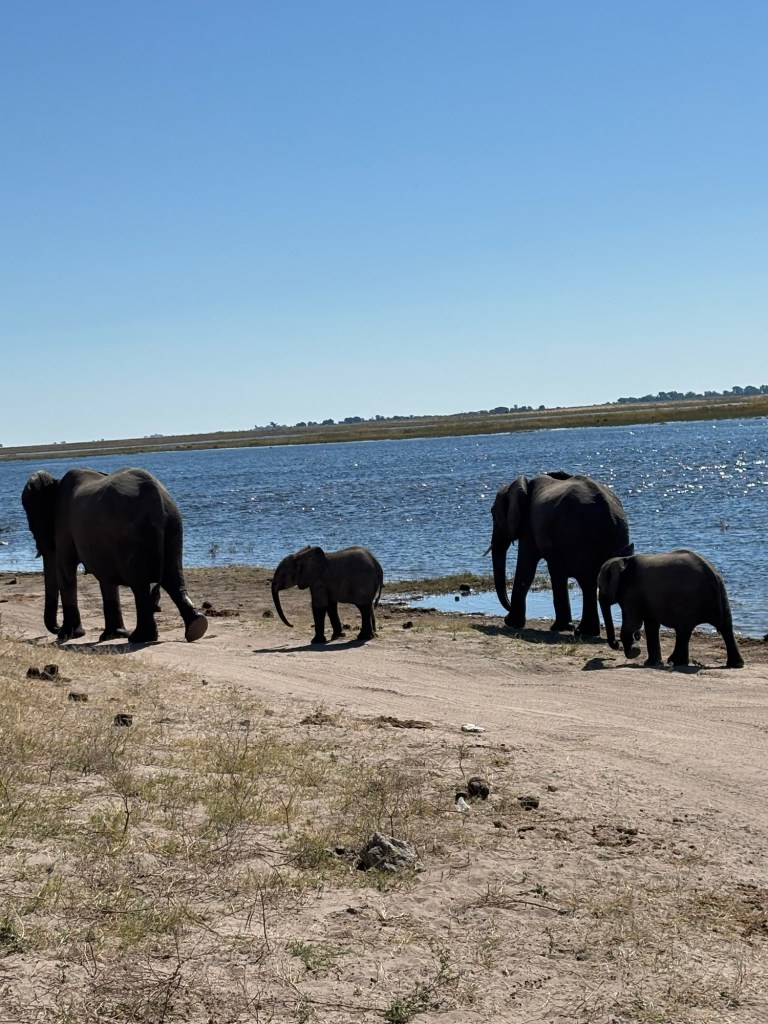
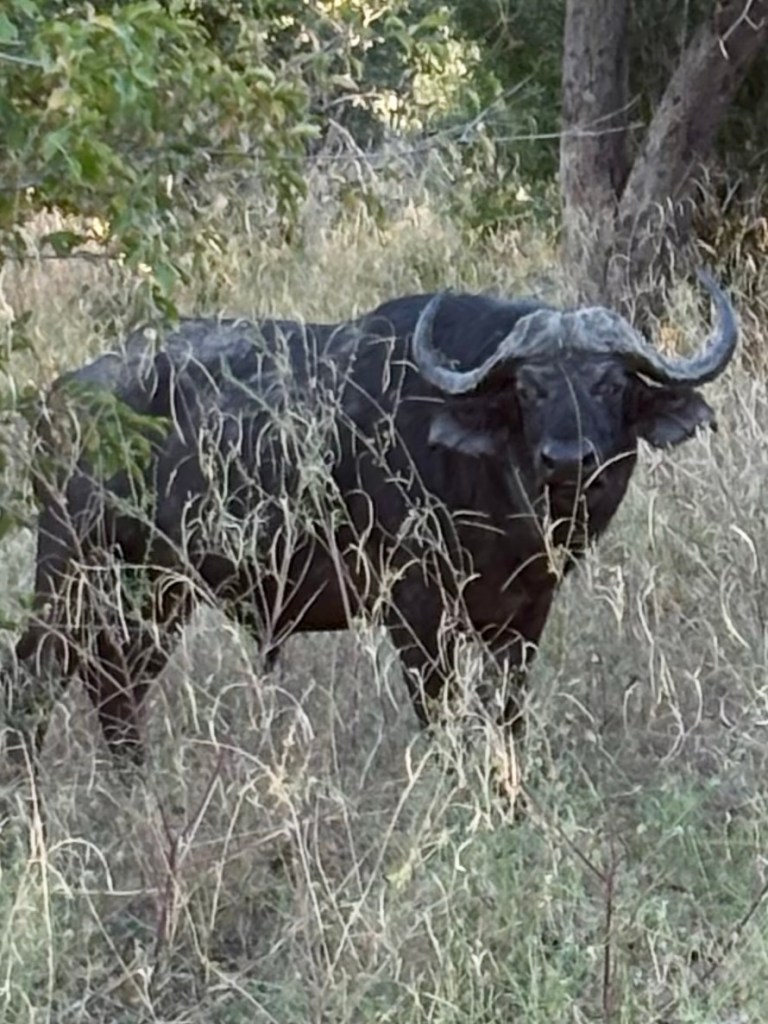
Chobe National Park is famous for its hefty herds of elephants, striped zebras, lanky giraffes, and the always serious-looking Cape buffalo. The park didn’t disappoint—on our drive through Thursday evening en route to camp, we spotted a welcoming committee of a dozen elephants and three zebras casually hanging out by the paved road,
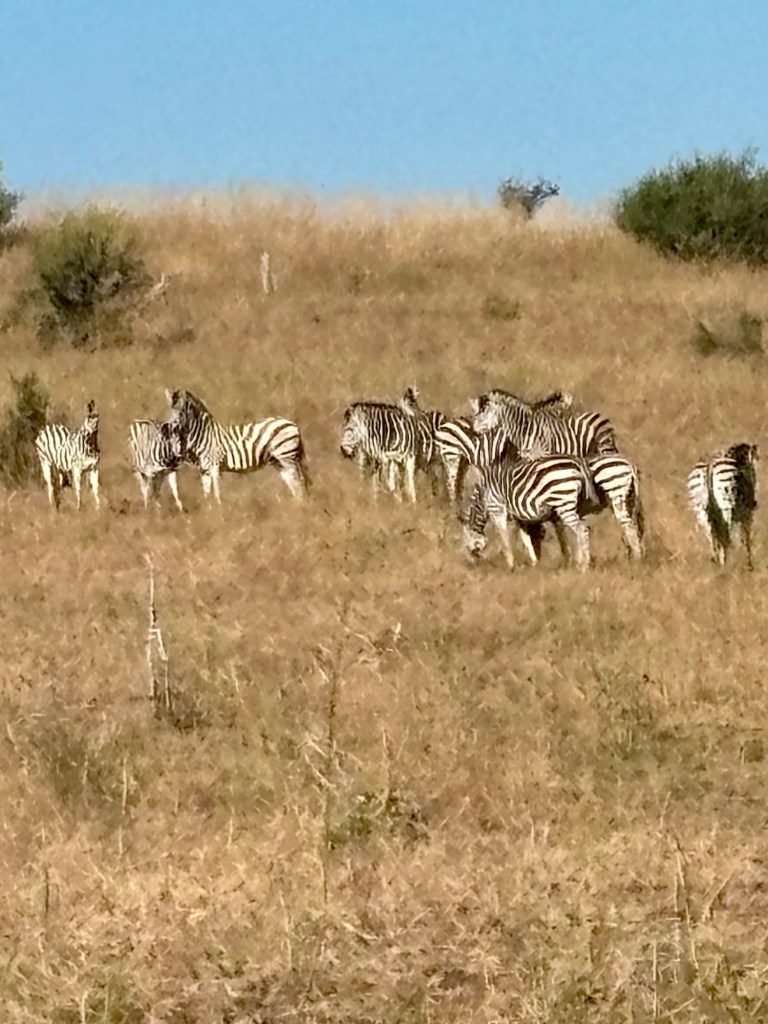
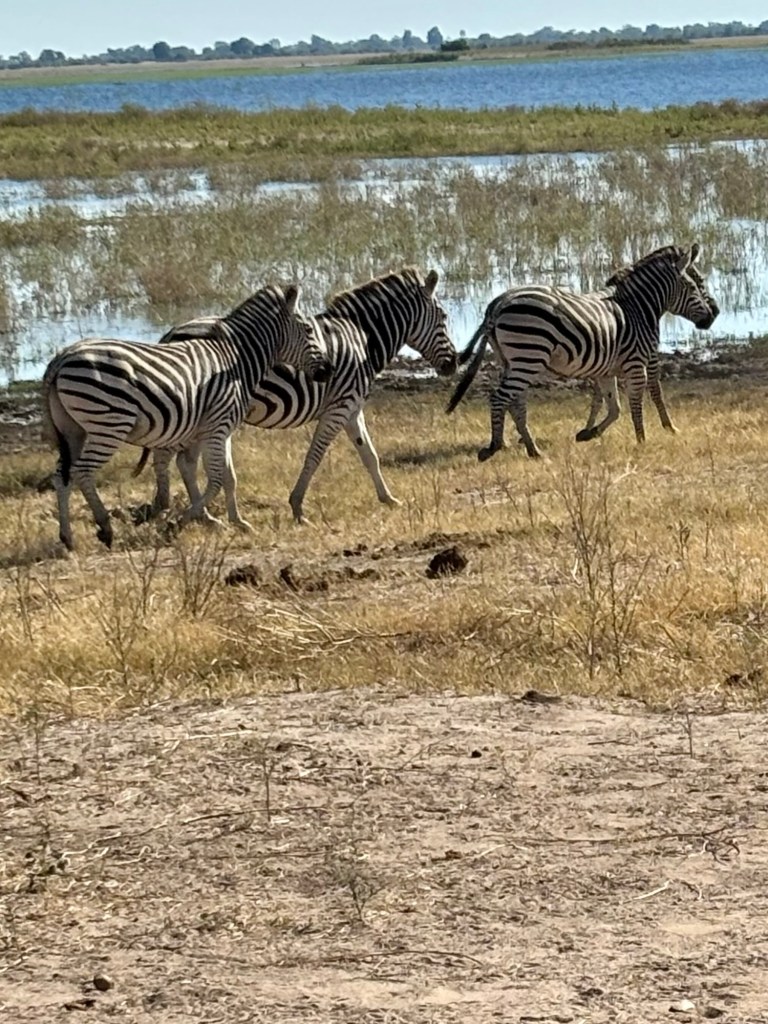
We saw so many zebras, it started to feel like we were stuck in an endless black-and-white movie. They were everywhere—grazing in open fields, trotting alongside the road, and gathering at the water’s edge to heading to drink.
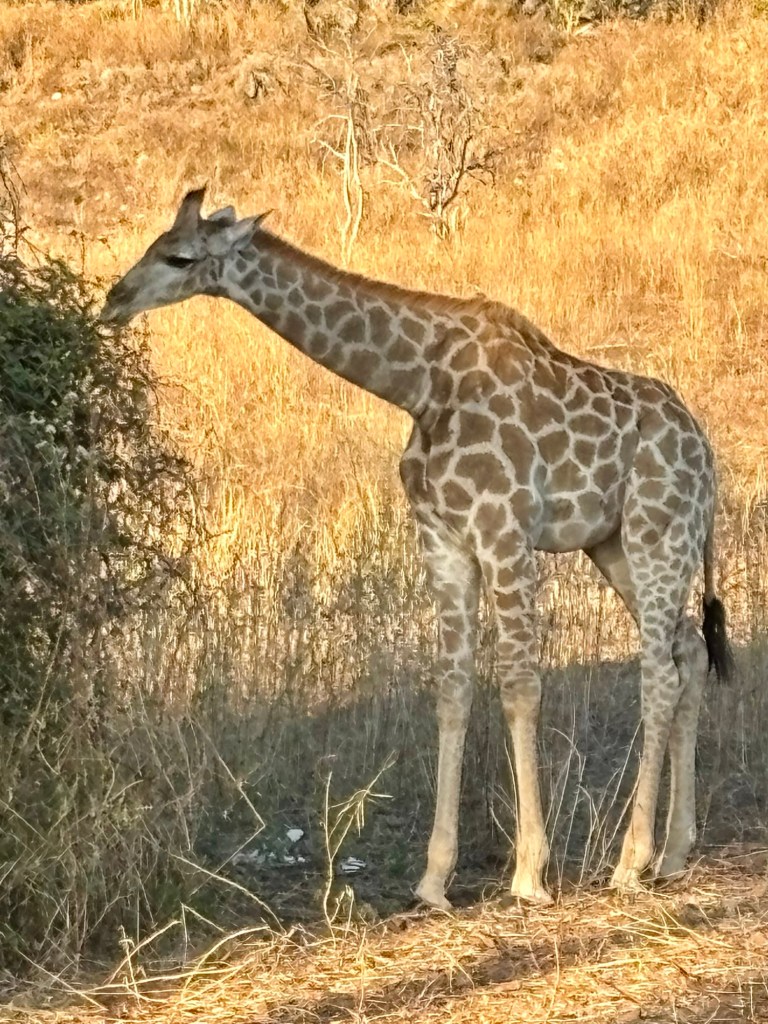
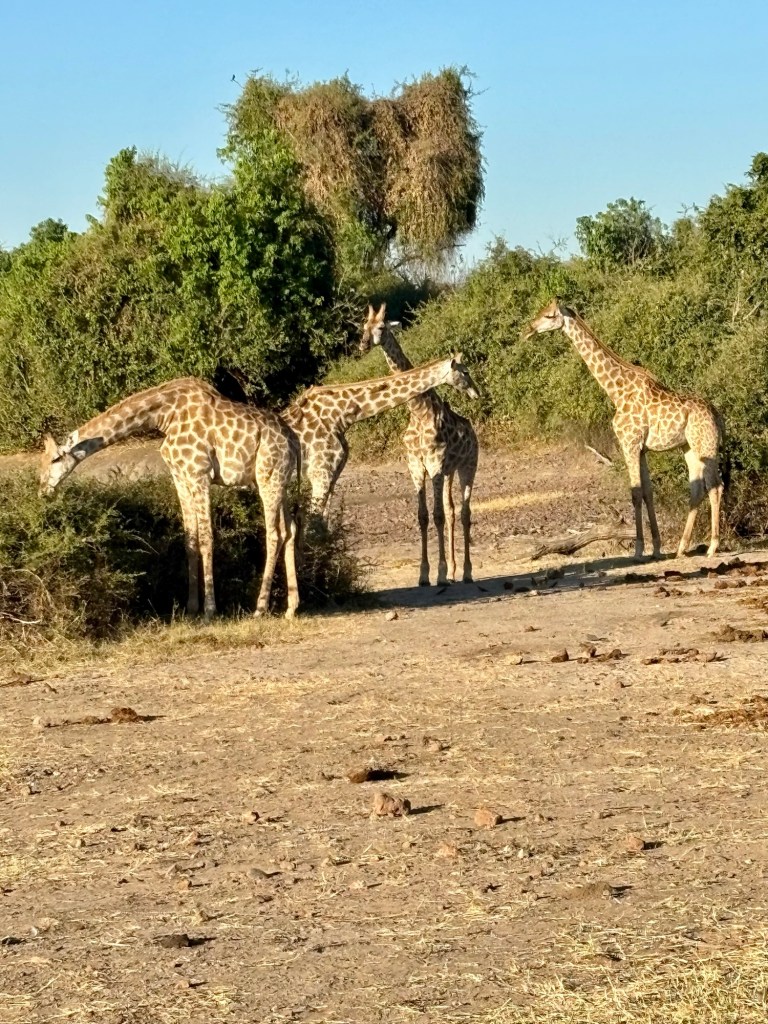
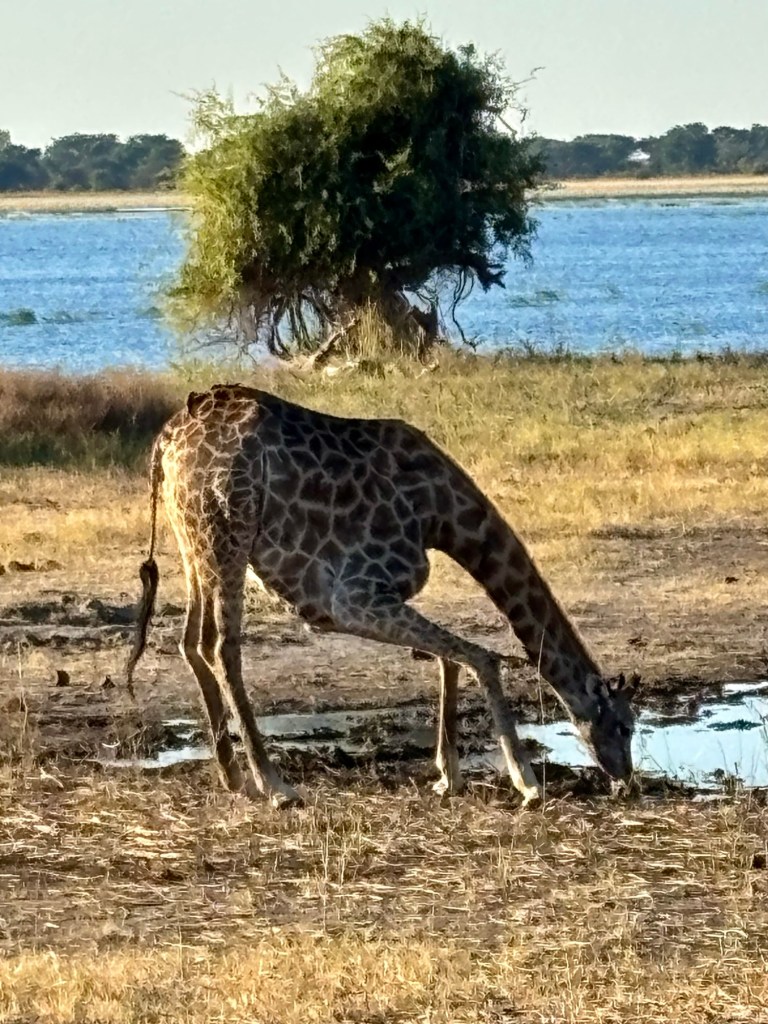
Hundreds of giraffes dotted the horizon. Their long necks rose above the trees, some craning to nibble at leaves, others simply standing still, statuesque and serene. They moved in slow motion—graceful, silent, and strangely surreal.
You have to be a contortionist to get a drink when you’re 20’ tall!!
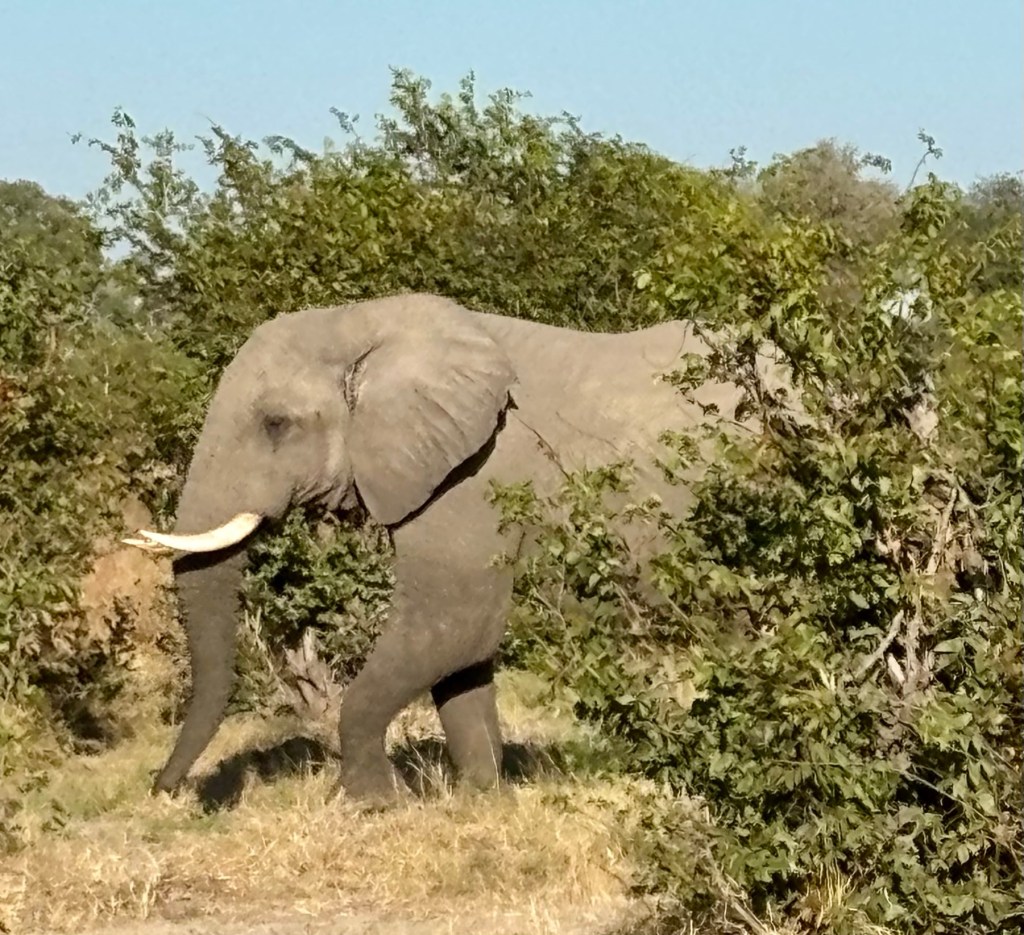
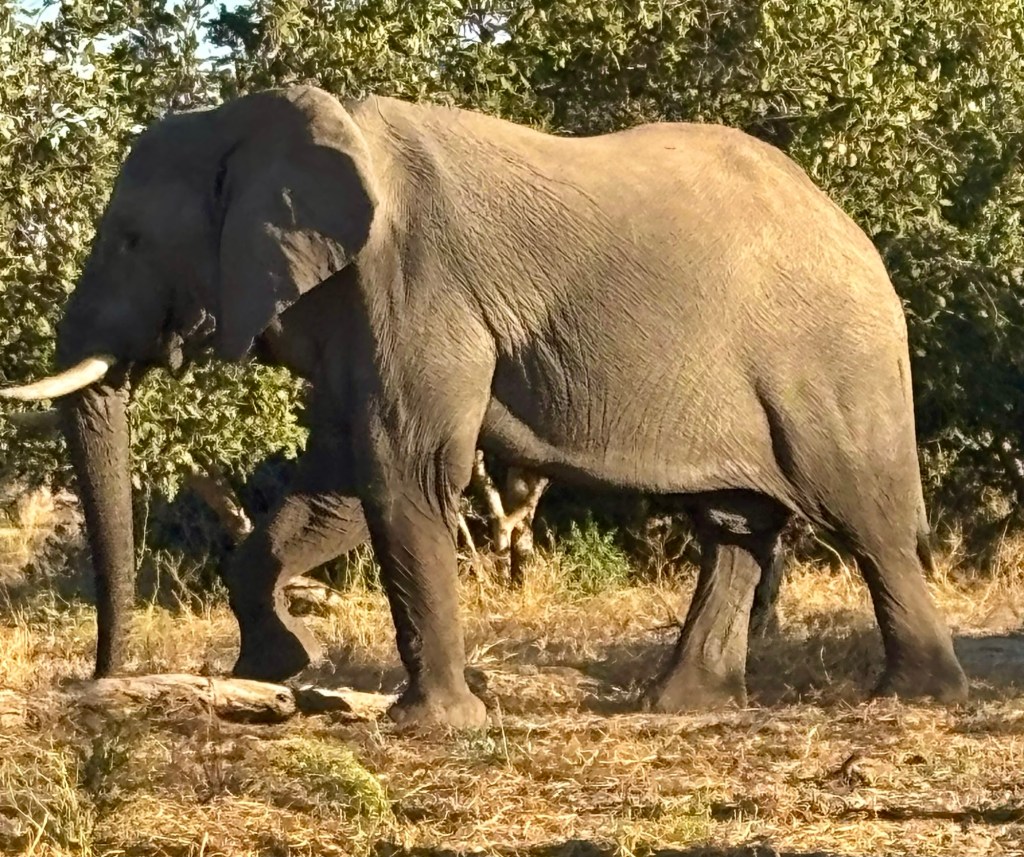
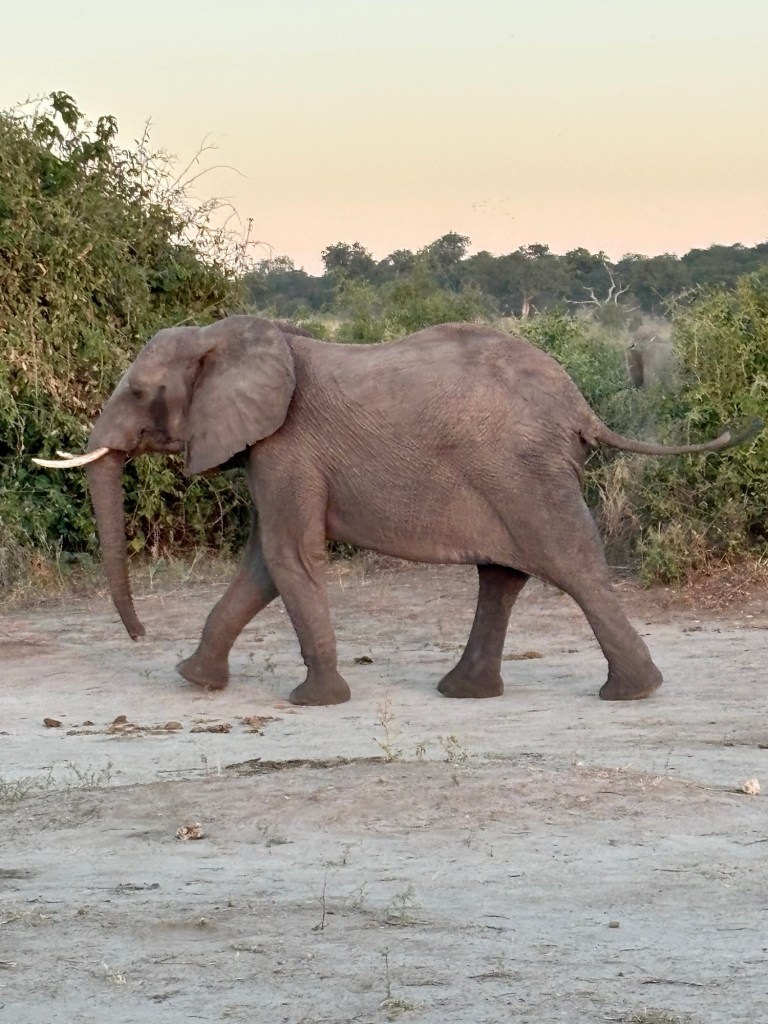
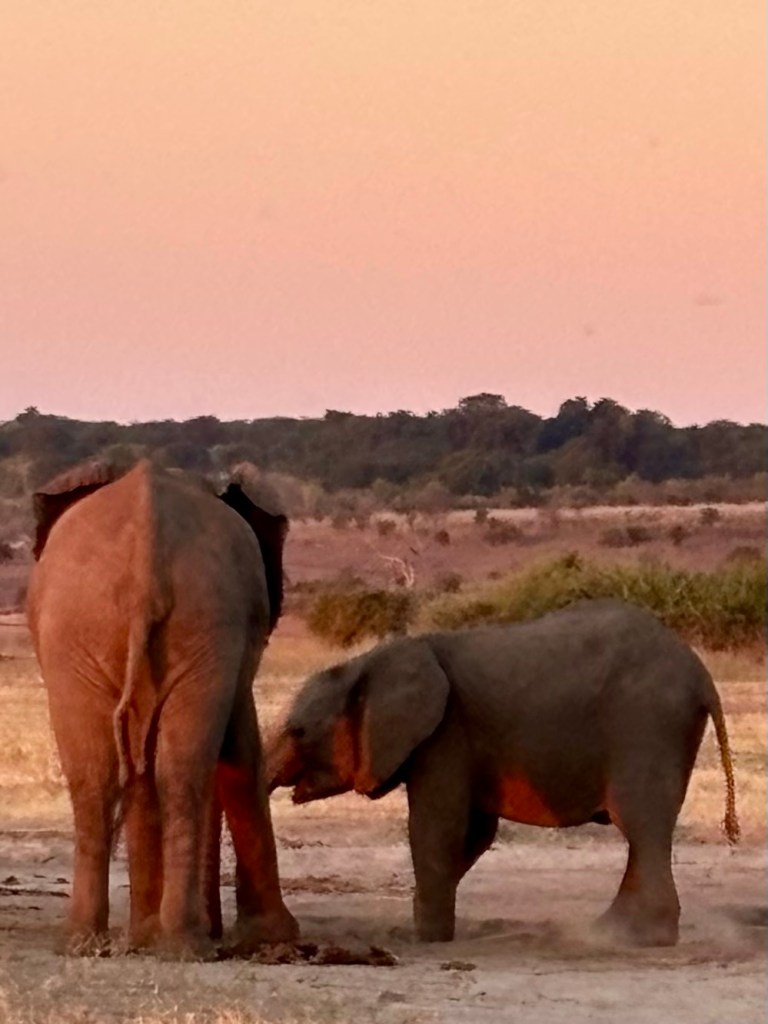
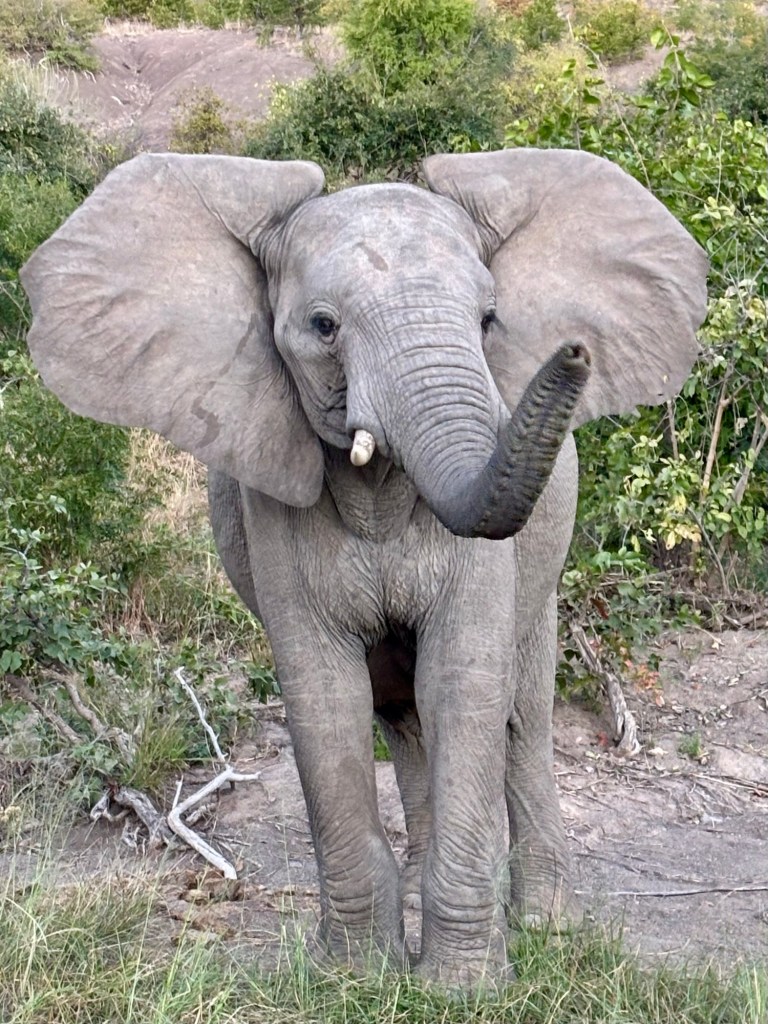
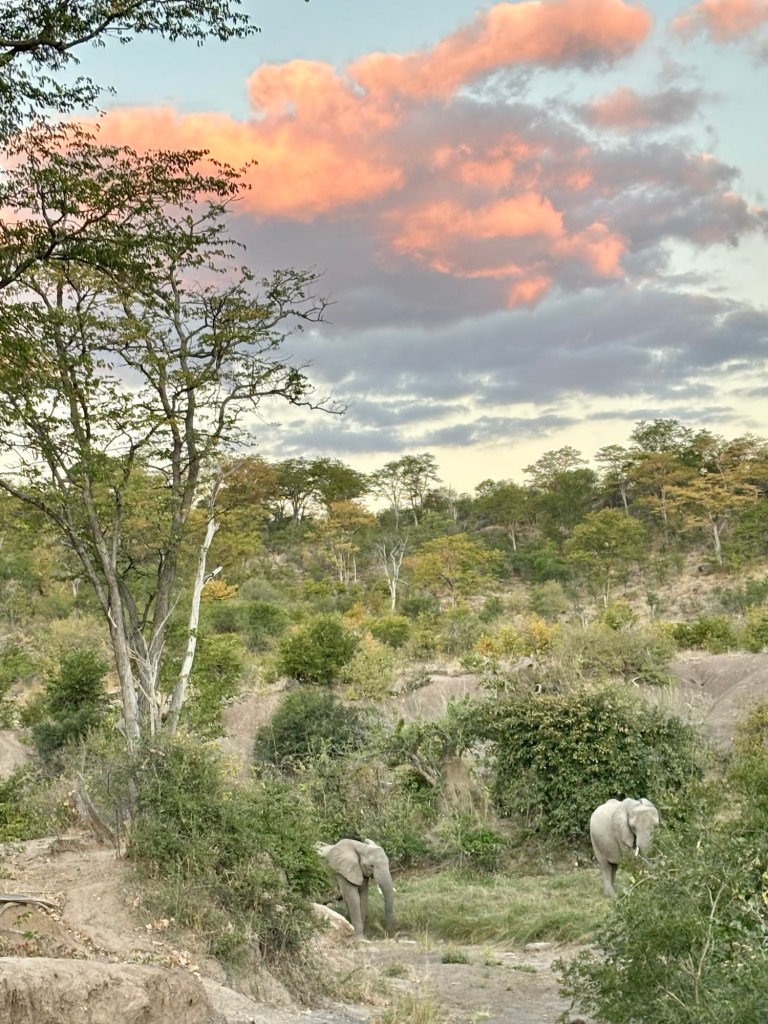
And of course, elephants were everywhere.
Unlike our first two camps, this one was a few miles outside the park, surrounded by an electric fence—meant either to keep the animals out or to keep us in. I’m still not sure which.
Even outside the park, we were still surrounded by wildlife. In the darkness, we heard the cackling of hyenas, the grunts of hippos, and the low, unmistakable rumble of a lion. Even Cape buffalo lurked nearby. We spotted our first just a quarter mile from the gate—followed by hundreds more once we entered the park.
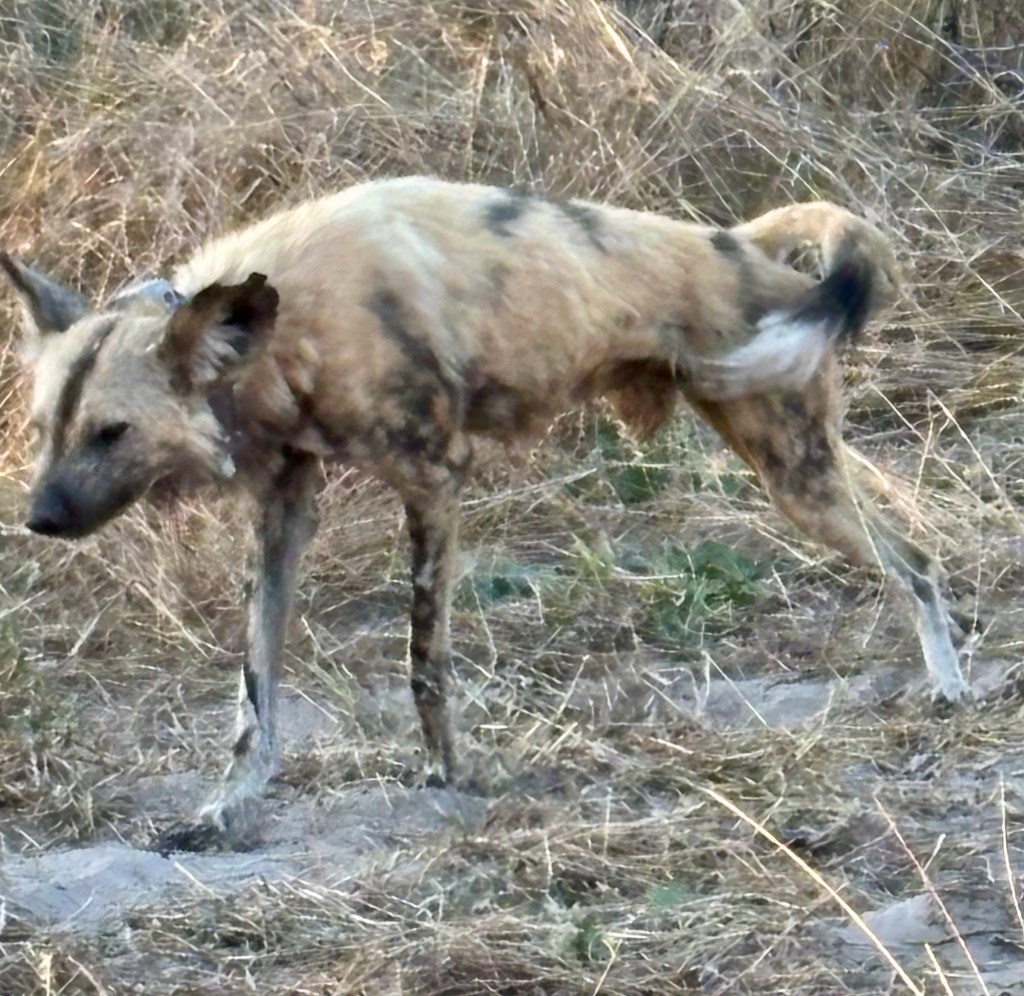
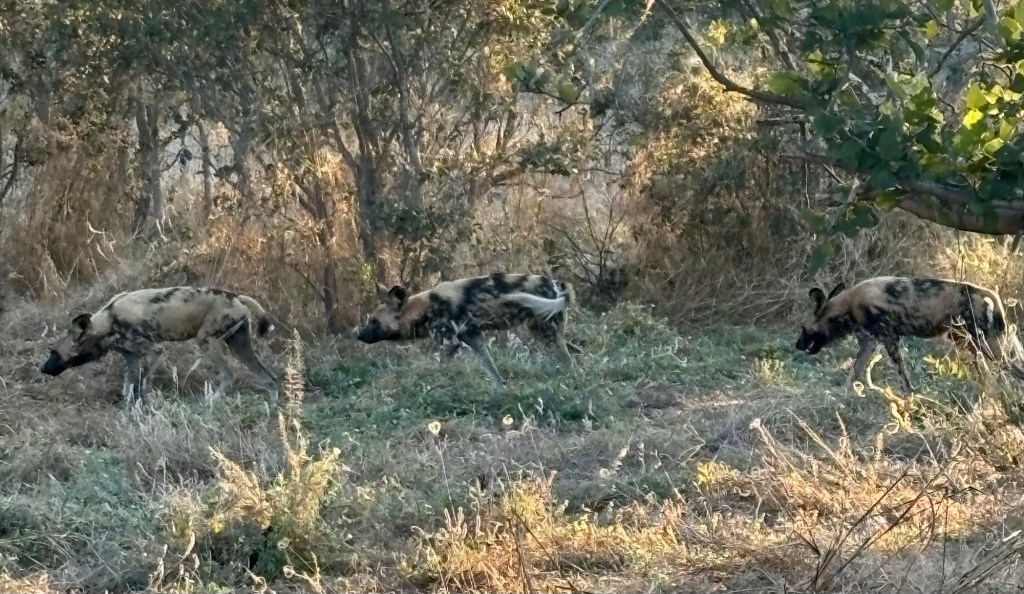
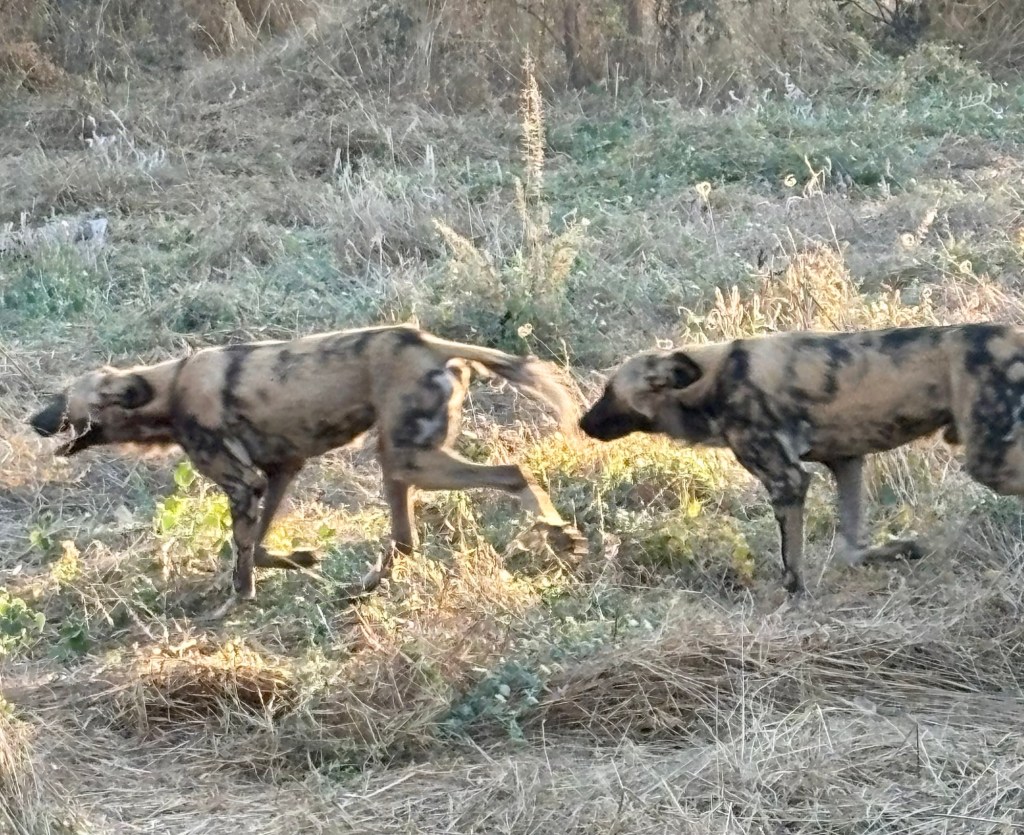
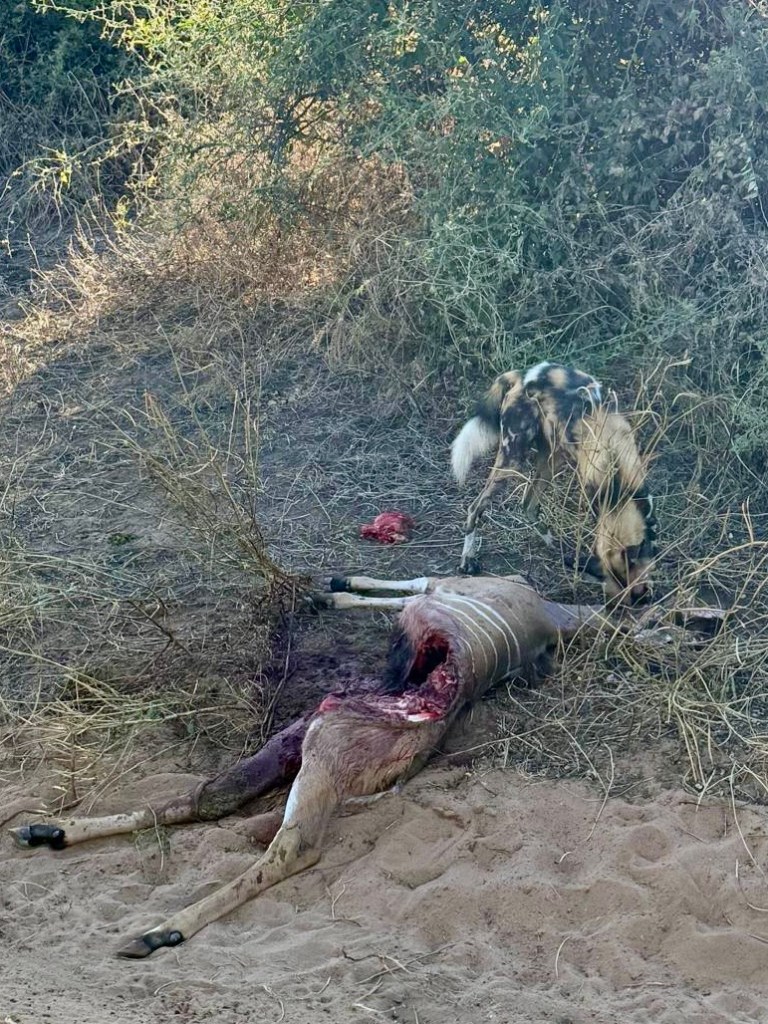
We spotted a couple of new species in Chobe—jackals and, more excitingly, wild dogs. Seeing the wild (or painted) dogs was especially memorable. Fewer than 7,000 of these rare and highly skilled predators remain in the wild. More on them in the postscript.
Next stop Okavango Delta.
Hakuna matata!
Just Pete
P.S. The following content is followed by graphic pictures.
Wild dogs hunt with endurance, chasing prey over long distances rather than relying on stealth or brute strength. They’re among Africa’s most efficient predators, with success rates as high as 80%—better than lions or hyenas. We first spotted them just after they’d brought down a female kudu.
Dragging their kill into the bush to continue their feast.
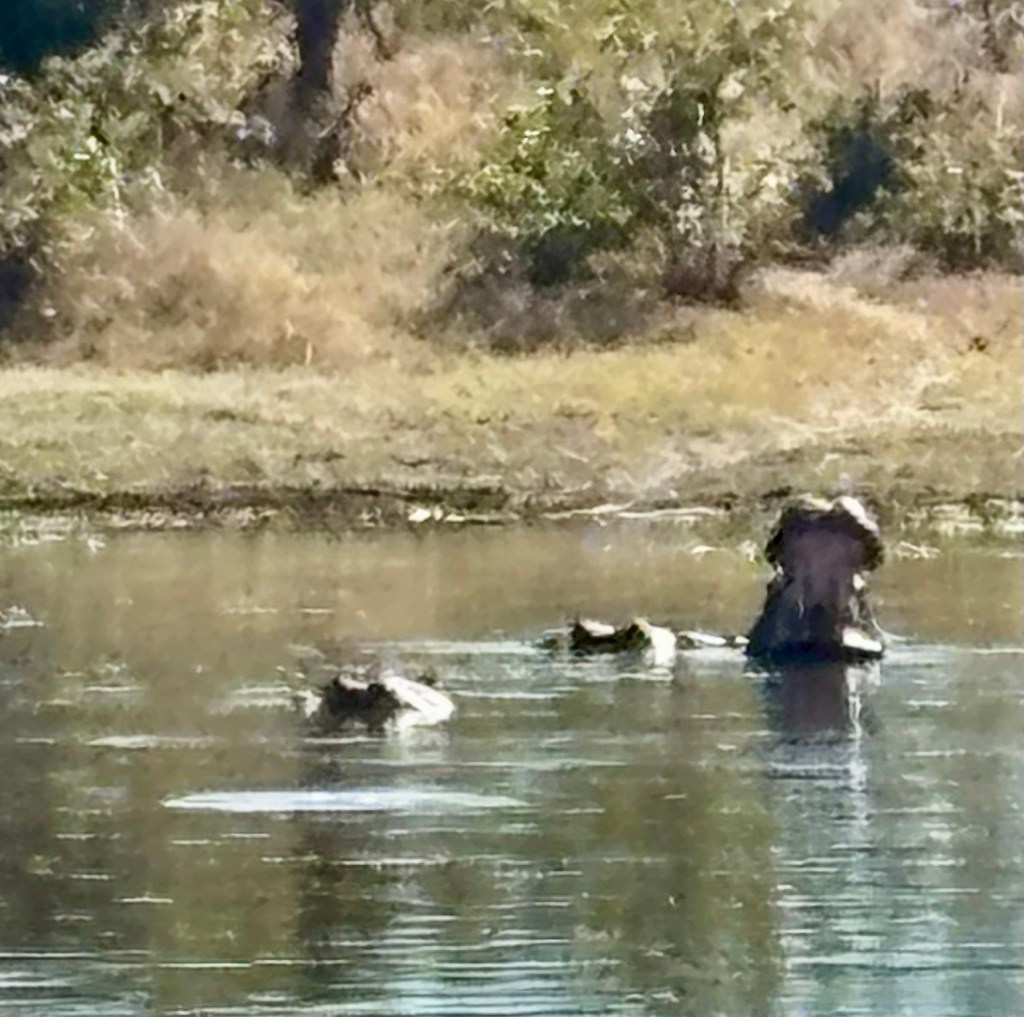
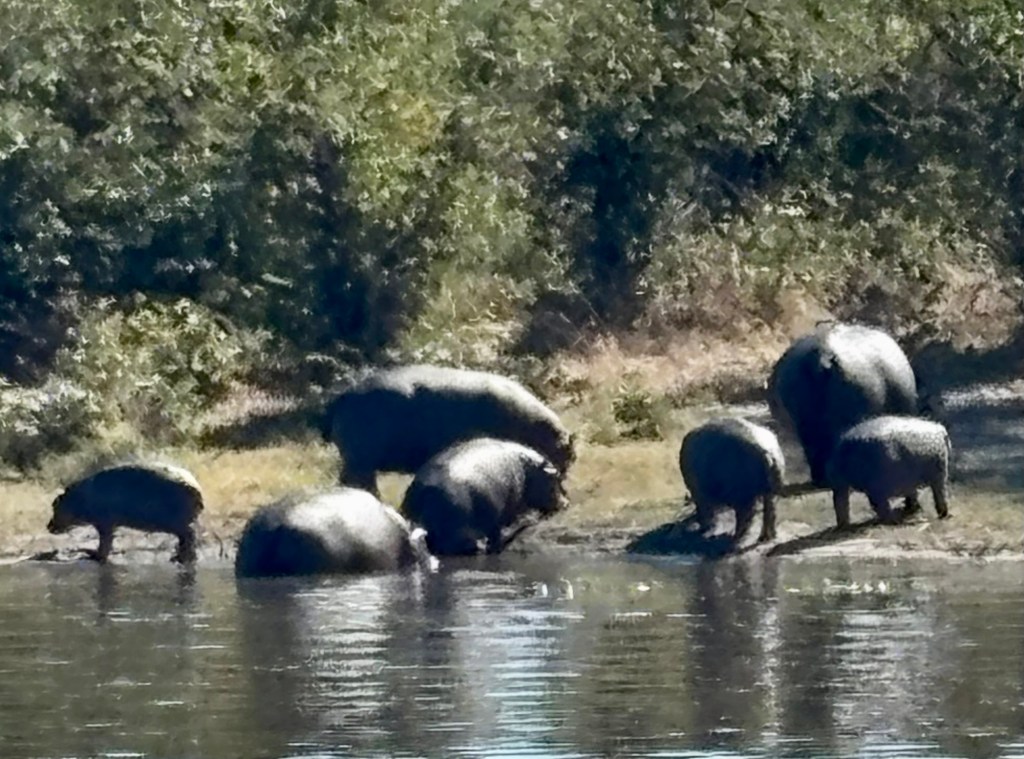
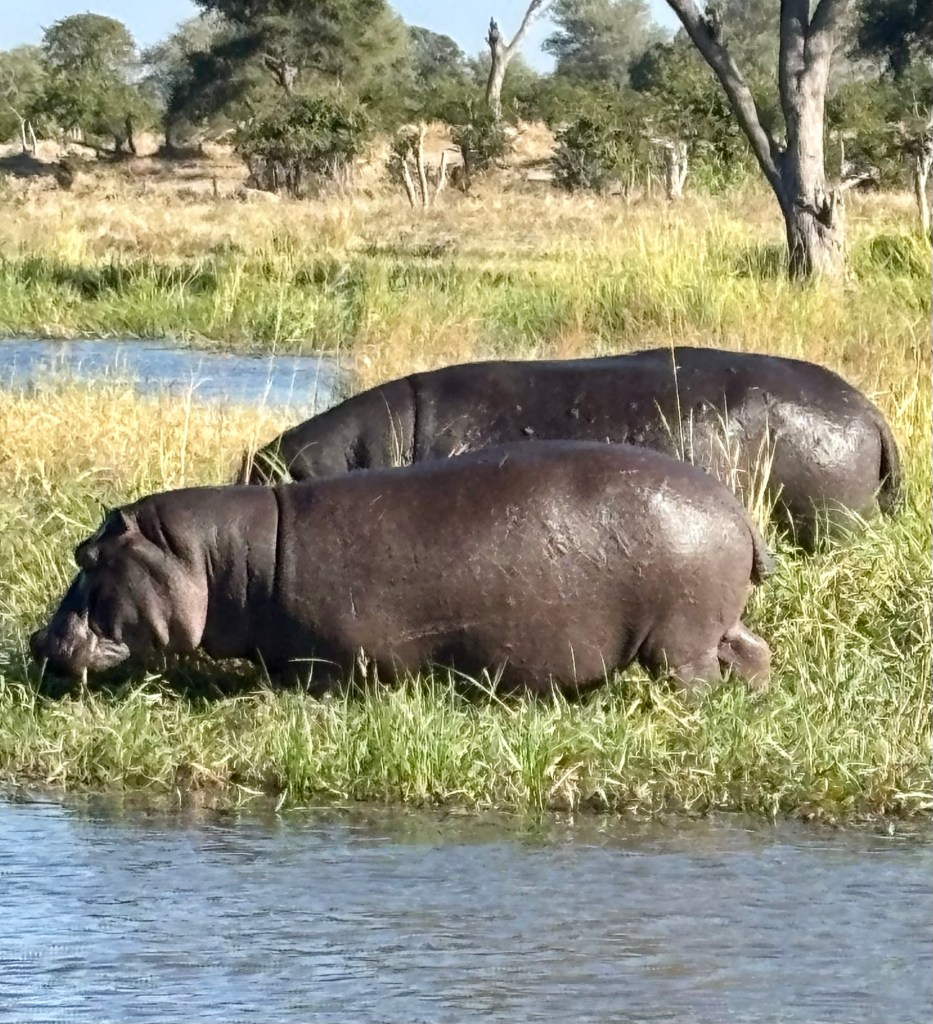
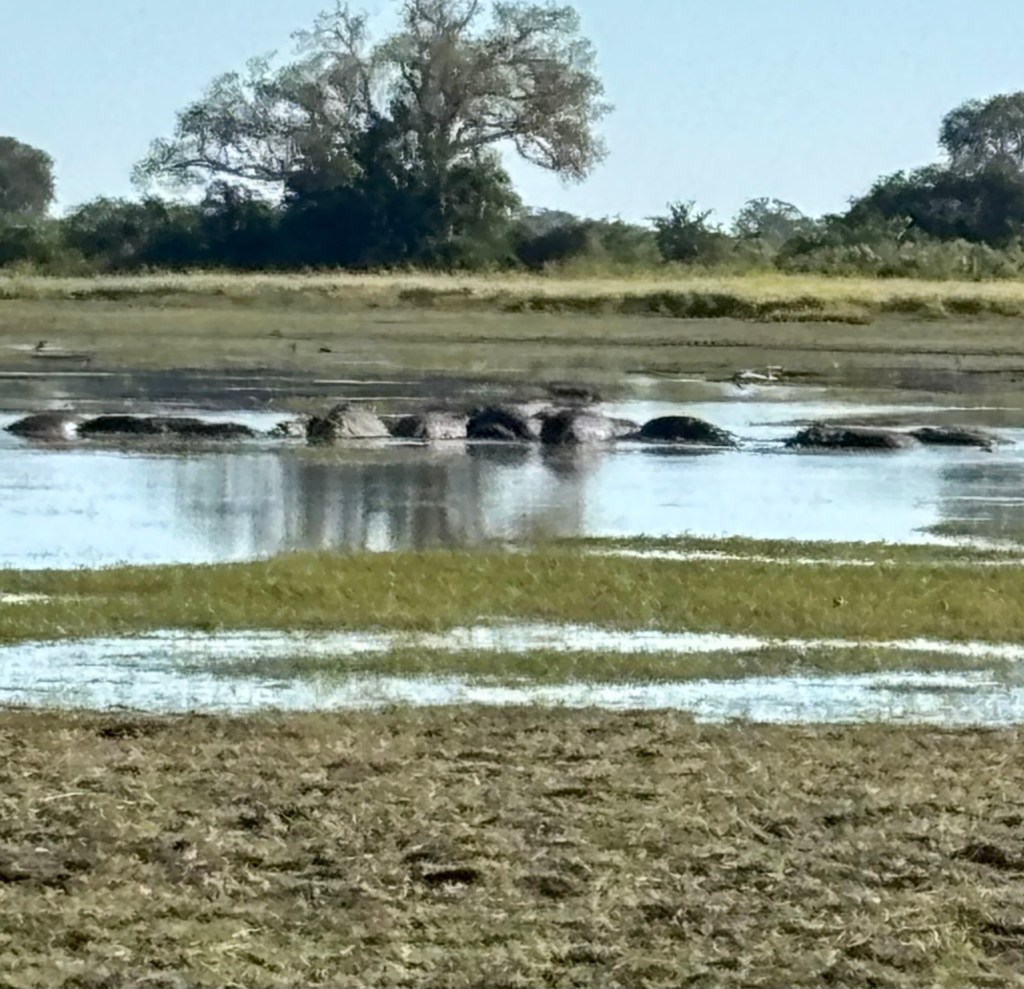
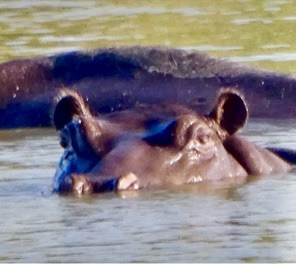
The hippopotamus is one of Africa’s most iconic animals—equal parts adorable and terrifying. It may look like a slow-moving, chubby water cow, but don’t let the dad-bod fool you. Hippos are actually one of the most dangerous creatures on the continent, responsible for more human deaths annually than lions or crocodiles.
By night, they graze peacefully on land like oversized lawnmowers. But by day, they retreat to the water even though, fun fact, hippos can’t actually swim. Instead, they sort of bounce along the river bottom. They can also hold their breath for up to five minutes, which is impressive, especially when you realize they’re basically jogging underwater the whole time.
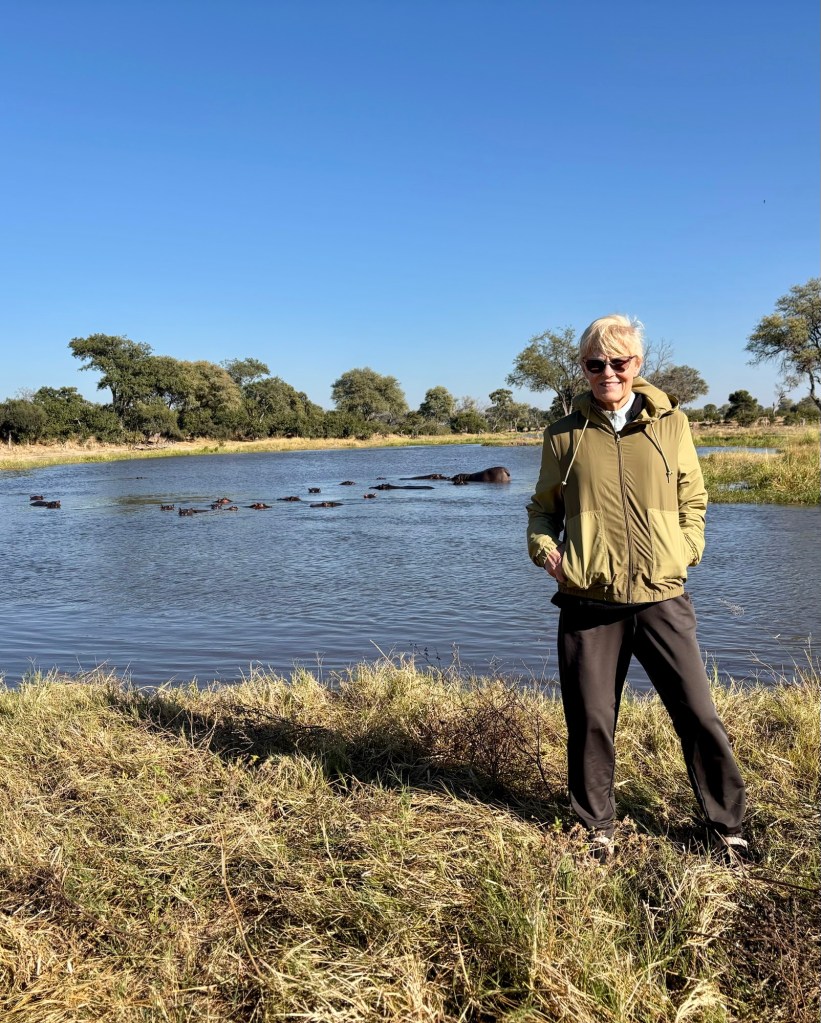
So naturally, on our last night in Kafue, we thought it was a brilliant idea to hop into a small motorboat and get up close and personal with these unpredictable, semi-submerged tanks.
No hippos—or humans—were harmed in the making of this video, but keep the volume up… they had a lot to say to us.
On Monday morning, we were up bright and early, ready to hit the road to Livingstone, Zambia—just across the border from Victoria Falls, Zimbabwe.
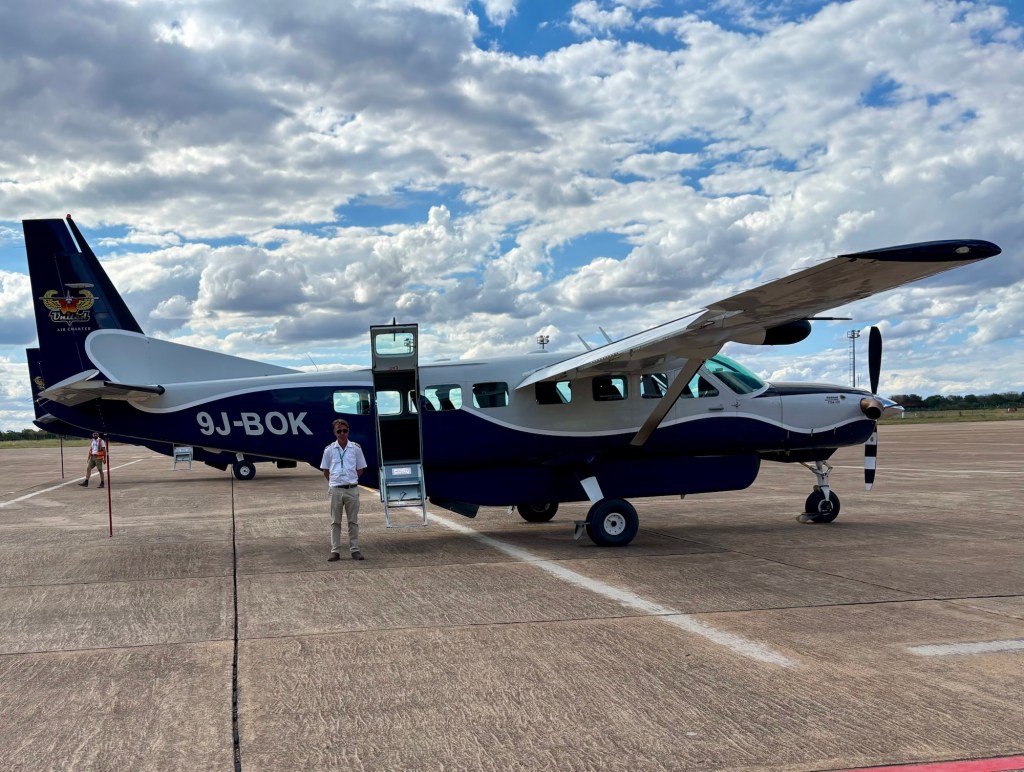
We flew directly from Livingstone to Kafue National Park, landing on what can only be described as a glorified dirt strip. Before our planes could touch down, the jeep drivers had to radio the pilots to confirm the runway was clear—of animals.
We didn’t land until nearly 4 p.m., but there was no time to waste—we jumped straight into a game drive on our way to camp, turning our transfer into a mini safari.
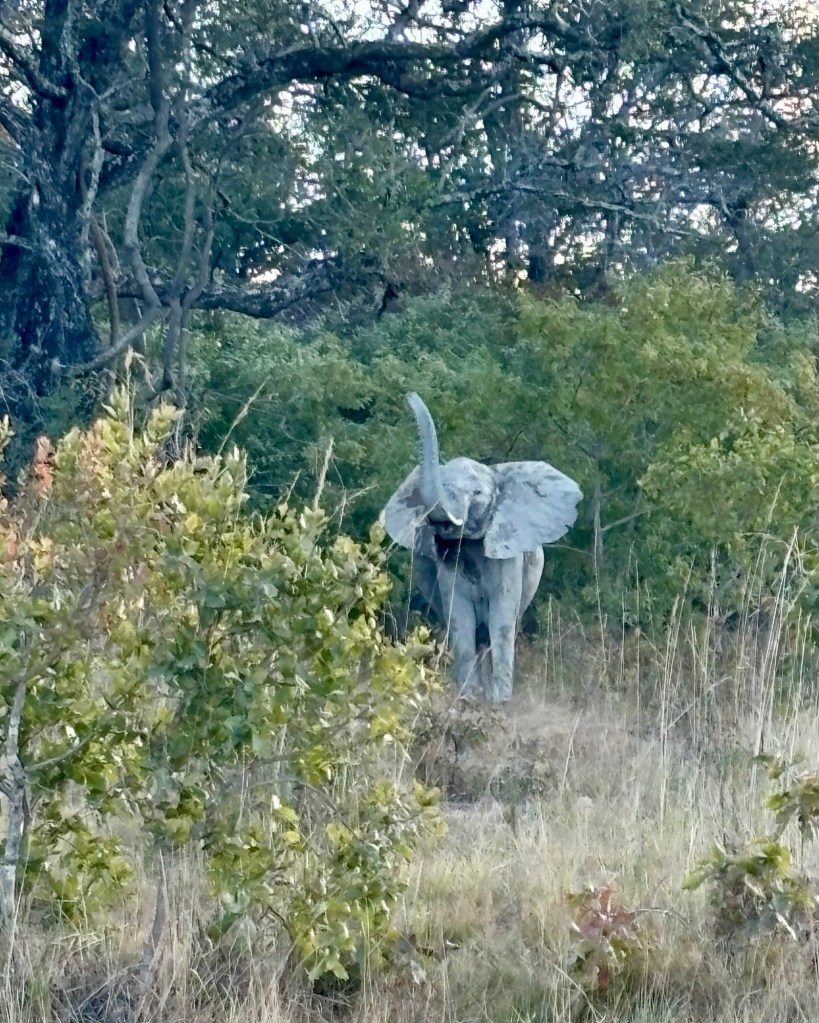
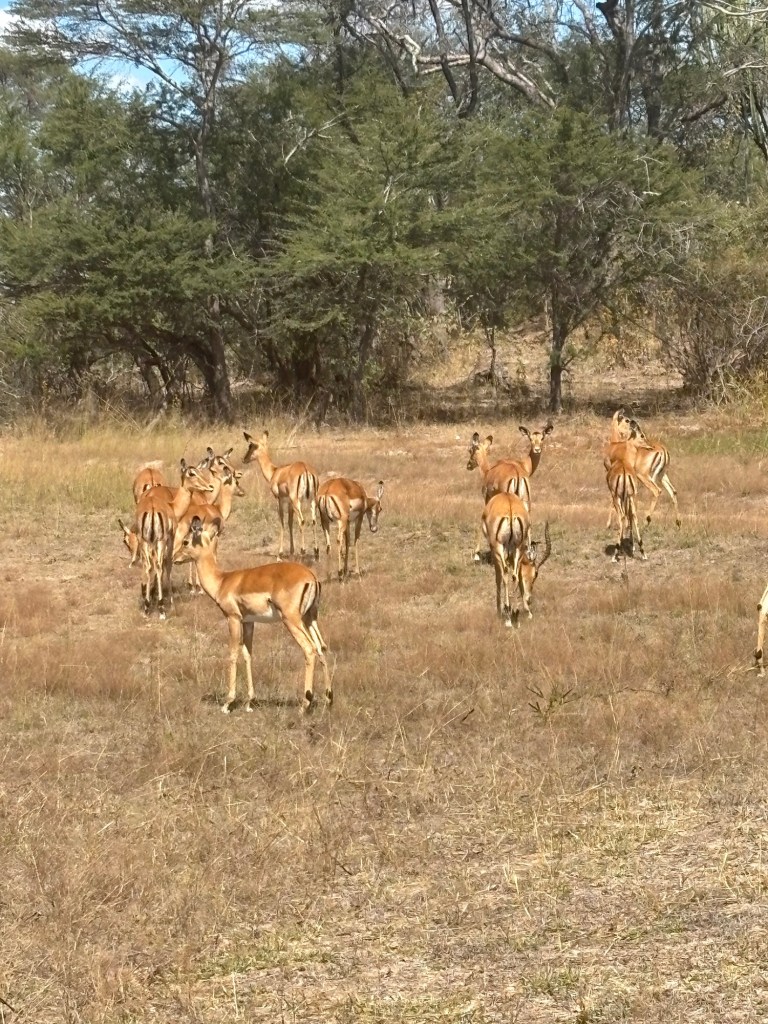
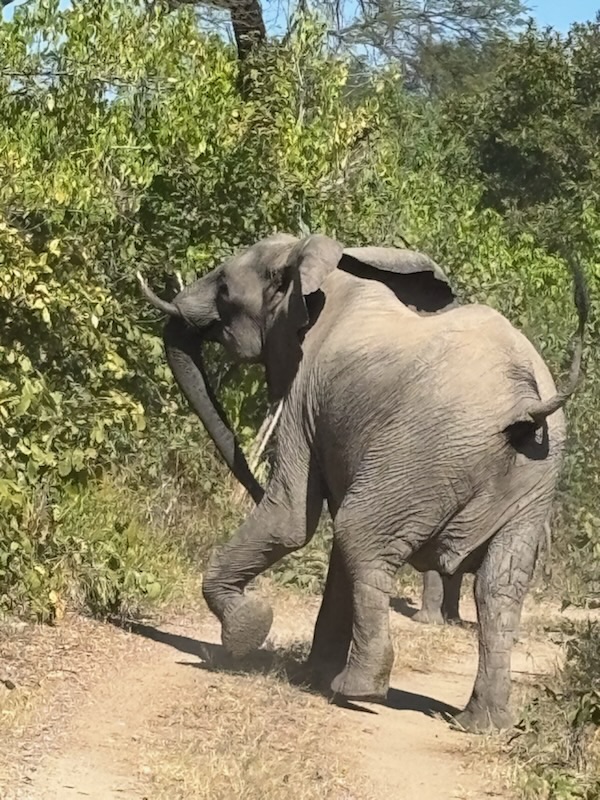
Impalas. Note the striped butts. Angry elephants surrounding their young.
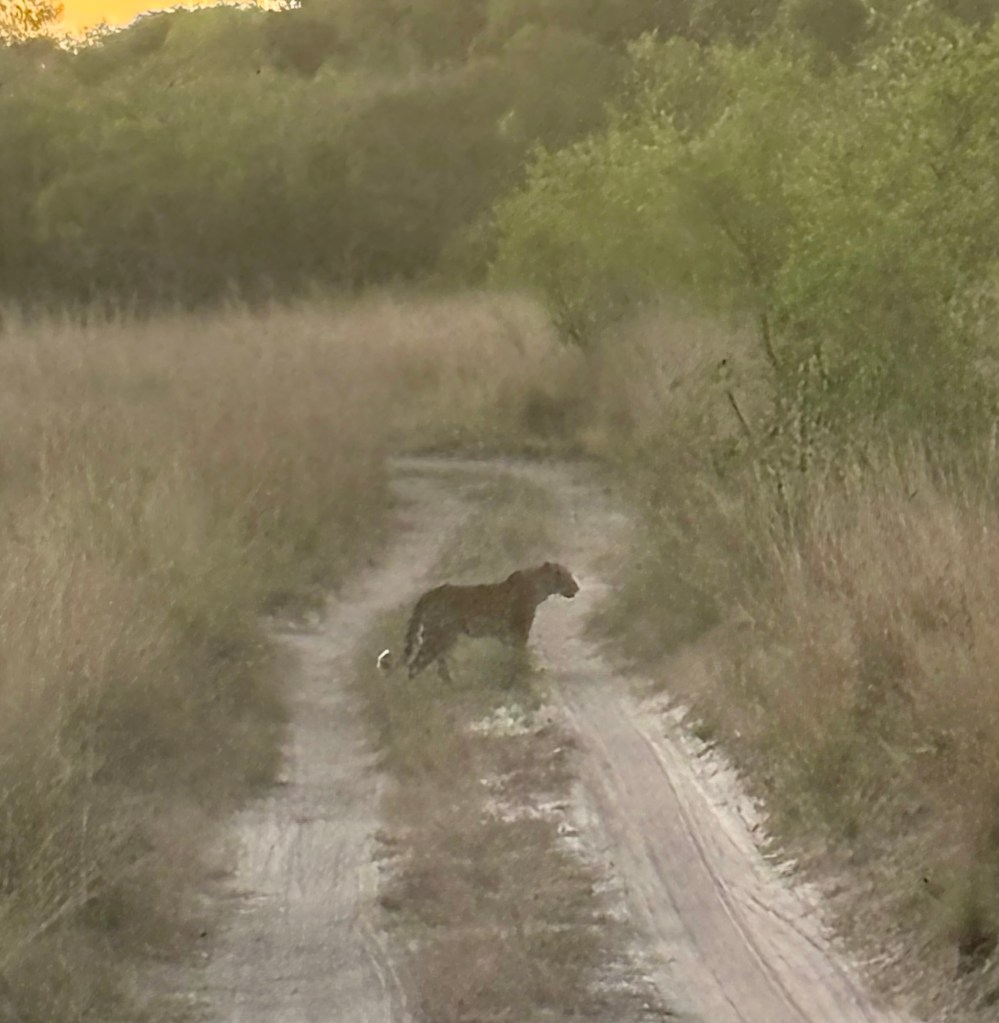
The highlight of our drive to Musanza Camp revolved around the age-old question: Why did the leopard cross the road? As we approached, he casually stepped into the grass just off the road, gave us a long, unimpressed stare, yawned like we’d interrupted his nap, and sauntered off.
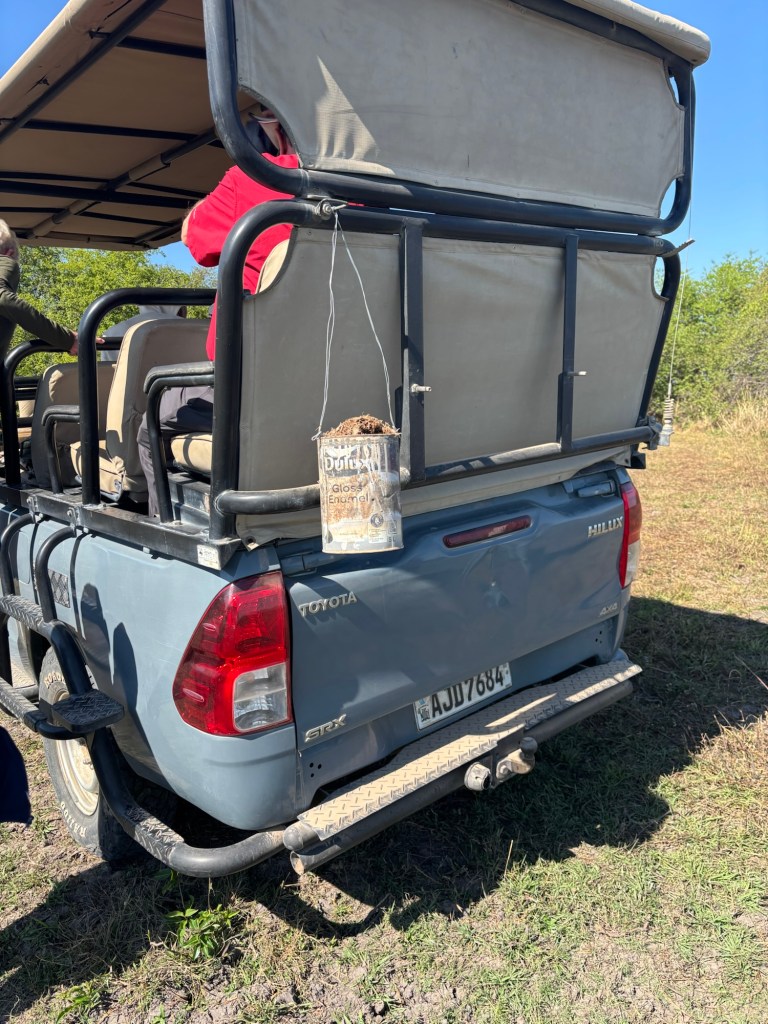
This region is known for its tse-tse flies. We were warned ahead of time to avoid wearing blue or black, apparently the tse-tse color palette of choice. The camp also took preventative measures.
Netting around beds in tent.Dried elephant dung burnt to deter flies.
Thankfully, during the dry season, flies and other insects weren’t much of a bother.
On Tuesday morning, we set out on a six-hour game drive to a vast savannah that looked suspiciously like a gigantic pasture in South Dakota—if South Dakota were crawling with wildebeests, hippos, and thousands of impala, puku, and lechwe. Same open space, slightly more exciting livestock.
WildebeestHippos
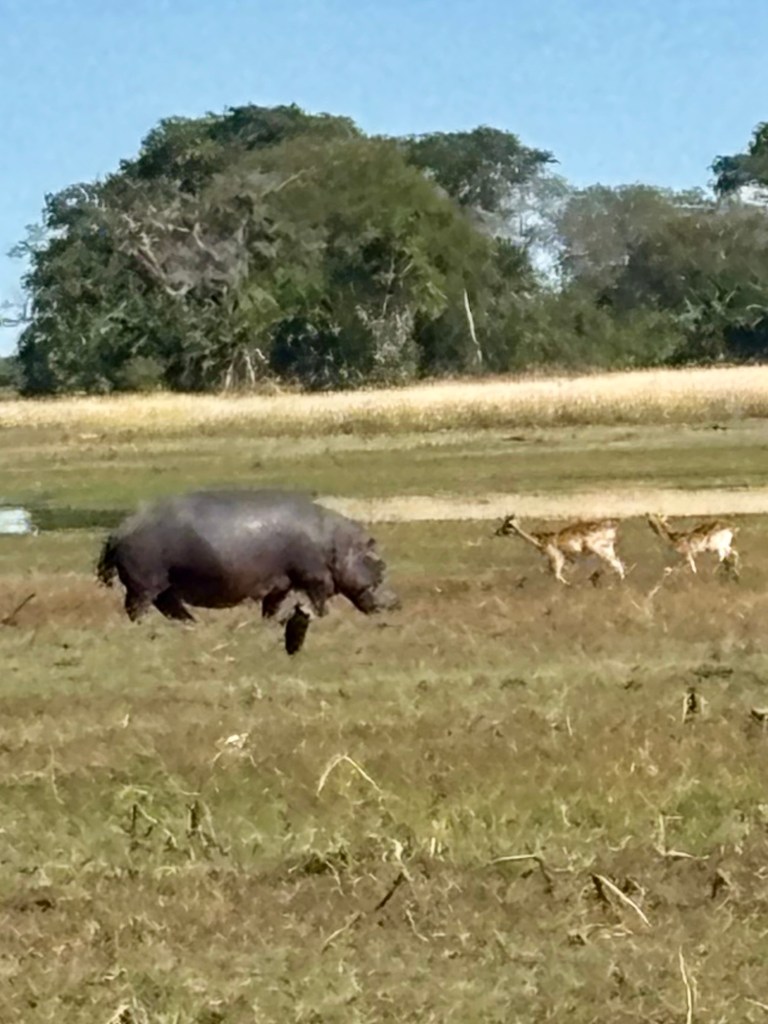
Hippos are way faster than they look. 25mph. ImpalaPuku
You’ve heard of the Flying Lawandas. Meet the Leaping Lechwes.
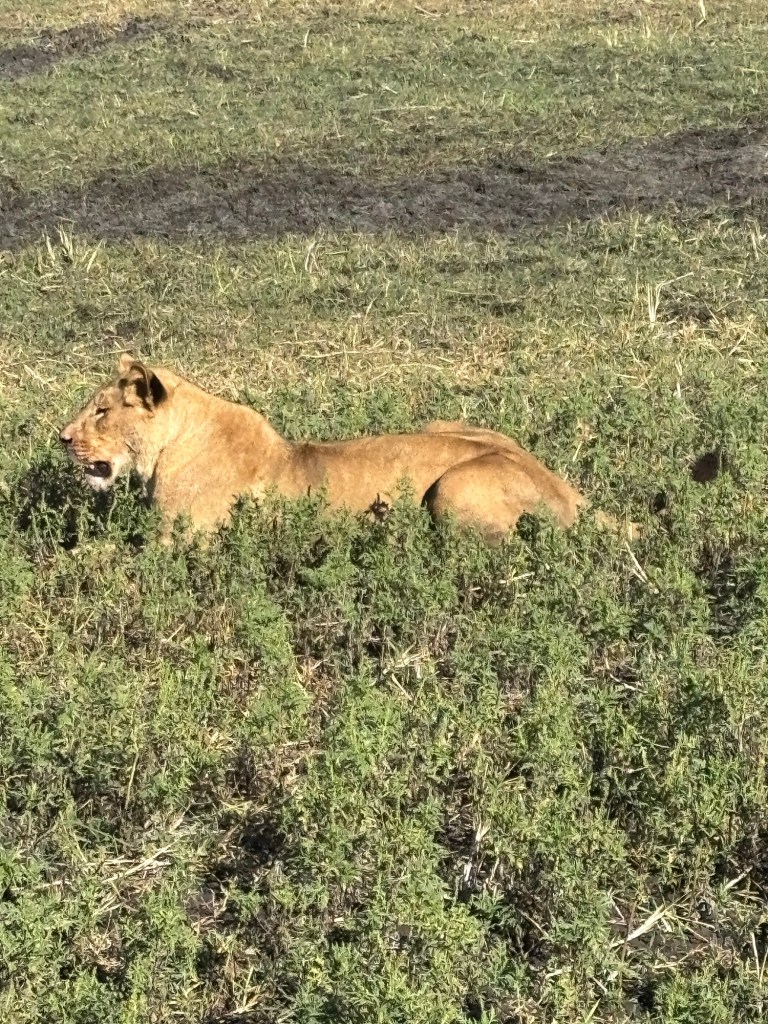
I forgot to mention one small detail: this pasture occasionally comes with lions.
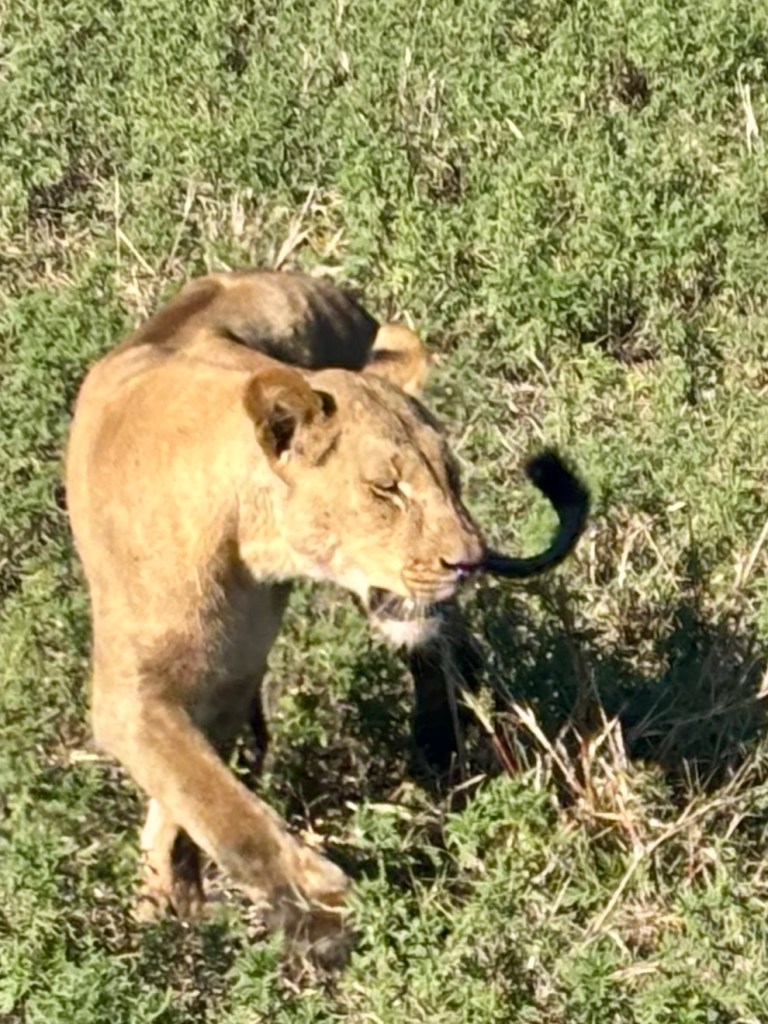
It’s good to be king of the jungle. One cat was so relaxed, he plopped down in the shadow of our jeep.
One animal I didn’t get a photo of—and I’m oddly okay with that—was a black mamba. In the morning, we saw its tracks: a three-inch-wide S-shape slithering across the road. On our return to camp, the snake itself made an appearance—over 10 feet long and rising six feet straight up. We didn’t stop for a photo. Something about the whole “dead in 30 minutes if it bites you” thing really kills the vibe.
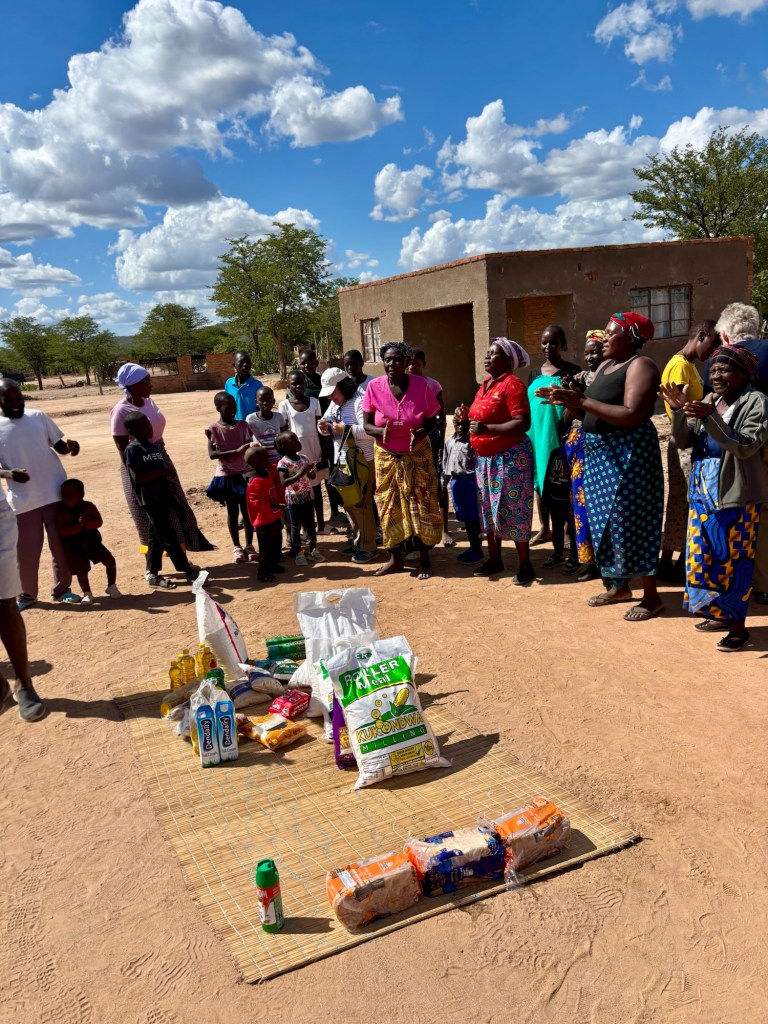
On Sunday, we were fortunate to visit a homestead near Hwange National Park.
In rural Zimbabwe, a homestead is the central living area shared by an extended family. Several homesteads together form a village, creating a close-knit community structure.
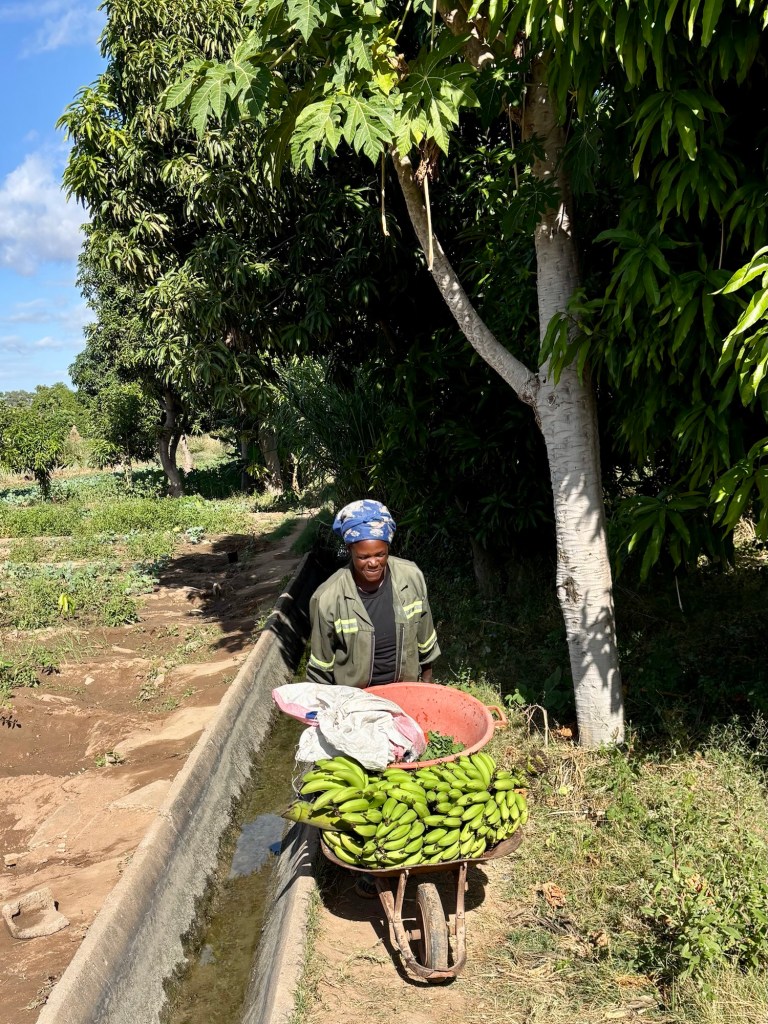
The homesteads share a 10-acre plot of land, where families cultivate fruit trees, vegetables, and grain crops to sustain their daily needs.
As we neared the homestead, several family members greeted us warmly as they made their way to church.
Once inside the homestead, we were introduced to the “head man,” Mr. Impala. Apparently, all the villagers have animal surnames—Kudu, Zebra, Lion, and so on. I kept my eyes peeled for Mrs. Elephant, but sadly, she never made an appearance.
We were given free rein to explore the homestead and chat with the welcoming family members, who greeted us with open arms and wide smiles. I made a beeline for the millet smasher—because who could resist a chance to pulverize grain the old-fashioned way? Within minutes, I was elbow-deep in millet dust, channeling my inner grain warrior.
There was a rhythm to the grain smashing—me, her, me, her—like a percussion duet with a purpose. A tribal chant rose in the background, giving our pounding a soundtrack. I was sweating in no time… but I must’ve been doing something right, because I was definitely a hit with the ladies.
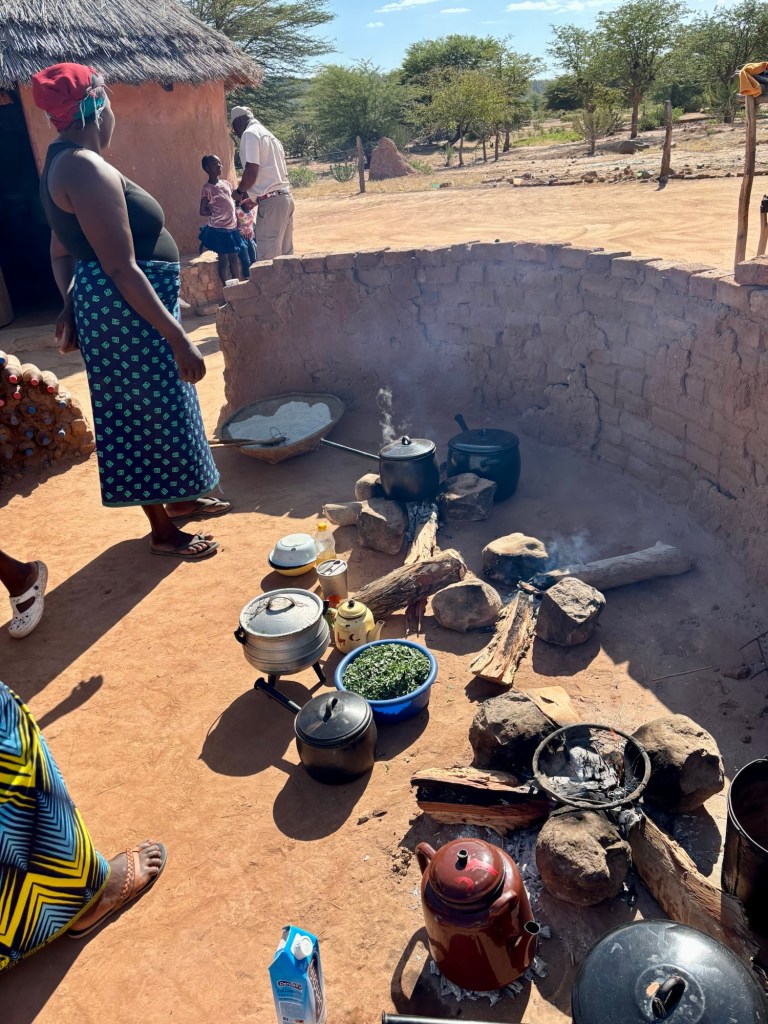
Once our millet-smashing masterpiece was complete, it was whisked away to the outdoor kitchen—proof, at last, that my hard labor might actually be edible.
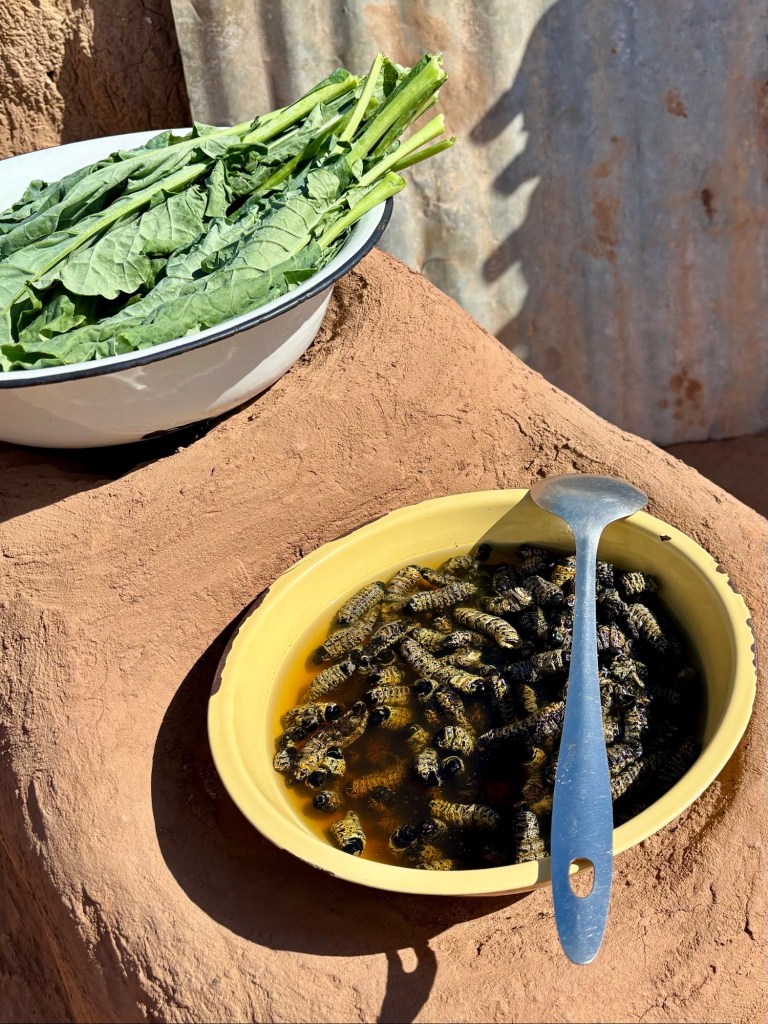
Our freshly smashed millet was destined to become polenta—a porridge-like dish that would be served with kale and fried worms. Yep, you read that right… worms! Crispy, seasoned, and apparently a local delicacy.
Our safari group was invited into a simple structure, where we sat shoulder to shoulder with about 15 adult family members. We took turns introducing ourselves, then listened as they shared stories about their customs, traditions, and daily life. The conversation was open, honest, and deeply moving—especially as they spoke about the challenges they face. With unemployment hovering around 95% in Zimbabwe, resilience isn’t just admirable—it’s a way of life.
Then it was time for lunch. When the fried worms came around, I put on my big boy pants and bravely took one from the plate, popped it into my mouth, bit into it and…
You may be able to tell from my expression that it didn’t suit my palate. In fact, I had to surreptitiously go outside and spit it out. It was gross!
After lunch we presented the homestead a load of supplies. We had purchased flour, sugar, bread, rice, peanut butter, and other necessities. It was the perfect ending to a rewarding day.
On a side note, I’d like you to meet 2 of my friends, Amy and Vicki. They’ve given me a few photography pointers and, interestingly, Vicki has a South Dakota connection. Her mother was a Peterson and grew up in Frederick, 60 miles from my hometown of Bristol. It truly is a small world.
Amy and Vicki
Next update will be from Kafue National Park in Zambia. And I will guarantee pictures of kitties!
We spent our first 3 nights and 2 days of our safari at Kashawe Camp in Hwange National Park.
We immediately settled into our tent.
Oops! Wrong tent pic.
Our ‘tent’ turned out to be a 400-square-foot oasis—with hot and cold running water, a toilet, and a shower—basically, everything you’d expect in a boutique hotel, just with better views and more baboons.
We quickly got into the rhythm of the safari.
6:30 AM Breakfast
7:00 – 11:00 AM Game Drive
Our safari squad is fifteen strong, so we split into two groups and hop into open-air jeeps driven by expert guides. We bounce into the bush in search of wildlife, with a civilized coffee/tea and snack break halfway through, because even adventurers need their caffeine.
12:00 PM Lunch back at camp. We’re not talking about a soup-and-sandwich combo. This is a full-on safari buffet extravaganza.
3:00 PM High Tea—because nothing says ‘wilderness adventure’ like delicate pastries, fresh fruit, and enough desserts to make you forget you’re technically in the middle of a national park.
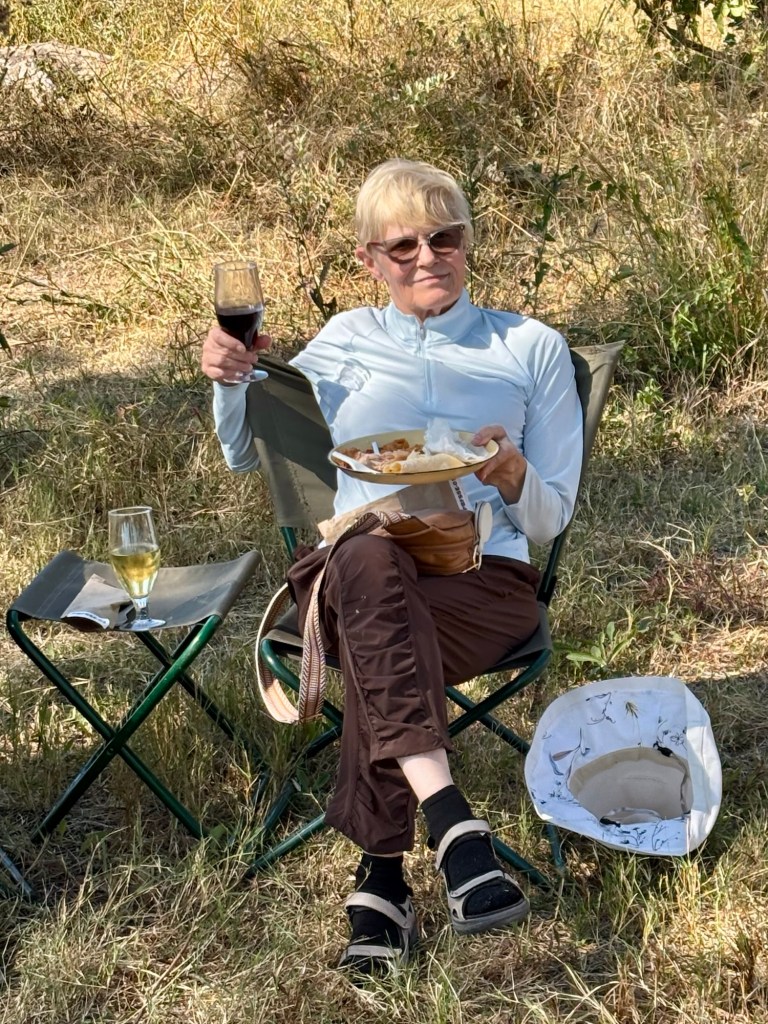
4:00 PM Afternoon game drive, which wraps up with a ‘sundowner’: wine and appetizers served in the bush, where the only thing more impressive than the sunset is how quickly you forget there are lions nearby.
6:30 PM Dinner is a full-on three-course affair with bar service. Gourmet dining in the middle of the African bush.
And now, the reason we’re here…the animals.
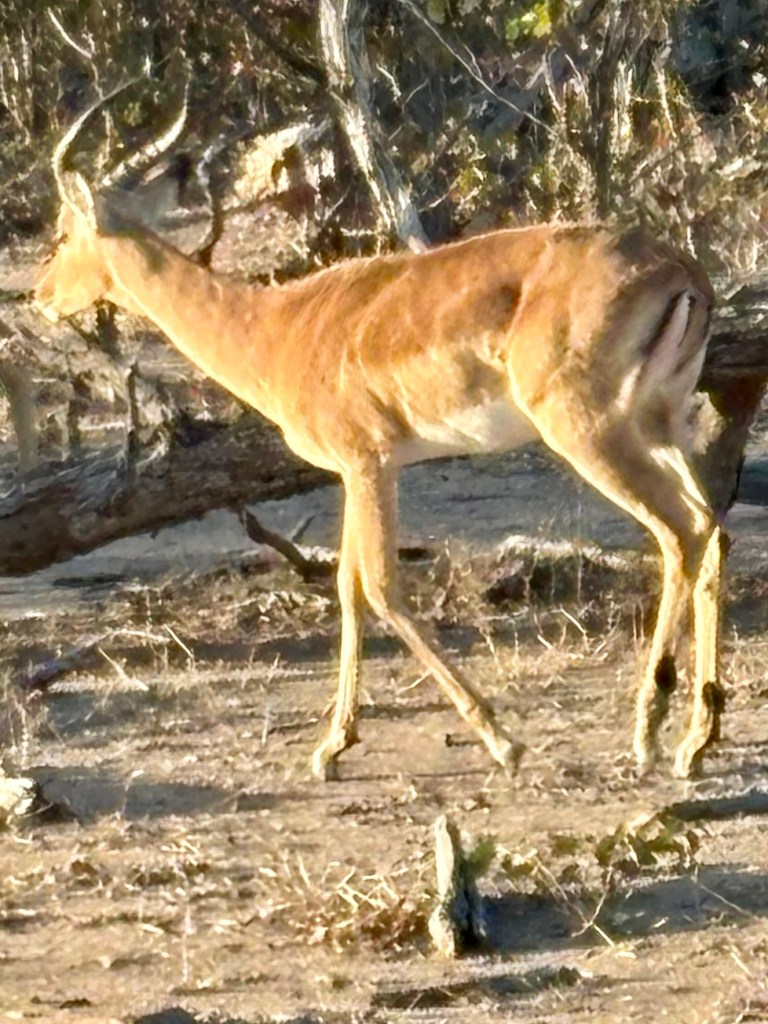
ImpalaA gathering of baboons is a “congress.” How ironic!KuduHippopotamus










































 Just Pete Hiking